Breakfast & Brunch
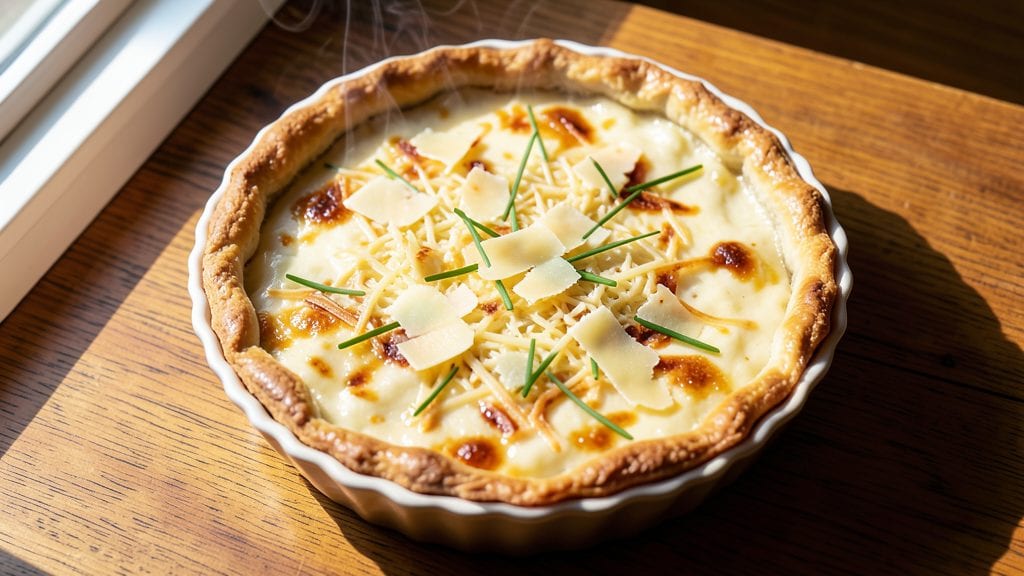
This Swiss cheese quiche recipe delivers the perfect balance of flaky crust and rich, nutty melted Swiss cheese that becomes the star of any brunch table.
The secret lies in a properly blind-baked crust and a custard filling that transforms ordinary eggs into something extraordinary—creamy yet firm, with just the right set. I've perfected this technique over years of testing, ensuring every bite delivers that satisfying contrast between tender filling and crisp pastry edges.
The beauty of this recipe is its versatility while remaining beginner-friendly. You'll start with a classic pie crust that bakes up golden and crisp, then layer it with a velvety egg mixture infused with sharp Gruyère-style Swiss cheese.
The result? A quiche with a melt-in-your-mouth texture where the cheese pulls just enough to create those signature pockets of gooey goodness. No fancy equipment needed—just a few simple tools and about 50 minutes of hands-on time.
What you'll end up with is a quiche that's elegant enough for weekend brunches but simple enough for weeknight suppers. The Swiss cheese adds depth that ordinary cheddar can't match, while the flaky crust ensures every bite has that satisfying crunch.
This recipe builds on traditional techniques while allowing room for variations—add spinach for freshness or crumbled bacon for extra heartiness. The aroma alone will have everyone gathering around the table.
Perfect for meal prep or serving fresh, this quiche keeps beautifully for up to three days in the refrigerator. The filling stays moist while the crust maintains its crispness, making it ideal for breakfast on the go or a satisfying lunch.
Let's create this brunch classic that's sure to become a household favorite.
Ingredients for swiss cheese quiche
Six ingredients for a golden crust and nutty Swiss cheese filling that transforms brunch into a showstopper.
| Ingredient | Amount | Notes |
|---|---|---|
| All-Purpose Flour 🌾 | 2 ½ cups | Sifted for light texture |
| Unsalted Butter 🧈 | 1 cup | Cold, cubed for flaky crust |
| Ice Water 💧 | ⅔ cup | Chilled for pie crust |
| Large Eggs 🥚 | 4 whole | Room temperature preferred |
| Heavy Cream 🥛 | 1 cup | Full-fat for richness |
| Swiss Cheese (Gruyère-style) 🧀 | 1 ½ cups | Shredded, nutty variety |
| Milk 🥛 | ½ cup | Whole milk preferred |
| Salt 🧂 | 1 ½ tsp | Kosher salt preferred |
| Black Pepper 🌶️ | ½ tsp | Freshly ground for flavor |
| Nutmeg 🌿 | ¼ tsp | Freshly grated for warmth |
| All-Purpose Flour (for dusting) 🌾 | ¼ cup | Extra for blind baking |
The crust is where this quiche shines. King Arthur flour gives the best texture, but any high-quality all-purpose will work. Use European-style butter like Plugrá or President for that extra flakiness—it has a higher fat content. Keep everything cold when mixing the dough. The ice water is crucial for a tender, not tough, crust. If your kitchen is warm, chill the dough for 30 minutes before rolling. For the cheese, Gruyère or Emmental from specialty shops like Murray's Cheese delivers that authentic Alpine nuttiness. Pre-shredded cheese has anti-caking agents—grate your own for the best melt and flavor.
No heavy cream? Half-and-half plus a splash of milk works in a pinch, though the texture won't be as rich. Substituting Swiss cheese? Comté or Jarlsberg are close seconds, but they lack that signature sharpness. For nutmeg, if you don't have it, a pinch of cinnamon plus a dash of cardamom can mimic the warmth. The eggs should be at room temperature—cold eggs can create pockets of water in your custard. If you're short on time, use room-temperature eggs straight from the fridge by letting them sit in warm water for 5 minutes. For the crust, if you can't find European butter, Land O'Lakes unsalted butter is a reliable grocery store alternative.
This quiche keeps beautifully in an airtight container for 3-4 days in the fridge, with the crust staying crisp and filling remaining moist. For meal prep, slice before storing to maintain clean edges. Reheat individual slices at 350°F for 8-10 minutes until heated through. The crust reheats better than most—it actually gets crispier the second time. Freeze portions on a tray before transferring to a bag for up to 2 months. To serve, let it sit at room temperature for 10 minutes before slicing—this helps the filling set properly and makes for cleaner cuts.
Why You'll Love This Recipe
- No-Fuss Crust: I swear by this cold butter crust—just flour, butter, and ice water. No rolling, no fuss, and it’s sturdy enough to hold that creamy filling without cracking. (Yes, even when I forget to preheat the oven.)
- Melty Magic: That Swiss cheese? It’s the star—nutty, rich, and melts into perfect strings when sliced just right. The heavy cream and eggs make it silky, but the cheese pulls it all together in the best way.
- Weeknight Hero: I make this for brunch, dinner, or even a quick lunch. It reheats beautifully, so I’ll whip up a big batch on Sunday and have leftovers for days. (My kids beg for it—no joke.)
- Budget Breakthrough: Eggs, flour, and butter are cheap staples, and this recipe stretches them far. A single quiche feeds four, and the leftovers freeze like a dream. Fancy enough for guests, but won’t break the bank.
Step-by-step instructions for Swiss cheese quiche
Mastering this quiche means perfecting two parts: a flaky crust and a rich, nutty filling.
Prepare the Flaky Crust
In a large mixing bowl, combine the 2.5 cups all-purpose flour and 1.5 teaspoons salt. Cut in the 1 cup unsalted butter using a pastry cutter or your fingers until the mixture resembles coarse crumbs with pea-sized butter pieces. This texture is crucial for achieving that signature flakiness.
Gradually add the 0.67 cup ice water, 1 tablespoon at a time, mixing gently with a fork until the dough just comes together. Avoid overmixing—just until the dough holds when pressed. Shape the dough into a disk, wrap it in plastic, and refrigerate for 30 minutes while you prepare the filling. This chilling step ensures the crust stays firm during rolling and baking.
Roll and Blind-Bake the Crust
On a lightly floured surface, roll the chilled dough into a 12-inch circle, about 1/8-inch thick. Transfer it to a 9-inch pie dish, gently pressing it into the bottom and up the sides. Trim any excess dough hanging over the edge. Prick the bottom of the crust with a fork to prevent puffing.
Preheat your oven to 375°F. Line the crust with parchment paper, fill it with pie weights or dried beans, and sprinkle the 0.25 cup all-purpose flour (for dusting) evenly over the paper. Bake for 15 minutes, then remove the weights and paper. Return the crust to the oven and bake for an additional 5 minutes until it's lightly golden. This blind-baking step prevents a soggy bottom when you add the filling.
Prepare the Swiss Cheese Filling
In a medium bowl, whisk together the 4 whole large eggs, 1 cup heavy cream, 0.5 cup milk, 0.5 teaspoon black pepper, and 0.25 teaspoon nutmeg until well combined. Add the 1.5 cups shredded Swiss cheese (Gruyère-style) and stir until fully incorporated. The mixture should be smooth and homogenous, with no cheese clumps remaining.
Season the filling with 1 teaspoon of the 1.5 teaspoons salt reserved for the crust. Taste the mixture—you want a balance of nutty Swiss flavor and subtle warmth from the nutmeg. If the filling seems too thick, whisk in an additional 1 tablespoon milk to ensure it pours smoothly into the crust.
Assemble and Bake the Quiche
Pour the cheese filling into the pre-baked crust, spreading it evenly with a spatula. The filling should reach just below the top edge of the crust, allowing room for the cheese to melt and bubble slightly during baking. Transfer the quiche to the oven and bake at 350°F for 40-45 minutes, until the center is just set and the top is golden brown.
To check doneness, insert a knife into the center—it should come out clean but slightly moist. If the edges brown too quickly, tent the quiche with aluminum foil after 20 minutes of baking. Let the quiche rest for 10 minutes before slicing to allow the filling to set properly. This resting period ensures clean slices with a perfect balance of flaky crust and creamy, nutty Swiss cheese filling.
Pro Tips For Making Swiss Cheese Quiche
- Chill the Dough First: Roll out that butter-and-flour crust and pop it in the fridge for 15 minutes before baking—even if you’re eager. I used to skip this and end up with a soggy bottom because the filling’s heat would melt the butter too fast. Cold dough = crispy crust that holds its shape.
- Whisk Eggs Like Mad: Beat those large eggs and heavy cream until the mixture is smooth, not just blended. I learned this after a quiche came out lumpy—turns out, a quick 30-second whisk with a fork makes a difference. No one wants to bite into a chewy egg surprise.
- Prevent Overbrowning: Cover the quiche with foil at the 20-minute mark, even if it looks pale. After burning my first batch (yes, I was overzealous), I realized Swiss cheese turns golden faster than the filling sets. Foil keeps the top creamy while the edges finish.
- Use Room-Temp Cream: Take the heavy cream out of the fridge 10 minutes before mixing—cold cream curdles when it hits hot eggs. I was skeptical until I tried it, and now my quiche filling is silky, not grainy. Room-temp works for eggs too, but don’t let them get warm.
Health benefits of this recipe
Protein Powerhouse
This Swiss cheese quiche packs a protein punch with 20-25 grams of protein per slice, thanks to the eggs and Swiss cheese.
The 4 large eggs provide high-quality protein with all nine essential amino acids, while the 1.5 cups shredded Swiss cheese adds an extra 12 grams of protein per serving. This makes it a satisfying breakfast that keeps you full for hours—perfect for busy mornings or meal prep. 💪
Calcium-Rich Nutrition
Swiss cheese is one of the most calcium-dense cheeses available, with 30% of your daily value per serving. A single slice of this quiche delivers nearly 25% of your calcium needs, supporting strong bones and teeth.
The combination of eggs and cheese also provides vitamin D, which helps your body absorb calcium efficiently. This makes it an excellent choice for anyone looking to boost their bone health.
Healthy Fats for Satiety
The heavy cream and butter in this recipe provide satisfying fats that help stabilize blood sugar levels. Unlike refined carbs, these fats create a slow-release energy source, preventing mid-morning crashes. The unsaturated fats in the butter and cream also support heart health when consumed as part of a balanced diet.
I always notice how much more satisfied I feel after eating this compared to lighter breakfast options.
Vitamin B12 Boost
Both eggs and Swiss cheese are excellent sources of vitamin B12, which is crucial for nerve function and red blood cell production.
A single serving of this quiche provides over 50% of your daily B12 needs, making it particularly beneficial for vegetarians or those with dietary restrictions that might limit their B12 intake. This nutrient is especially important for maintaining energy levels and cognitive function throughout the day.
Low-Carb Option
With careful portion control, this quiche can fit into a low-carb diet, thanks to its minimal crust and cheese-heavy filling.
The 2.5 cups all-purpose flour in the crust contributes about 15 grams of carbs per slice, but you can reduce this by using a lower-carb crust alternative like almond flour.
For a truly low-carb version, I sometimes replace half the crust flour with almond flour—it adds a nice nutty flavor that complements the Swiss cheese beautifully.
Meal Prep Friendly
The balanced macronutrient profile makes this quiche ideal for meal prep. The protein and fats help preserve freshness, while the crust stays crisp for up to 3 days when stored properly in an airtight container.
I always make a double batch on Sundays—it reheats beautifully and provides a satisfying, nutrient-dense meal for the week ahead. The combination of protein, calcium, and healthy fats makes it a complete meal that supports both physical activity and recovery. ✨
Nutrition facts
Frequently asked questions
Can I make this quiche without a pre-made pie crust?
This recipe uses a homemade crust for that perfect flaky texture, but you can substitute with store-bought pie crust if needed. Just be sure to pre-bake it the same way (blind-bake for 20 minutes at 375°F) to prevent a soggy bottom. For extra flakiness, brush the crust with a little melted butter before adding the filling.
What's the best way to store leftover quiche?
Keep it fresh in an airtight container for up to 3-4 days in the refrigerator. For longer storage, freeze individual slices on a tray before transferring to a bag for up to 2 months. Reheat slices at 350°F for 8-10 minutes until warmed through—this actually makes the crust crispier!
Why did my quiche come out gummy instead of set?
Underbaking is the most common cause. The center should be just set (not jiggly) when done. Bake for the full 40-45 minutes and check with a knife—it should come out clean but slightly moist. If your oven runs hot, tent with foil after 20 minutes to prevent over-browning.
Can I add other ingredients like spinach or bacon?
Yes! Sauté 2 cups chopped spinach until wilted and mix into the filling, or cook 4 strips cooked bacon and crumble it in. Just reduce the cheese slightly to maintain the proper ratio. These additions work beautifully with the nutty Swiss flavor.
How do I know when the crust is properly blind-baked?
The crust should be completely set and lightly golden when done. Press gently—it should hold its shape without being soft. If it puffs up during baking, it needs more pricking before baking. A properly blind-baked crust prevents a soggy bottom when you add the filling.