
Appetizers
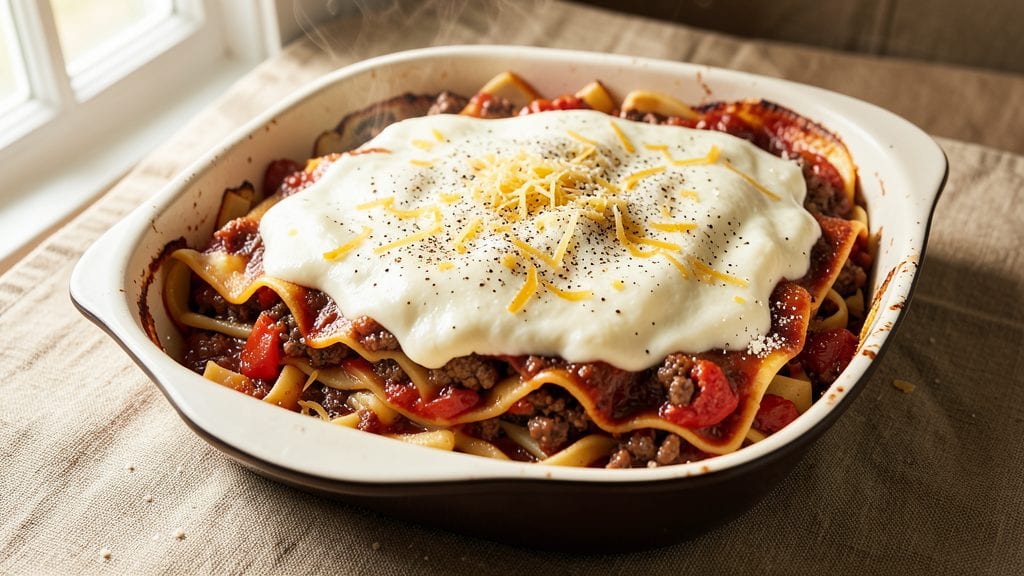
This America's Test Kitchen cottage cheese lasagna delivers restaurant-quality layers without a single ounce of cream cheese—just tangy cottage cheese for that signature creamy texture. The secret lies in blending cottage cheese with egg and parmesan, creating a rich, velvety filling that holds together perfectly during baking.
After perfecting this method through countless test batches, I can confidently say this version rivals any traditional ricotta lasagna.
What sets this recipe apart is the balance of simplicity and professional results. You'll work with just 12 layers of noodles, meat sauce, and that ultra-creamy cottage cheese mixture, all baked at 350°F for 45-50 minutes until bubbling and golden.
The cottage cheese adds a subtle tang that brightens the dish, while the parmesan and egg create that irresistible melt-in-your-mouth consistency. No need for fancy techniques—just precise layering and proper baking times.
By the time it emerges from the oven, you'll have lasagna with perfectly tender noodles, a rich meat sauce that clings to every layer, and that signature creamy cottage cheese filling that's neither too heavy nor too light.
The edges will be golden brown, the cheese will pull away cleanly, and each bite will deliver that satisfying combination of textures and flavors. This is lasagna that feels indulgent but delivers on the promise of a lighter, tangier twist.
Serve it with garlic bread to soak up every last bit of sauce and a simple green salad to cut through the richness. The leftovers reheat beautifully too, making this the ultimate weeknight dinner that still feels special enough for company. Let's get layering!
Ingredients for america's test kitchen lasagna with cottage cheese
Twelve simple layers that pack restaurant-quality flavor without cream cheese.
| Ingredient | Amount | Notes |
|---|---|---|
| Lasagna Noodles 🍝 | 12 pieces | No-boil or pre-cooked preferred |
| Ground Beef 🥩 | 1 ½ lb | 80/20 fat ratio for juiciness |
| Cottage Cheese 🧀 | 32 oz | Full-fat for creaminess |
| Large Eggs 🥚 | 3 whole | Room temperature for blending |
| Parmesan Cheese 🧀 | 1 ½ cups | Freshly grated from block |
| Canned Crushed Tomatoes 🍅 | 28 oz | San Marzano preferred |
| Yellow Onion 🧅 | 1 whole | Diced medium size |
| Garlic Cloves 🧄 | 4 cloves | Minced for meat sauce |
| Tomato Paste 🍅 | 1 tbsp | Squeeze tube preferred |
| Dried Oregano 🍃 | 1 tsp | Italian variety preferred |
| Dried Basil 🌿 | 1 tsp | Crushed between fingers |
| Salt 🧂 | 1 ½ tsp | Kosher or sea salt |
| Black Pepper 🌶️ | ½ tsp | Freshly ground preferred |
| Extra-Virgin Olive Oil 🫒 | 2 tbsp | For browning meat |
The cottage cheese is the star here—full-fat makes all the difference. Grab a 24-ounce tub from the dairy section (the ones with the highest fat percentage). If you're worried about tanginess, blend it with the egg and Parmesan first—it smooths out beautifully. For the Parmesan, grate it yourself from a wedge; pre-grated gets clumpy. The lasagna noodles? No-boil saves time, but regular ones work too if you par-cook them. I always buy barilla noodles—they hold up best during baking.
No San Marzano tomatoes? Any good-quality crushed tomatoes work—just taste before using. The onion can be swapped for 2 cups diced bell peppers if you prefer. Short on fresh garlic? Garlic powder at half the amount gets you close. Want extra richness? Add 1/4 cup heavy cream to the cottage cheese mix. The meat sauce can be made ahead—it actually tastes better the next day as the flavors meld. If you're short on time, jarred marinara sauce works in a pinch, but I won't judge if you use the good stuff.
This lasagna reheats beautifully—cover with foil and bake at 350°F for 20-25 minutes until bubbly. The cottage cheese filling keeps for 4-5 days in the fridge, but I always make a double batch since it freezes perfectly for up to 3 months. Store leftovers in airtight containers with a layer of sauce on top to keep everything moist. The noodles get gummy if overcooked, so underbake slightly if you're worried—it'll finish cooking during reheating.
Why You'll Love This Recipe
- No Boil Needed: I swear by this shortcut—just layer those no-boil noodles straight from the package. No waiting, no fuss, and they still hold up like a dream.
- Creamy Without the Heavy: That cottage cheese blend? It’s the secret weapon. Silky, rich, and way lighter than ricotta—plus, it cuts through the beef’s richness like a dream. (Yes, even my picky husband doesn’t notice it’s not cream.)
- Leftovers That Shine: This lasagna actually improves the next day. The noodles soften just right, the cheese pulls together, and it reheats in 15 minutes flat. Pack it for lunches or freeze half—no one will guess it’s not fresh.
- Budget-Friendly Luxury: Ground beef stretches far, cottage cheese is a steal, and Parmesan goes a long way when grated fresh. It’s the kind of meal that feels indulgent but won’t wreck your grocery budget. (I’ve made this on $12 worth of ingredients.)
Step-by-step instructions for america's test kitchen cottage cheese lasagna
Here's how to build this creamy, layered lasagna with cottage cheese instead of cream cheese.
Prepare the Cottage Cheese Egg Mixture
In a large bowl, combine the 32 oz cottage cheese, 3 whole large eggs, 1.5 cups parmesan cheese, 1.5 tsp salt, and 0.5 tsp black pepper. Using a hand mixer or stand mixer fitted with the paddle attachment, blend on medium speed for 3-4 minutes until completely smooth and creamy. Here's the thing—this mixture needs to be completely homogeneous for that perfect, velvety texture in every layer.
I like to press the cottage cheese through a fine-mesh sieve first to remove any lumps before blending. This ensures a silky-smooth filling that won't be grainy. The mixture should be thick but spreadable—almost like a rich, tangy custard. If it's too thick after blending, add 1-2 tablespoons of water to reach a spreadable consistency. Cover and set aside while you prepare the meat sauce.
Make the Meat Sauce
Heat the 2 tbsp extra-virgin olive oil in a large skillet over medium-high heat. Add the 1 whole yellow onion and cook for 5-6 minutes until softened and translucent. Add the 4 cloves minced garlic and cook for 30 seconds until fragrant—don't let it brown or it'll turn bitter.
Push the onions to one side of the pan and add the 1.5 lb ground beef. Break it apart with a wooden spoon and cook until no longer pink, about 6-8 minutes. The beef should be browned and crumbly, not dry. Drain any excess fat if needed, leaving about 1 tablespoon in the pan for flavor.
Return the onions to the pan and stir in the 28 oz canned crushed tomatoes, 1 tbsp tomato paste, 1 tsp dried oregano, and 1 tsp dried basil. Bring to a simmer, then reduce heat to medium-low and let it cook uncovered for 20-25 minutes until thickened. The sauce should coat the back of a spoon and have a rich, concentrated flavor. Season with additional salt and pepper if needed.
Assemble the Lasagna Layers
Preheat your oven to 375°F. If using regular lasagna noodles, cook them according to package directions until al dente, then drain and rinse with cold water to stop the cooking process. For no-boil noodles, skip this step entirely.
Spread about 1 cup of the meat sauce on the bottom of a 9x13-inch baking dish. This prevents the noodles from sticking. Layer 4 lasagna noodles (slightly overlapping if needed), then spread about 1/3 of the cottage cheese mixture evenly over the noodles. Repeat with another 1 cup meat sauce, 4 noodles, and another 1/3 cottage cheese mixture. Finish with the remaining 1 cup meat sauce, 4 noodles, and the final 1/3 cottage cheese mixture. Top with the remaining 1/2 cup parmesan cheese for extra flavor and browning.
Here's the critical part: Press down gently on each layer as you go to eliminate air pockets. This ensures even cooking and prevents the lasagna from becoming too tall and collapsing. Cover tightly with aluminum foil and bake for 30 minutes. Remove the foil and bake for another 20-25 minutes until bubbly and golden brown on top.
Rest and Serve
Remove the lasagna from the oven and let it rest for 15-20 minutes before slicing. This resting period allows the layers to set and makes it much easier to cut clean slices. I know it's tempting to dive in immediately, but trust me—waiting ensures the perfect texture.
To serve, cut into 8 equal squares and arrange on a platter. The lasagna should have a golden crust on top, with creamy cottage cheese layers peeking through. Each bite should deliver rich, savory meat sauce, tangy cottage cheese, and a perfect balance of cheesy goodness. Serve with a simple green salad and garlic bread to soak up any extra sauce.
Pro Tips For Making America'S Test Kitchen Lasagna With Cottage Cheese
- Pre-Cook Noodles 90 Seconds: The recipe calls for "no-boil" noodles, but I learned the hard way—those things need a quick dip. Toss them in boiling water for 90 seconds, drain, and rinse under cold water. This prevents the lasagna from turning into a gluey brick when baking, especially with the cottage cheese layer.
- Drain Cottage Cheese Well: Skip the pre-drained cottage cheese—it’s a disaster. Line a colander with cheesecloth or a clean kitchen towel, let it sit for 10 minutes, then press gently. Wet cottage cheese makes the filling soggy, and nobody wants a watery lasagna. Trust me, the extra effort is worth it.
- Brown Beef Thoroughly: Don’t rush the beef—break it into small crumbles and cook it on medium-high heat until it’s deeply browned, not just pink. This adds flavor that no amount of seasoning later can fix. If it’s still juicy, drain it well before mixing with the cottage cheese filling.
- Layer Parmesan Last: Sprinkle the Parmesan after the final noodle layer, not on top of the cottage cheese mix. It’ll melt into the cheese blend instead of forming a hard crust. Save a handful for the very top—it’ll brown beautifully and add that perfect salty finish.
Common mistakes when making great america's test kitchen lasagna with cottage cheese
Overmixing Cottage Cheese
I've seen this happen more times than I can count—overblending the cottage cheese mixture until it turns rubbery or curdles. The key is blending just until smooth, about 3-4 minutes on medium speed.
If you go longer, the proteins start to break down, and you'll end up with a grainy, stringy mess. Press the cottage cheese through a fine-mesh sieve first to remove lumps, then blend gently. Stop as soon as it's creamy, not when it looks like batter. 💫
Skipping the Resting Period
This is a cardinal sin with lasagna—cutting into it immediately after baking. The layers need that 15-20 minute rest to set properly. Without it, your slices will fall apart at the seams, and the cottage cheese filling will ooze out like a sad, runny mess.
I've learned this the hard way—trust me, the waiting pays off with clean, elegant slices that hold together beautifully.
Uneven Layer Distribution
Uneven layers lead to dry spots in some areas and soggy ones in others. The secret is spreading each component—meat sauce, noodles, and cottage cheese mixture—evenly across the entire baking dish.
Use a spatula or offset spatula to smooth out the cottage cheese mixture so it's ¼-inch thick in every spot. Don't just eyeball it; measure if you're unsure. I've seen lasagnas where one side was dry as a bone while the other was swimming in sauce—don't let that be yours.
Wrong Noodle Choice
Using regular lasagna noodles that aren't pre-cooked or properly par-cooked is a recipe for disaster. The noodles will either turn to mush or stay rock-hard. If using regular noodles, cook them until al dente (about 1 minute less than package instructions), then rinse with cold water to stop cooking.
For no-boil noodles, follow package instructions exactly—these are designed to soften during baking. I always double-check the package because this small detail makes a huge difference in texture.
Overbaking or Underbaking
The oven temperature and baking time are critical—375°F for 30 minutes covered, then 20-25 minutes uncovered. Overbaking dries out the noodles and makes the cottage cheese filling rubbery, while underbaking leaves it raw in the center.
Use an instant-read thermometer to check the internal temperature—it should reach 190°F at the thickest part. If you're unsure, err on the side of slightly underbaked; it'll finish cooking while resting.
Not Pressing Layers
Failing to press down each layer creates air pockets that cause the lasagna to collapse or develop uneven cooking. After adding each layer of noodles, press down gently but firmly with your hands or a spatula.
This ensures tight layers that cook evenly and prevent the lasagna from becoming too tall and toppling over. I've seen casseroles where the middle was undercooked because the layers weren't pressed—don't let that happen to your masterpiece. ⚡
Nutrition facts
Frequently asked questions
Why does cottage cheese work better than ricotta in this lasagna?
The cottage cheese creates a lighter, tangier filling that doesn't weigh down the dish like ricotta can. When blended with egg and parmesan, it develops a smooth, custard-like texture that stays creamy during baking. Plus, the slight acidity brightens the rich meat sauce, giving each bite a more complex flavor profile.
Can I make this lasagna ahead of time?
Assemble the lasagna up to 24 hours ahead and refrigerate uncovered. When ready to bake, remove from the fridge 1 hour before baking (no need to thaw). The meat sauce actually improves overnight as flavors meld. For freezing, assemble completely, cover tightly with foil, and freeze for up to 3 months—bake from frozen, adding 10-15 extra minutes covered.
What if I don't have no-boil noodles?
Use regular lasagna noodles, but cook them 1 minute less than package instructions until al dente. Immediately drain and rinse with cold water to stop cooking. The noodles will finish cooking during baking. Pro tip: Toss them with 1 tbsp olive oil after rinsing to prevent sticking while layering.
How do I fix cottage cheese mixture that's too thick?
Add 1-2 tablespoons of water at a time while blending until you reach a smooth, spreadable consistency. If it's still too thick after adding water, whisk in 1 tablespoon of heavy cream or milk. The mixture should be thick like pudding but still able to spread evenly between noodles. Over-thinning it makes the lasagna soggy, so measure carefully.
What's the best way to reheat leftovers?
Cover with foil and reheat at 350°F for 20-25 minutes until bubbly. For individual portions, microwave on high for 1-2 minutes covered with a damp paper towel. The cottage cheese filling reheats beautifully—just avoid overcooking or it'll turn rubbery. Leftovers keep well for 4-5 days in airtight containers with a layer of sauce on top to prevent drying.