
Breakfast & Brunch
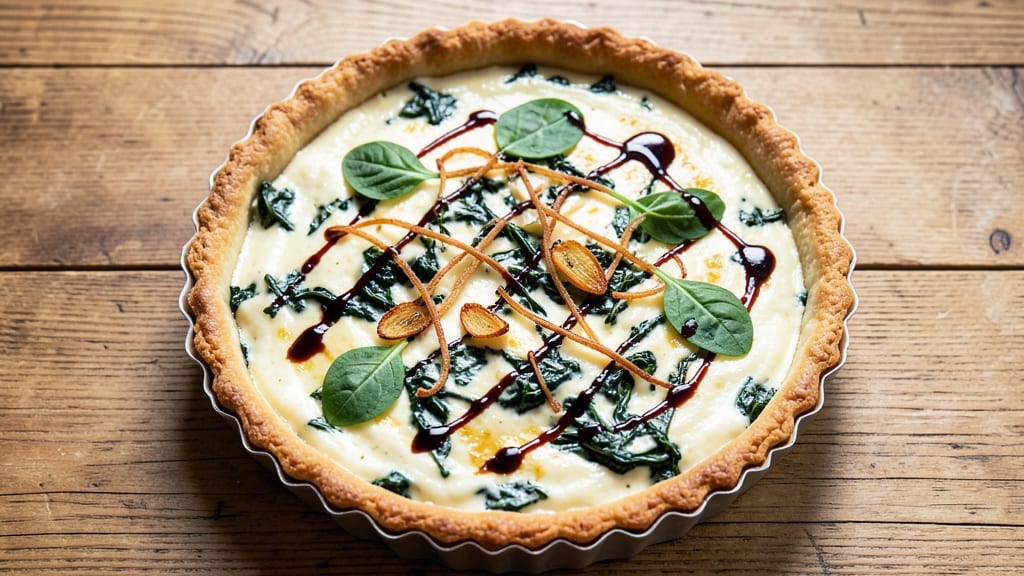
This spinach quiche recipe with ricotta cheese delivers the perfect balance of flaky crust and creamy, herby filling—the cheese transforms ordinary quiche into something luxurious. I developed this version after years of testing, ensuring the ricotta stays melty while the crust stays crisp at every bite.
The secret lies in proper pre-baking and a well-seasoned filling that sings with garlic and nutmeg.
Ricotta brings richness without heaviness, creating a texture that's velvety yet light—ideal for breakfast or brunch. You'll start with a classic pie crust (store-bought or homemade), then layer sautéed spinach and ricotta before pouring in the egg mixture.
Baking at 375°F for 35-40 minutes ensures a golden crust and perfectly set filling every time.
The result is a quiche with a golden, shatteringly crisp crust and a filling that's creamy, herby, and just slightly tangy from the lemon zest. Garnish with fresh chives or parsley for a pop of color, and you've got a dish that feels restaurant-worthy but requires minimal effort.
This recipe adapts easily too—add feta, mushrooms, or sun-dried tomatoes for variations.
Perfect for meal prep or serving as a brunch centerpiece, this quiche keeps well for up to 4 days. The ricotta's creaminess ensures every slice is satisfying, while the flaky crust adds that essential crunch. Let's get started—your kitchen will smell like a French bistro in no time.
Ingredients for spinach quiche recipe with ricotta cheese
Flaky crust meets velvety ricotta filling—just six ingredients transform simple pantry staples into brunch perfection.
| Ingredient | Amount | Notes |
|---|---|---|
| All-Purpose Flour 🌾 | 2 ½ cups | For pie crust, sifted |
| Unsalted Butter 🧈 | 1 cup | Cold, cubed for crust |
| Ice Water 💧 | ½ cup | For pie crust |
| Salt 🧂 | ½ tsp | Fine sea salt |
| Large Eggs 🥚 | 1 whole | For pie crust |
| Fresh Baby Spinach 🌿 | 5 oz | Wilted and drained |
| Ricotta Cheese 🧀 | 15 oz | Whole-milk preferred |
| Large Eggs 🥚 | 4 whole | Room temperature |
| Heavy Cream 🥛 | ½ cup | Full-fat for richness |
| Whole Milk 🥛 | ¼ cup | For creaminess |
| Garlic Cloves 🧄 | 2 cloves | Minced for flavor |
| Ground Nutmeg 🌿 | ¼ tsp | Freshly grated |
| Lemon Zest 🍋 | 1 tbsp | Brightens filling |
| Salt 🧂 | ½ tsp | Adjust to taste |
| Fresh Chives 🌿 | ¼ cup | Chopped for garnish |
The pie crust is where magic happens. Store-bought crusts work, but homemade delivers that shatteringly crisp texture—use Pillsbury Classic if short on time, but for the real deal, King Arthur Flour all-purpose is your best bet. Cold butter is non-negotiable; cut it into pea-sized pieces and work quickly to avoid melting. The ricotta? Whole-milk from Trader Joe's has the best texture, but any whole-milk ricotta will do. Avoid part-skim—it’s lighter but lacks that luxurious creaminess. For the spinach, baby spinach is ideal—wilt it thoroughly to remove excess moisture, or your quiche will turn soggy.
No ricotta? Cottage cheese blended until smooth works in a pinch, though it’s slightly grainier. Short on heavy cream? Full-fat Greek yogurt thinned with milk adds tang and body. The nutmeg is key—freshly grated (not pre-ground) makes all the difference. No zest? 1 tsp lemon juice will give brightness, though zest adds that restaurant-quality aroma. For the crust, if you’re using store-bought, brush it with 1 tbsp melted butter before adding filling—trust me, it’s worth the extra minute.
Assemble the quiche morning-of for peak freshness, but the filling can be prepped 1 day ahead—store in the fridge and pour into the crust just before baking. The crust stays crisp for 2 days at room temperature, wrapped tightly, but the filling’s best within 4 days. Freeze portions of filling (without crust) for 3 months350°F for 10 minutes—the crust stays crispy!
Why You'll Love This Recipe
- No-Fuss Crust: The butter crust comes together with just three ingredients—flour, butter, and ice water. Honestly, it’s more like pressing together cold butter and flour until it crumbles, then shaping it fast. No rolling pin required, and it holds up like a dream.
- Ricotta Magic: That creamy ricotta folds into the eggs like a secret weapon—richer than a plain quiche but still light. I’ll be real: the first time I added it, I thought, "Why didn’t I do this sooner?" The spinach soaks up the tangy goodness without turning mushy.
- Weeknight to Brunch: Slice it for a quick lunch, serve it warm for breakfast, or take a piece to a potluck—no one will guess it’s not from a bakery. Between us, my husband’s coworkers keep asking for the recipe after tasting a slice at my desk.
- Leftovers That Don’t Suck: This quiche actually improves the next day. The crust stays crisp, the filling sets just right, and I’ve reheated slices straight from the fridge for a lazy afternoon meal. Plus, it’s cheaper than takeout and way healthier. Win-win.
Step-by-step instructions for spinach ricotta quiche
Here's how to create a golden, flaky crust with a rich, herby filling that melts in your mouth.
Prepare the Perfect Pie Crust
In a large bowl, combine the 2.5 cups all-purpose flour and 0.5 teaspoon salt. Cut in the 1 cup cold, cubed unsalted butter using a pastry cutter or your fingers until the mixture resembles coarse crumbs with pea-sized butter pieces. This texture is crucial—it ensures flaky layers when baked.
Gradually add the 0.5 cup ice water, 1 tablespoon at a time, mixing gently with a fork until the dough just comes together. Avoid overmixing; the dough should hold its shape when pressed but still feel slightly crumbly. Shape into a disk, wrap in plastic, and refrigerate for at least 1 hour (or up to 2 days). Cold dough prevents shrinking and ensures better handling.
Roll and Blind-Bake the Crust
On a lightly floured surface, roll the chilled dough into a 12-inch circle, about ⅛-inch thick. Transfer to a 9-inch pie dish, gently pressing the edges to create a slight rim. Trim any excess dough, then prick the bottom all over with a fork to prevent puffing. Line with parchment paper, fill with pie weights or dried beans, and bake at 375°F for 15 minutes. Remove the weights and bake for 5-7 more minutes until the edges are just beginning to golden. This pre-baking step prevents a soggy bottom.
Here's the thing—don't skip the blind-baking. The crust needs this head start to support the filling without becoming soggy. If the edges brown too quickly, tent with foil to protect them while the center finishes baking.
Prepare the Spinach-Ricotta Filling
In a large skillet over medium heat, wilt the 5 ounces fresh baby spinach with a pinch of salt for 2-3 minutes until just tender. Drain well in a colander, pressing out excess moisture with a clean kitchen towel. Wet spinach makes the filling watery, and we want a silky, creamy texture.
In a separate bowl, whisk together the 4 whole large eggs, 0.5 cup heavy cream, 0.25 cup whole milk, 1 tablespoon lemon zest, 0.25 teaspoon ground nutmeg, and 0.5 teaspoon salt. Gently fold in the 15 ounces ricotta cheese and the wilted spinach until just combined. The mixture should be smooth but still hold its shape when dropped from a spoon—this ensures it sets properly in the oven. Stir in the 2 minced garlic cloves and 0.25 cup chopped fresh chives, reserving some for garnish.
Assemble and Bake the Quiche
Pour the filling into the pre-baked crust, spreading it evenly to the edges. The filling should come about ¾ of the way up the sides—this prevents overflow while allowing the top to brown beautifully. Bake at 350°F for 40-45 minutes, until the center is just set (it should still have a slight wobble) and the top is golden brown. If the edges brown too quickly, cover them loosely with foil after 20 minutes to protect them.
I know it's tempting to bake until the center looks completely firm, but quiche continues cooking as it cools. The ideal doneness is when the center is barely set—this guarantees a creamy, not rubbery, texture. Let the quiche rest for 10 minutes before slicing; this allows the filling to fully set and makes serving easier.
Garnish and Serve
Top the quiche with the reserved 0.25 cup chopped fresh chives and let it rest for an additional 5 minutes before slicing into 6 equal wedges. The chives add a fresh, herby brightness that cuts through the richness of the ricotta and spinach. Serve warm or at room temperature—this quiche tastes just as good the next day, if there are any leftovers (and there won't be).
Each bite should deliver that perfect combination of flaky crust, creamy ricotta, and vibrant spinach. The lemon zest and nutmeg add subtle warmth, while the chives provide a bright finish. Trust the process, and you'll have a quiche that's restaurant-quality without the fuss.
Pro Tips For Making Spinach Quiche Recipe With Ricotta Cheese
- Chill the Dough Ball: Roll out that cold butter-and-flour disk straight from the fridge—it’s the only way to guarantee a flaky crust. I used to let it sit on the counter, and the butter would melt into a greasy mess before I even got to the pie dish. Keep it wrapped in plastic and press it into the pan gently—no need to force it.
- Salt the Ricotta: Ricotta tastes bland on its own, so season it before mixing it with eggs and spinach. A teaspoon of salt and a few grinds of black pepper per cup of ricotta make a real difference—trust me, you’ll taste it in every bite. (And skip the pre-shredded cheese; fresh ricotta is smoother and less watery.)
- Pre-Cook the Spinach: Wilt the spinach thoroughly before adding it to the ricotta mixture—this prevents a soggy quiche. A minute in a hot pan with a pinch of salt and garlic (if you like) does the trick. Drain it well, squeeze out excess water, and let it cool completely. Cold spinach mixes better and won’t turn your filling into a watery sludge.
- Bake Until Set: The quiche is done when the center is just slightly jiggly, not wobbly. I learned this the hard way—overbaking turns the ricotta rubbery, while underbaking leaves it raw. Start checking at 30 minutes (for a 9-inch pie), then give it 5 more minutes if the edges are golden but the middle’s still shaky. A toothpick should come out clean or with one moist crumb.
Pro cooking tips for this recipe
Prevent Soggy Crust
Blind-bake your crust for 15-20 minutes before adding filling—this is non-negotiable. I’ve ruined countless quiches by skipping this step, and the soggy bottom is a heartbreaker. Use pie weights or dried beans to keep the crust flat while pre-baking.
For extra insurance, brush the baked crust with 1 tablespoon melted butter before adding filling. This creates a moisture barrier that keeps the crust crisp. 🌡️
Ricotta Texture Tips
Ricotta’s texture makes or breaks your quiche. Always use whole-milk ricotta—it’s creamier and less likely to curdle. Before mixing, drain any excess liquid from the ricotta by pressing it through a fine-mesh sieve.
For a smoother filling, blend the ricotta with 1 tablespoon of the egg mixture before folding in everything else. This ensures a velvety consistency without lumps.
Spinach Prep Matters
Wilt your spinach thoroughly—it should be dry enough to squeeze when pressed in a towel. I’ve seen recipes skip this, and the result is a watery, unappetizing filling. For extra flavor, sauté the spinach with 1 minced garlic clove and a pinch of salt before draining.
This adds depth that raw spinach can’t match. If using frozen spinach, thaw and drain it completely, then pat it dry with paper towels.
Egg Mixture Secrets
Whisk your eggs and dairy until just combined—overmixing incorporates too much air, causing the filling to puff and crack during baking. For a richer flavor, replace 2 tablespoons of milk with 2 tablespoons heavy cream.
The nutmeg is crucial here—freshly grated (not pre-ground) adds warmth that pre-ground can’t replicate. Taste the mixture before baking—adjust salt if needed, but remember the ricotta and spinach already contribute flavor.
Baking Like a Pro
Bake at 350°F, not higher—this ensures even cooking without browning the edges too quickly. If your oven runs hot, reduce the temperature to 325°F and add 5-10 minutes to the baking time. The quiche is done when the center is just set—it should jiggle slightly like gelatin.
Resist the urge to overbake; quiche continues cooking as it cools. Let it rest for 10 minutes before slicing, or the filling will slide out of the crust.
Make-Ahead Magic
Assemble the quiche the night before, cover it tightly, and refrigerate. Bake straight from the fridge—no need to bring it to room temperature. The filling will be slightly cooler, so add 5 minutes to your baking time.
For leftovers, reheat slices at 350°F for 10 minutes to restore crispness. The crust stays perfect for 2 days at room temperature, while the filling remains fresh for 4 days in the fridge.
Nutrition facts
Frequently asked questions
Can I use cottage cheese instead of ricotta?
Yes, but with a few adjustments! Cottage cheese works best when blended until completely smooth to avoid graininess. Use 16 ounces instead of ricotta, and drain it thoroughly to remove excess moisture. For extra creaminess, mix in 2 tablespoons of heavy cream before combining with the egg mixture. The texture will be slightly different but still delicious.
How do I make this quiche without a pie crust?
For a crustless version, simply pour the filling into a 9-inch oven-safe skillet or ceramic dish and bake at 350°F for 30-35 minutes, until set. The texture will be more like a savory custard, but the ricotta and spinach flavors still shine. This works especially well for meal prep—just portion into individual ramekins before baking.
Why did my quiche turn out rubbery?
Overbaking is the most common cause—quiche continues cooking as it cools, so aim for a center that's just barely set (like gelatin). Another culprit? Overmixing the egg mixture or using too much spinach (which releases moisture). For next time, pre-bake the crust thoroughly, use whole-milk ricotta, and let the quiche rest 10 minutes before slicing to allow the filling to fully set.
Can I add other vegetables to this recipe?
Sautéed mushrooms, sun-dried tomatoes, or roasted red peppers work beautifully. For best results, pre-cook any additions to remove excess moisture—think 5 minutes for mushrooms or 10 minutes for peppers. Keep the total filling volume similar to the original recipe to maintain proper texture. Caramelized onions also add wonderful depth when cooked until soft and sweet.
How should I store and reheat leftovers?
Store in an airtight container in the fridge for up to 4 days. For reheating, wrap individual slices in foil and warm at 350°F for 10 minutes—this keeps the crust crisp while gently warming the filling. Microwaving works in a pinch (30 seconds), but it can make the crust soggy. The quiche also freezes well—wrap tightly and bake from frozen at 350°F for 50-55 minutes.