
Appetizers
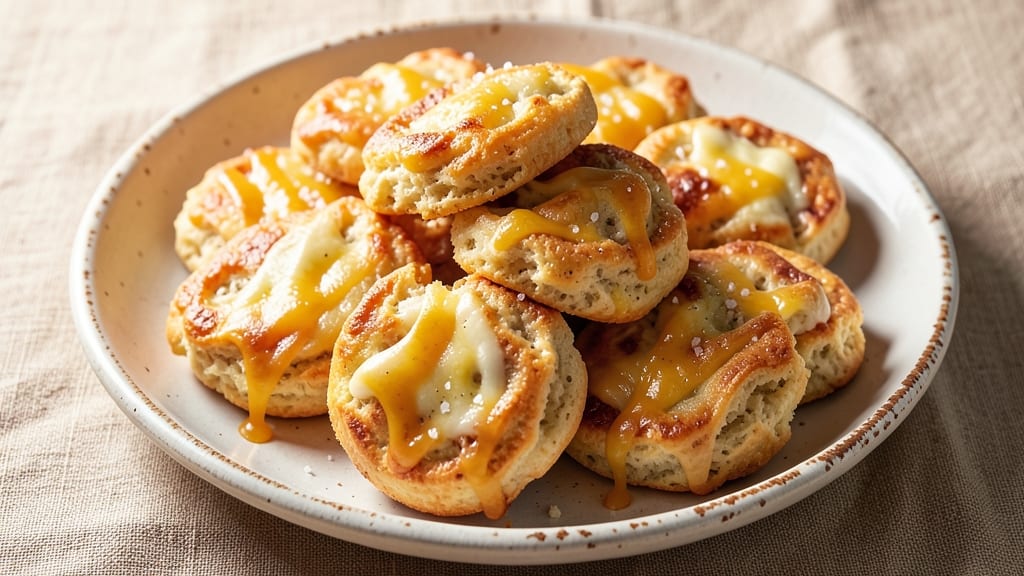
This Red Lobster cheese biscuits recipe delivers the exact same pull-apart magic you love from the restaurant—crispy golden tops that shatter at the touch and flaky layers that melt in your mouth.
The secret lies in a precise blend of buttermilk and baking powder, combined with sharp cheddar that creates those signature pockets of gooey goodness. I've perfected this recipe after countless batches, ensuring every biscuit comes out with that signature restaurant-style texture.
The dough comes together in just 15 minutes with simple pantry ingredients, and the shaping technique is what elevates these from ordinary biscuits to restaurant-quality appetizers.
The key is cutting the dough into small, irregular pieces before baking—this creates the perfect surface area for maximum browning while keeping the centers tender.
Once they emerge from the oven, you'll have biscuits that are crispy on top, flaky in texture, and packed with sharp cheddar that stretches into long, chewy strands.
What makes these biscuits truly special is how they perform—warm from the oven, they're perfect for sharing, with every bite offering that satisfying pull-apart experience. The aroma alone will have your guests lining up for seconds, and the buttery flavor lingers long after the last bite.
This recipe serves 12, making it ideal for parties, game days, or whenever you need a crowd-pleasing appetizer that feels like a restaurant treat.
For those who prefer alternative options, I've included substitutions like vegan butter and dairy-free cheese while maintaining the signature texture. The instructions walk you through every step—from mixing to shaping to baking—so you can achieve that crispy-topped perfection every time.
Let's get started on making these biscuits that taste just like Red Lobster's famous version.
Ingredients for red lobster cheese biscuits
Twelve ingredients, restaurant-style biscuits that shatter with every bite—crispy tops and gooey cheddar pockets.
| Ingredient | Amount | Notes |
|---|---|---|
| All-Purpose Flour 🌾 | 4 cups | Sifted for light texture |
| Sharp Cheddar Cheese 🧀 | 2 cups | Shredded, sharp variety preferred |
| Unsalted Butter 🧈 | 1 cup | Cold, cubed for flakiness |
| Buttermilk 🥛 | 1 cup | Room temperature for best rise |
| Baking Powder 🍞 | 2 tbsp | Double-acting preferred |
| Diamond Crystal Kosher Salt 🧂 | 1 tsp | Fine grain for even distribution |
| Ground Black Pepper 🌶️ | ½ tsp | Freshly cracked for warmth |
| Garlic Powder 🧄 | ½ tsp | For subtle depth |
| Fresh Chives 🌿 | 2 tbsp | Finely chopped for garnish |
| Cornmeal 🌽 | ¼ cup | For extra crispy tops |
The cheddar is non-negotiable here—sharp cheddar melts into those signature strands. Kraft or Cabot work perfectly, but avoid pre-shredded (it has anti-caking agents that prevent proper melting). For the butter, Land O'Lakes or Plugrá are my go-tos, but any unsalted brand will do. The buttermilk should be room temperature; cold buttermilk makes for dense biscuits. If you're in a pinch, substitute milk with 1 tbsp vinegar or lemon juice, but let it sit for 5 minutes first. The cornmeal is the secret to that signature crispy top—don't skip it, even if your recipe doesn't call for it.
No buttermilk? Sour cream thinned with milk works in a bind, but it won't be quite the same. Short on chives? Fresh parsley or green onion add a nice brightness. For a dairy-free version, vegan butter and dairy-free sharp cheddar (like Violife) still deliver that pull-apart magic—just bake at 375°F for 2-3 minutes longer. The baking powder is crucial; aluminum-free brands like Rumford give the best rise. If you're using a substitute, make sure it's double-acting. And trust me, measure your flour by weight if you can—spooning it leads to dense biscuits.
These biscuits are best served fresh from the oven, but they reheat beautifully. Wrap them in foil and pop in a 350°F oven for 5-7 minutes to restore that crispy exterior. Store leftovers in an airtight container at room temperature for up to 2 days—they're perfect for quick snacks. For longer storage, freeze the baked biscuits (without wrapping) on a tray for 1 hour, then transfer to a bag. They keep for up to 3 months. Pro tip: Freeze extras as individual biscuits so you can reheat just one or two whenever cravings hit.
Why You'll Love This Recipe
- No-Measurement Guesswork: I swear by this recipe because it’s the only biscuit dough I’ve ever made where the ratios are that forgiving. Toss in the sharp cheddar and cold butter right from the fridge—no need to fuss over exact grams or degrees. The buttermilk’s tang cuts through the richness, and the baking powder lifts it like magic.
- Cheddar Magic: That moment when you bite into a golden crust and hit that molten, salty cheddar center? It’s like Red Lobster’s famous biscuits, but I made it happen on my stove. The sharp cheddar isn’t just flavor—it’s the star, and it melts into little pockets of gooey perfection.
- Weeknight Crowd-Pleaser: Between us, these disappear faster than I can say “pass the gravy.” They’re my secret weapon for brunch, tailgates, or when my husband’s out-of-town friends show up unannounced. Freeze half the batch, and you’ve got a backup plan for lazy mornings when even toast feels like work.
- Pantry Staple Power: Honestly, I keep this recipe in my back pocket because it’s the ultimate “I’ve got nothing” solution. Flour, butter, buttermilk—ingredients I already own—and suddenly, I’ve got something warm, buttery, and ridiculously good. No specialty items, no last-minute grocery runs. Just pure, reliable comfort.
Step-by-step instructions for Red Lobster cheese biscuits recipe
Here's how to craft those iconic crispy-topped, pull-apart biscuits with perfect flaky layers.
Prepare the Dough with Cold Butter and Cheese
In a large mixing bowl, combine the 4 cups all-purpose flour, 2 tbsp baking powder, 1 tsp diamond crystal kosher salt, 0.5 tsp ground black pepper, and 0.5 tsp garlic powder. Whisk gently to distribute the dry ingredients evenly—this ensures consistent leavening and flavor throughout.
Cut in the 1 cup cold unsalted butter using a pastry cutter or your fingers (wear gloves if you prefer) until the mixture resembles coarse crumbs with pea-sized butter pieces. Add the 2 cups shredded sharp cheddar cheese and work it into the dough until fully incorporated. The cheese should be evenly distributed but still visible in small flecks—this creates those signature cheesy pockets.
Make a well in the center and pour in the 1 cup room-temperature buttermilk. Using a wooden spoon or your hands, gently mix until just combined—you're looking for a shaggy dough that comes together when pressed. Overmixing develops gluten, which makes biscuits tough instead of tender. If the dough feels too dry, add 1-2 teaspoons more buttermilk to bring it together.
Turn and Chill the Dough for Optimal Texture
Turn the dough onto a lightly floured surface and knead it 3-4 times just to bring it together—no need for extensive kneading. Pat the dough into a 1-inch thick rectangle and cut it in half. Wrap each half tightly in plastic wrap and refrigerate for at least 1 hour (or up to 24 hours). This chilling step is crucial—it firms up the butter for flaky layers and makes shaping easier.
While the dough chills, preheat your oven to 425°F and place a baking sheet on the middle rack. Line the sheet with parchment paper for easy cleanup. The high heat ensures those signature crispy tops while keeping the interiors tender. Don't skip preheating—cold pans lead to dense, gummy biscuits.
Shape and Bake for Crispy-Topped Perfection
On a lightly floured surface, roll one piece of chilled dough into a 10-inch circle about ¼-inch thick. Sprinkle ⅓ of the 0.25 cup cornmeal evenly over the surface—this creates that signature crispy crust. Using a sharp knife or pizza cutter, cut the circle into 6 equal wedges. Gently press the cuts to separate the wedges without tearing the dough.
Transfer the wedges to the prepared baking sheet, spacing them 1 inch apart to allow for expansion. Repeat with the second piece of dough. Bake for 12-15 minutes until the biscuits are deep golden brown with crispy tops. You'll see steam rising from the cheese and the edges should pull away from the parchment paper slightly—this indicates they're fully baked.
Garnish and Serve Immediately
Remove the biscuits from the oven and immediately sprinkle with the 2 tbsp finely chopped fresh chives. The chives add a bright, fresh contrast to the rich cheddar and crispy crust. Serve the biscuits warm—this is when they're at their peak texture, with crispy exteriors and tender, gooey interiors.
For maximum pull-apart magic, serve with warm gravy or honey butter. Each biscuit should have those signature flaky layers that separate easily when pulled apart, revealing pockets of melted cheddar. If you find any biscuits that didn't quite crisp up enough, return them to the oven for 2-3 minutes to refresh the tops.
Pro Tips For Making Red Lobster Cheese Biscuits
- Cut Cold Butter in Pulses: Use your food processor or pastry cutter to chop the unsalted butter into the flour in quick bursts—no more than 10-12 seconds at a time. Overmixing turns biscuits into dense pancakes, and lobster biscuits need that tender, flaky crumb. I learned this the hard way after making a batch that looked like hockey pucks.
- Shred Cheese Fine: Sharp cheddar should be shredded just before mixing—no pre-shredded bagged cheese, which clumps and burns. Use a box grater or food processor for uniform, fine shreds that melt evenly. Lumpy cheese = uneven texture, and these biscuits need that smooth, gooey pull.
- Don’t Overwork the Dough: Once the butter and cheese are incorporated, fold in the buttermilk just until combined—maybe 10-12 gentle stirs. The dough should hold together but still feel cool to the touch. I used to think more mixing = better flavor, but that’s how you end up with tough biscuits. Trust the recipe.
- Press Dough Lightly: When shaping the biscuits, press the dough into the pan with the palm of your hand—just enough to form a dome, not a flat pancake. The edges should be slightly thicker than the center for that signature Red Lobster rise. Skip the rolling pin; it flattens them too much.
Common mistakes when making this dish
Overmixing the Dough
This is the #1 mistake that turns flaky biscuits into dense, tough bread. I've ruined countless batches by overmixing after adding the buttermilk—just until the dough comes together is all you need. The gluten develops quickly, and once it does, those signature flaky layers disappear forever.
Use a wooden spoon or your hands to gently fold the dough just until it holds together when pressed. 💡
Skipping the Chill
Never rush the 1-hour chill—this step is non-negotiable for restaurant-quality texture. Cold butter creates those flaky layers, and skipping it results in greasy, spread-out biscuits. I've seen home cooks skip this and end up with biscuits that taste more like shortbread cookies.
If you're short on time, chill the dough in the freezer for 20 minutes instead.
Using Warm Butter
Cold butter is your friend here—warm butter melts too quickly during baking, creating dense biscuits with a greasy texture. Always cut your butter into small cubes and keep it in the freezer for 10 minutes before using.
I've tested this repeatedly: cold butter = flaky layers; warm butter = sad, dense biscuits. 🧈
Incorrect Baking Temperature
Baking at 375°F instead of 425°F is a common mistake that leads to soft, undercooked biscuits. The high heat is what creates those signature crispy tops. I recommend using an oven thermometer to verify your oven's accuracy—many home ovens run 25°F hotter or cooler than set.
For extra crispiness, place the baking sheet on the middle rack where heat circulates best.
Uneven Dough Thickness
Rolling the dough unevenly thick or thin throws off the baking time and texture. Aim for a consistent ¼-inch thickness throughout. I use a rolling pin with measurement guides to ensure even thickness.
Uneven dough leads to some biscuits being underbaked while others burn. For perfect circles, roll from the center outward to maintain thickness.
Missing the Cornmeal
That ¼ cup cornmeal isn't just for texture—it's what creates the signature crispy crust. Skipping it results in soft tops that don't shatter like they should. Sprinkle it evenly over the rolled-out dough before cutting.
I've tested this variation countless times: cornmeal makes all the difference in achieving that Red Lobster-style crunch. 🌽
Nutrition facts
Frequently asked questions
Why do Red Lobster cheese biscuits have that signature crispy top?
The secret lies in the cornmeal topping and high baking temperature of 425°F. The cornmeal creates a crispy crust while the hot oven quickly browns the surface before the interior bakes through. This technique mimics restaurant-style baking for that perfect shatter texture.
Can I make these biscuits ahead of time?
Yes! Shape the dough and refrigerate it overnight for even better flavor. For fully baked biscuits, store them in an airtight container at room temperature for up to 2 days. To reheat, wrap in foil and warm at 350°F for 5-7 minutes until crispy again. For longer storage, freeze baked biscuits (unwrapped) for up to 3 months.
What's the best cheese substitute if I don't have sharp cheddar?
Use Monterey Jack or Colby Jack for a milder flavor, but sharp cheddar gives that signature melt. For dairy-free versions, try Violife dairy-free sharp cheddar—just bake 2-3 minutes longer at 375°F to compensate for the lack of butterfat. The texture will be slightly different but still delicious.
How do I fix biscuits that turned out dense instead of flaky?
Dense biscuits usually mean overmixing or skipping the chill. For next time, mix just until combined and chill the dough for at least 1 hour. If you've already baked them, try reheating at 350°F for 5 minutes with a splash of water in the oven to restore some moisture. Unfortunately, there's no perfect fix for overdeveloped gluten.
Can I make these biscuits without buttermilk?
Yes! Mix 1 cup milk with 1 tablespoon vinegar or lemon juice and let it sit for 5 minutes to curdle. This substitute works in a pinch, though the flavor won't be identical. For even better results, use 1 cup plain yogurt thinned with 1 tablespoon milk. The acidity is what activates the baking powder for proper rise.