
Appetizers
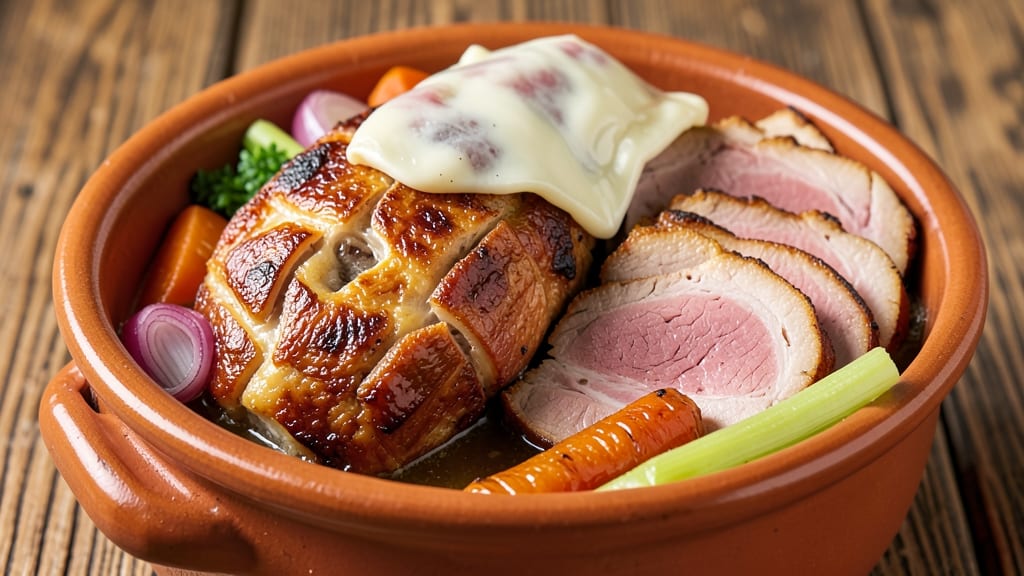
This old-fashioned head cheese recipe transports you to Southern kitchens where pork fat rendered into golden clarity and meat set into delicate jelly became a centerpiece. The technique—simmering pork head until the broth clarifies, then blending it with gelatin—has been passed down for generations, transforming humble ingredients into something elegant.
What makes this dish special is how it balances rustic tradition with precision: the fat must render perfectly, the broth must clear completely, and the gelatin must set just right to create that signature wobble.
The process begins with rendering pork fat in a slow, controlled manner until it achieves that prized golden transparency, then clarifying the broth by skimming off impurities.
Once the meat is shredded and combined with the clarified broth and gelatin, the mixture is poured into a mold and chilled until it achieves its signature firm yet tender texture.
This isn’t just a dish—it’s a labor of love that rewards patience with a result that’s both satisfying and impressive.
When properly made, head cheese delivers a rich, gelatinous texture that’s neither too firm nor too soft, with each bite offering tender pork and savory broth in perfect harmony. The fat, rendered to clarity, adds depth, while the gelatin gives it that distinctive wobble that makes it unforgettable.
Serve it sliced thin with crackers, or as part of a charcuterie board alongside pickles and mustard for a true Southern experience.
Though it may sound intimidating, the method is straightforward once you understand the key steps: proper fat rendering, broth clarification, and precise gelatin setting. This recipe preserves an old-world technique while making it accessible for modern kitchens. Let’s bring this classic back to life.
Ingredients for old fashioned head cheese
Precision-crafted Southern ingredients transform humble pork into elegant head cheese with golden clarity and signature wobble.
| Ingredient | Amount | Notes |
|---|---|---|
| Pork Head 🐖 | 1 whole | Fresh, cleaned, head only |
| Unsalted Pork Fat Back 🥓 | 1 ½ lb | Leaf lard preferred for clarity |
| Pork Shoulder 🍖 | 2 lb | Boneless, cut into chunks |
| Yellow Onions 🧅 | 2 whole | Medium, peeled, quartered |
| Carrots 🥕 | 3 whole | Medium, peeled, chopped |
| Celery Stalks 🥬 | 3 whole | Fresh, trimmed, chopped |
| Bay Leaves 🌿 | 2 whole | Dried, standard size |
| Black Peppercorns 🌶️ | 1 tbsp | Coarsely crushed |
| Kosher Salt 🧂 | 1 ½ tsp | Diamond Crystal preferred |
| Unflavored Gelatin 🍬 | 1 oz | Powdered, high bloom |
| Apple Cider Vinegar 🍎 | 1 tbsp | For broth clarification |
| Cold Water 💧 | 2 cups | For gelatin activation |
| Heavy Cream 🥛 | ½ cup | Full-fat, optional enrichment |
The pork head and fat back are the foundation—look for fresh, high-quality cuts from a trusted butcher. Smithfield or local Southern processors often carry head meat, or ask your butcher to save it for you. The fat should render to a golden transparency, not brown—this requires patience and low heat. For gelatin, Great Lakes or Knox brand are reliable choices, offering consistent bloom strength. The pork shoulder should be well-marbled; trim excess fat to avoid greasiness in the final product. Fresh herbs like thyme or parsley can be added post-cooking for brightness, but traditionalists rely on the classic aromatics of bay leaf and peppercorn.
Substitutions must preserve the dish's integrity. No pork head? Pork neck bones or shoulder chunks work, but render the fat separately to avoid cloudiness. For gelatin, agar-agar at half the weight creates a firmer set but lacks the same mouthfeel. The vinegar is critical for clarifying the broth—substitute with white wine vinegar in equal measure. If using pre-rendered lard, ensure it's leaf fat for optimal clarity. The heavy cream, while optional, adds richness; sour cream or crème fraîche can replace it at a 1:1 ratio. For a vegetarian adaptation, mushroom broth and vegetable gelatin mimic the texture, though the flavor will differ significantly.
Rendered fat and clarified broth can be refrigerated separately for up to 5 days before assembly. Once combined with gelatin, the mixture must be poured immediately into a greased mold or loaf pan—glass or ceramic works best. Chill for 4-6 hours until firm, then invert to unmold. Properly stored in the fridge, head cheese keeps for 1 week; for longer storage, slice and freeze portions for up to 3 months. The texture improves with age, as the gelatin continues to set. Serve at room temperature for optimal texture, accompanied by toasted rye crackers or cornichons to highlight its savory depth.
Why You'll Love This Recipe
- One-Pot Wonder: I swear by this—just toss the pork head, fat back, and shoulder into a pot with onions and carrots, then let it simmer. No chopping, no fuss, and the fat renders down so effortlessly you’ll wonder why you ever braised anything else.
- Rich & Deep Umami: Between us, the pork head alone makes this dish. That slow-cooked collagen turns gelatinous, wrapping every bite in a meaty, almost custardy richness—like a cross between a terrine and a stew. The onions caramelize right in the pot, adding sweetness that balances the savory fat.
- Game-Day Crowd Pleaser: I’ve made this for tailgates, holiday dinners, and even a last-minute potluck. Serve it sliced cold with crusty bread, or warm it up with mustard and pickles. It’s the kind of dish that disappears fast—no one will believe it’s just pork and veggies.
- Pantry Goldmine: Honestly, this recipe turns scraps into treasure. Use the fat back for frying later, the shoulder for sandwiches, and the head for broth. Plus, it keeps for weeks in the fridge, so you’re always covered—whether it’s a lazy Sunday or a weeknight emergency. Budget-friendly doesn’t get better than this.
Step-by-step instructions for Southern-style head cheese
Master this traditional technique for creating a rich, jellied pork masterpiece with perfect texture and depth of flavor.
Prepare the Meat and Aromatics
Begin by cleaning the pork head thoroughly, removing any remaining hair and trimming excess fat. Cut the head into manageable pieces, ensuring you keep the tongue and cheeks intact if desired. In a large stockpot, combine the pork head, 2 lb pork shoulder, and 1.5 lb unsalted pork fat back. Add the 2 whole yellow onions, 3 whole carrots, and 3 whole celery stalks, all chopped into large chunks for even cooking.
Add the 2 whole bay leaves and 1 tbsp coarsely crushed black peppercorns to the pot. The aromatics will infuse the broth with deep, savory notes. Sprinkle the 1.5 tsp kosher salt evenly over the meat. This initial seasoning ensures proper flavor development throughout the long cooking process. You'll notice the mixture will look raw and unassuming, but this is where the magic begins.
Render the Fat and Simmer the Broth
Place the stockpot over medium-high heat and bring the contents to a boil. Once boiling vigorously, reduce the heat to maintain a gentle simmer. Cover partially and cook for 4-5 hours, skimming any foam or impurities that rise to the surface with a fine-mesh skimmer. This step is crucial for developing the rich, gelatinous quality of the head cheese.
After the initial 4 hours, check the meat for tenderness. The pork should be falling off the bone, and the broth should have reduced significantly but remain ample. If the broth hasn't reduced enough, continue simmering uncovered for another 30-60 minutes. The goal is to create a concentrated, flavorful liquid that will properly set the gelatin later. The aroma should be intensely meaty with hints of caramelized vegetables.
Strain and Clarify the Broth
Using a fine-mesh strainer or cheesecloth, carefully strain the broth into a large bowl or pot. Discard the solids, as they've given up all their flavor. Return the strained broth to the stockpot and add the 1 tbsp apple cider vinegar. This acidification helps clarify the broth by coagulating proteins that would otherwise make the finished product cloudy.
Bring the broth to a gentle simmer again and let it cook uncovered for 30-45 minutes. You'll notice the surface will develop a skin as impurities rise to the top. Skim this foam periodically. The broth should reduce by about 25% and become clear with a deep amber color. This clarified broth is the foundation of your head cheese, and its quality will determine the final texture.
Prepare and Bloom the Gelatin
While the broth simmers, prepare the gelatin. Sprinkle the 1 oz unflavored gelatin evenly over the 2 cups cold water in a heatproof bowl. Let it sit for 5-10 minutes until the gelatin forms a gel-like consistency. This activation step is critical—gelatin only works when properly hydrated. Once bloomed, place the bowl over a pot of barely simmering water (double boiler method) and stir gently until completely dissolved.
Remove the bowl from the heat and let the gelatin solution cool slightly to room temperature. This step ensures the gelatin incorporates smoothly without creating lumps in your head cheese. The solution should be clear and slightly thicker than water. If you notice any undissolved particles, strain it through a fine-mesh sieve before proceeding.
Combine and Set the Head Cheese
Return the clarified broth to the stockpot and remove it from heat. Slowly pour in the dissolved gelatin while stirring continuously with a wooden spoon. The mixture should thicken noticeably as the gelatin activates. Stir in the 0.5 cup heavy cream for added richness and a velvety texture. Taste and adjust seasoning if needed, though the head cheese should already be well-seasoned from the initial cooking.
Pour the mixture into a clean, greased loaf pan or mold. For a traditional presentation, you can use the pork head skin as a natural casing if you've saved it properly. Cover with plastic wrap and refrigerate for at least 8 hours, preferably overnight. The head cheese should set completely, achieving a firm yet tender gel-like consistency. When ready to serve, unmold carefully and slice into thick portions for a luxurious, meaty experience.
Pro Tips For Making Old Fashioned Head Cheese
- Trim the Fat Back Properly: Cut the unsalted pork fat back into ½-inch cubes—not slices—so it renders evenly and doesn’t clump into greasy lumps. I used to leave it in big slabs, and half the time it’d turn to mush instead of crispy bits. The cubes stay intact and add that perfect fatty texture to the head cheese.
- Parboil the Pork Head: Give the pork head a 10-minute parboil in salted water before braising—it shortens cooking time and keeps the meat from drying out. I learned this the hard way after ending up with tough, overcooked cheeks. Just don’t skip the salt in the water; it seasons the meat before it even hits the pot.
- Don’t Overcrowd the Pot: Layer the pork shoulder, head, and aromatics in a single layer at the bottom of the pot before adding liquid. Crowding steams the meat instead of browning it, and you’ll end up with bland, waterlogged head cheese. If your pot’s too small, cook in batches—yes, it’s extra work, but it’s worth it.
- Strain the Aspic Twice: After simmering the broth, strain it through a fine-mesh sieve and then a cheesecloth for crystal-clear gel. The first strain catches big bits, but the cheesecloth grabs the fine sediment that makes head cheese cloudy. I used to skip this, and my finished product always looked murky—now it’s glass-like.
Creative variations of these flavors
Southern-Style Variations
For a more robust flavor, try adding 1 tsp smoked paprika and ½ tsp cayenne pepper to the broth during simmering. This creates a smoky, slightly spicy variation that pairs beautifully with cornbread and pickled okra.
I’ve found that using applewood-smoked bacon instead of plain pork fat adds depth without overpowering the delicate texture. 🔥
Herb-Infused Twist
Swap the bay leaves for 1 tbsp fresh rosemary and 1 tbsp fresh thyme tied in cheesecloth. This herbaceous version works wonderfully with sharp cheddar crackers and a spicy mustard dip.
The herbs brighten the rich pork flavor, making it perfect for holiday gatherings. For extra elegance, garnish slices with edible flowers before serving.
Sweet and Savory Fusion
Add ½ cup apple cider to the broth during the final 30 minutes of simmering, along with 1 cinnamon stick. This sweet-savory variation balances the richness with a subtle warmth.
Serve with sliced apples and walnuts for a dessert-like appetizer. The cinnamon infuses the gelatin, creating a unique texture that surprises guests. 💫
Vegetarian Adaptation
For a vegetarian version, replace pork with mushroom stems and vegetable broth, using agar-agar (½ oz) instead of gelatin. Add soy sauce and miso paste for umami depth. While the texture won’t be identical, it delivers a satisfying plant-based alternative. Pair with marinated tofu and pickled vegetables for contrast.
Regional Twists
In Appalachian-style head cheese, add ½ cup blackberry jam to the broth for a fruity-savory balance. For a Cajun-inspired version, include 1 tsp filé powder and ½ tsp hot sauce in the final mixture.
Both variations shine when served with corn muffins and spicy remoulade. The key is adjusting seasonings to complement local flavors while maintaining the dish’s signature wobble.
Nutrition facts
Frequently asked questions
What's the secret to getting that perfect golden clarity in the rendered fat?
Patience and low heat are key! Render the fat over medium-low heat for 2-3 hours, stirring occasionally, until it reaches a golden transparency. Never rush it—high heat creates browned fat that will cloud your head cheese. Use leaf lard for the clearest results, and skim any impurities that rise to the surface during rendering.
Why did my head cheese turn out too soft instead of having that signature wobble?
This usually happens from either undercooked gelatin or insufficient chilling time. Make sure your gelatin is fully bloomed (5-10 minutes in cold water) and dissolved completely. Also, refrigerate for at least 8 hours—overnight is ideal. If it's still too soft, try adding an extra ½ oz gelatin next time.
Can I make head cheese without a pork head? What substitutes work best?
Use pork neck bones or extra pork shoulder chunks instead, but render the fat separately to avoid cloudiness. For extra richness, add 1 cup pork jowl to the broth. The texture will be slightly different but still delicious. Just ensure you have enough connective tissue to create the gelatinous quality.
How do I store and serve leftover head cheese?
Wrap slices tightly in plastic wrap and store in the fridge for up to 1 week. For longer storage, freeze portions for 3 months. Serve at room temperature with toasted rye crackers, cornichons, or on a charcuterie board. The texture actually improves after a day or two as the gelatin continues to set.
Is there a way to make head cheese less rich for a lighter version?
Yes! Reduce the pork fat back to 1 lb and replace ½ cup of the heavy cream with ½ cup low-fat yogurt. You can also use chicken or turkey broth instead of pork for a lighter base. The result will still have that signature texture but with less fat content.