
Appetizers
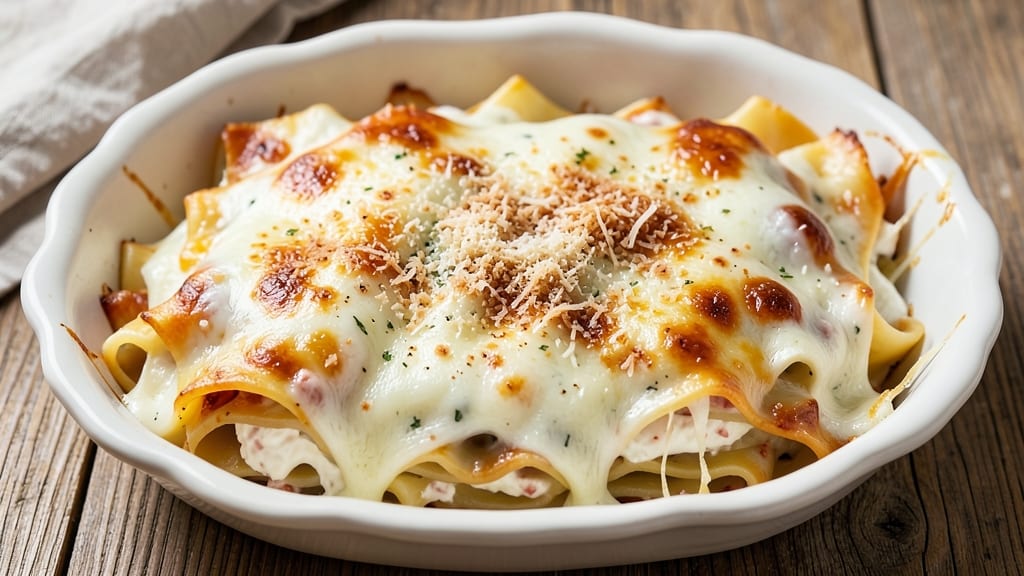
This no-boil cheese lasagna recipe delivers all the comfort and richness of traditional lasagna without the hours of boiling noodles or waiting for layers to set.
The secret lies in using oven-ready pasta and precise layering techniques that create a dish with a golden, bubbling top and creamy, melty cheese throughout—no pre-cooking required.
What sets this recipe apart is the balance of textures: tender lasagna noodles that absorb the tomato-based sauce perfectly, a velvety ricotta mixture that stays light, and a three-cheese blend that melts into a luscious, stretchy blanket.
The no-boil method actually improves the final result—noodles cook evenly in the oven while absorbing flavors, and the dish holds together beautifully when sliced.
By the time it emerges from the oven, you’ll have a lasagna with perfectly browned edges, layers that stay intact, and a cheese pull so impressive it’ll fool even the most skeptical lasagna purists.
The rich, savory aroma alone will have everyone gathering around the table, and each bite delivers that classic lasagna experience—just faster and with less effort.
This recipe works equally well for weeknight dinners or holiday gatherings, scaling easily to feed a crowd. The key is patience during assembly and baking, but the result is worth every minute. Let’s build this lasagna the right way—no boiling required.
Ingredients for no boil cheese lasagna
Twelve oven-ready noodles and five cheeses transform into lasagna perfection without boiling—just layer and bake.
| Ingredient | Amount | Notes |
|---|---|---|
| No-Boil Lasagna Noodles 🍝 | 12 sheets | Oven-ready, 9-inch size preferred |
| Ricotta Cheese 🧀 | 2 cups | Whole-milk, drained overnight |
| Large Eggs 🥚 | 2 whole | Room temperature for blending |
| Parmesan Cheese 🧀 | 1 ½ cups | Freshly grated, block preferred |
| Mozzarella Cheese 🧀 | 2 cups | Low-moisture, shredded by hand |
| Cream Cheese 🧈 | 8 oz | Full-fat, softened at room temp |
| Marinara Sauce 🍅 | 2 ½ cups | Homemade or high-quality jarred |
| Garlic Cloves 🧄 | 4 cloves | Minced, for ricotta mixture |
| Fresh Basil Leaves 🌿 | ¼ cup | Chopped, for ricotta blend |
| Diamond Crystal Kosher Salt 🧂 | 1 ½ tsp | For seasoning ricotta mixture |
| Freshly Ground Black Pepper 🌶️ | ½ tsp | For ricotta seasoning |
| Extra-Virgin Olive Oil 🫒 | 2 tbsp | For brushing lasagna layers |
| Freshly Grated Nutmeg 🌿 | ¼ tsp | For ricotta mixture depth |
The lasagna noodles are the foundation—oven-ready sheets ensure perfect texture without pre-cooking. Barilla or De Cecco brands deliver consistent results, and always check the package for 'no-boil' labeling. For the cheese blend, whole-milk ricotta creates the signature creaminess, but part-skim works in a pinch. Draining the ricotta overnight in a cheesecloth-lined strainer removes excess moisture for a lighter texture. The Parmesan should be freshly grated from a block—pre-shredded contains anti-caking agents that make the cheese grainy. Mozzarella's moisture content matters: low-moisture shreds melt cleanly without soggy layers. For the cream cheese, full-fat is non-negotiable—it adds richness that low-fat versions can't match.
No ricotta? Cottage cheese blended until smooth mimics the texture, though it lacks the same creaminess. Short on Parmesan? Pecorino Romano at a 1:1 ratio delivers a sharper flavor profile. The marinara sauce can be store-bought (look for San Marzano tomato-based brands like Rao's or Mutti), but homemade elevates the dish—simmer crushed tomatoes, garlic, and a pinch of sugar for 30 minutes. For the basil, fresh is ideal, but dried oregano at half the amount works if you're out. The nutmeg may seem optional, but it's what gives the ricotta that subtle, sophisticated depth—don't skip it. If you're scaling this for a crowd, double the ricotta mixture and use two lasagna pans for even baking.
Assembled lasagna keeps 3-4 days in the fridge, covered tightly with foil. For longer storage, freeze fully assembled (before baking) for up to 3 months—thaw overnight in the fridge before baking. The ricotta mixture can be prepped 2 days ahead and stored in an airtight container. When reheating, cover with foil for the first 20 minutes to prevent over-browning. The leftovers reheat beautifully—just add a splash of water or marinara to the dish before covering. For serving, let it rest 10 minutes before slicing to maintain those perfect layers.
Why You'll Love This Recipe
- No Boil, No Stress: I swear, the noodles stay perfectly al dente without a single boil—just layer, bake, and walk away. My kids even help stack them now (and yes, they’re still edible).
- Creamy-Rich Magic: That ricotta-egg mix? It’s like lasagna’s secret handshake—silky, tangy, and clinging to every noodle. The mozzarella on top turns golden and stretchy, while the parm dusting adds that salty crunch.
- Meal Prep MVP: Honestly, I make two trays on Sunday—one for dinner, one for lunches. The leftovers reheat like a dream (microwave or oven, no judgment), and the flavors only get better the next day.
- Budget-Friendly Feast: A single lasagna feeds six for under $15 at my grocery store. No-boil noodles cut prep time, and ricotta stretches farther than you’d think. My wallet and my family thank me every time.
Step-by-step instructions for no-boil cheese lasagna
A perfectly layered lasagna without the wait—this method delivers restaurant-quality results in under an hour.
Prepare the Ricotta Cheese Mixture
In a large mixing bowl, combine the 2 cups ricotta cheese, 2 whole large eggs, 1.5 cups freshly grated parmesan cheese, 8 oz softened cream cheese, 0.25 cup chopped fresh basil leaves, 1.5 tsp diamond crystal kosher salt, 0.5 tsp freshly ground black pepper, and 0.25 tsp freshly grated nutmeg. The mixture should be thick but spreadable—if it's too stiff, add 1 tablespoon of whole milk at a time until it reaches a smooth, pipeable consistency.
Using a rubber spatula, fold the ingredients together until fully incorporated. The texture should be homogeneous, with no visible lumps of cream cheese or parmesan. This blend forms the creamy, flavorful layer between the noodles, so take your time to ensure it's perfectly smooth. Cover the bowl with plastic wrap and set aside while you prepare the remaining components.
Assemble the Lasagna Layers
Preheat your oven to 375°F and lightly grease a 9x13-inch baking dish with 1 tablespoon of the 2 tbsp extra-virgin olive oil. Spread 1 cup of the marinara sauce evenly over the bottom of the dish, creating a thin, even layer that will prevent the noodles from sticking.
Layer the 12 sheets of no-boil lasagna noodles horizontally, slightly overlapping them if needed to cover the bottom completely. This first layer ensures the noodles stay in place during baking. Spread half of the ricotta cheese mixture evenly over the noodles, followed by 1 cup of the remaining marinara sauce. Top this with 1 cup of the mozzarella cheese, dividing it evenly across the surface. Repeat the process—noodles, remaining ricotta mixture, another 1 cup marinara sauce, and the final 1 cup mozzarella cheese—ending with the cheese on top.
Bake to Golden Perfection
Cover the baking dish tightly with aluminum foil and bake for 30 minutes. This initial covered baking time allows the lasagna to set and prevents the top from drying out. After 30 minutes, remove the foil and continue baking for an additional 10-15 minutes until the top is golden brown and the edges are bubbling. The cheese should be fully melted and slightly crispy on top.
To check for doneness, insert a knife into the center of the lasagna. It should come out clean with no resistance, indicating the noodles are cooked through and the filling is heated evenly. If the top isn't brown enough, return it to the oven for 2-3 additional minutes until it reaches the desired color. The residual heat from the oven will continue cooking the lasagna slightly after removal.
Rest and Serve
Remove the lasagna from the oven and let it rest for 10-15 minutes before slicing. This resting period allows the layers to set and the juices to redistribute, ensuring each slice is rich and cohesive. Tent the dish loosely with foil if you're serving it immediately to keep it warm.
Use a sharp, long knife to cut the lasagna into 6 equal servings, wiping the knife between cuts to ensure clean slices. The layers should hold together beautifully, with a creamy ricotta center, tender noodles, and a crispy, melted cheese top. Serve with a side of garlic bread or a simple arugula salad to complement the rich flavors.
Pro Tips For Making No Boil Cheese Lasagna
- Preheat That Pan: Your oven should hit 375°F (190°C) before the lasagna goes in—no exceptions. Cold pans make noodles soggy faster, and this isn’t a race. I learned this the hard way when my first layer turned into a sad, mushy mess after 20 minutes.
- Drain Ricotta Properly: Skip the water bath—ricotta’s already wet. Instead, press it through a fine-mesh sieve or spread it on parchment, then cover with plastic wrap and weigh it down with a pan for 10 minutes. This removes excess moisture without turning your filling into a puddle.
- Layer Parmesan Last: Sprinkle grated Parmesan only on the very top layer, not between. It’ll melt into the cheese sauce and lose its sharp bite. Save the good stuff for the final crunch—your taste buds will notice the difference.
- Press Noodles Flat: No-boil noodles still need love. Lay them flat in the pan before adding sauce—no overlapping. Press them down gently with a spatula so they absorb heat evenly. Overlapping = uneven cooking = one side done, one side raw. (Yes, even if the box says "no boil.")
Creative variations of no boil cheese lasagna
White Cheese Lasagna
Swap the marinara for a béchamel sauce made with 2 tbsp butter, 2 tbsp flour, 2 cups whole milk, and 1 cup grated Gruyère.
Replace the ricotta layer with a mix of 2 cups shredded mozzarella, ½ cup cream cheese, and 1 egg for a denser, cheesier texture. This Italian-American classic skips tomatoes entirely—just layer noodles, béchamel, cheese, and repeat. 🧀
Vegetable-Packed Spinach & Mushroom
Sauté 2 cups sliced mushrooms and 2 cups chopped spinach with 2 minced garlic cloves in 1 tbsp olive oil until tender. Fold this into the ricotta mixture for a vegetable-rich twist.
Top with an extra sprinkle of mozzarella before baking. For extra depth, add ½ tsp red pepper flakes to the sautéed veggies. 🌿
Meat Lovers' Sausage & Pepperoni
Brown 1 lb Italian sausage and ½ lb pepperoni in a skillet, then drain excess fat. Spread this meat mixture between layers of ricotta and mozzarella for a hearty, protein-packed version. Use ½ cup marinara sauce as a glaze on top before baking to keep the lasagna moist. 🍖
Breakfast Lasagna
Transform this into a morning dish by adding a layer of scrambled eggs mixed with ½ cup shredded cheddar between the noodles. Top with a final layer of mozzarella and bake as directed.
Serve with a side of sautéed hash browns or a fresh fruit salad for balance. This version works brilliantly for brunch crowds! 🍳
Gluten-Free Adaptation
Use gluten-free lasagna noodles (like Barilla GF or Jovial) and ensure your ricotta mixture is 100% gluten-free—check labels on cream cheese and Parmesan. For extra binding, add 1 tbsp cornstarch to the ricotta blend.
This version holds together just as well as traditional lasagna, with no compromise on texture. 🌾
Spicy Chipotle Kick
Infuse the ricotta mixture with 1 tsp adobo sauce from canned chipotle peppers and ½ tsp smoked paprika. Add ½ cup diced roasted red peppers to the marinara sauce for a smoky-sweet contrast.
Top with extra mozzarella and a sprinkle of chopped cilantro before serving. This version delivers bold, smoky heat without overpowering the cheese. 🌶️
Nutrition facts
Frequently asked questions
Why does this lasagna use oven-ready noodles instead of boiled?
The no-boil method saves time and prevents soggy layers. Oven-ready noodles cook perfectly in the oven while absorbing flavors, creating a tender texture without the risk of overcooking or mushy layers. This technique also ensures the lasagna holds together beautifully when sliced.
Can I make this lasagna ahead of time?
Assemble the lasagna up to 24 hours ahead, cover tightly with foil, and refrigerate. Bake straight from the fridge, adding 10-15 extra minutes to the covered baking time. For freezing, assemble but don't bake—wrap tightly and freeze for up to 3 months. Thaw overnight before baking.
What's the secret to preventing a watery lasagna?
Draining ricotta overnight removes excess moisture, and using low-moisture mozzarella prevents soggy layers. Spread marinara sauce thinly between layers and avoid overfilling the baking dish. The foil cover during initial baking traps steam, ensuring even cooking without excess liquid.
How do I know when the lasagna is fully cooked?
The noodles should be tender with no resistance when pierced with a knife, and the cheese should be fully melted with a golden-brown top. Insert a knife into the center—it should come out clean. If the top isn't brown enough, bake uncovered for 2-3 more minutes until bubbly.
Can I substitute any of the cheeses?
Yes! For ricotta, use cottage cheese blended smooth (though texture differs). Swap mozzarella for provolone or fontina for a sharper flavor. Replace Parmesan with Pecorino Romano at a 1:1 ratio. Avoid pre-shredded cheeses—they contain anti-caking agents that make the lasagna grainy.