
Side Dishes
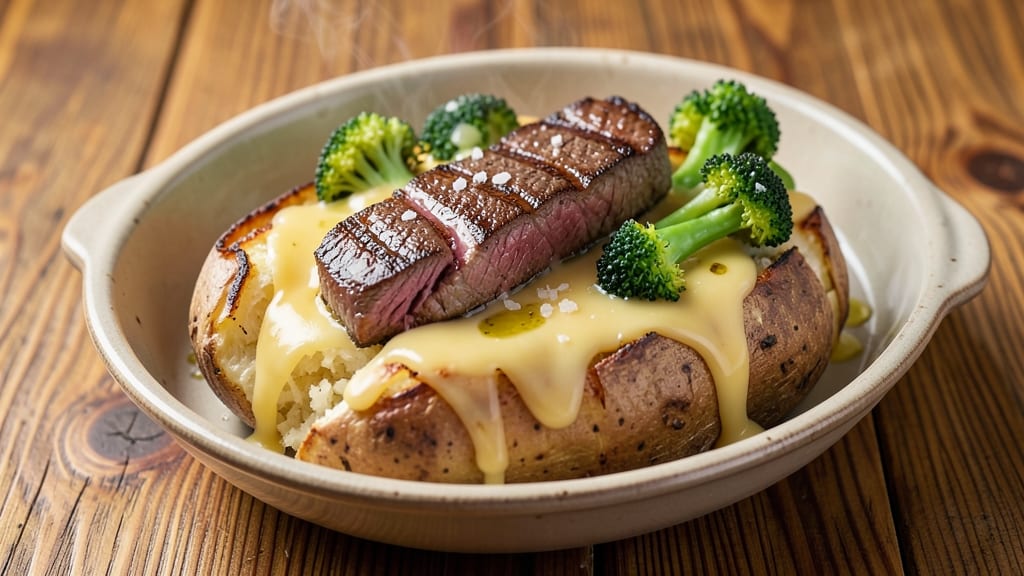
A loaded baked potato with steak, broccoli, and cheese transforms a simple side into a hearty, one-skillet masterpiece that feels like a restaurant meal.
The secret lies in timing—searing tender steak strips alongside roasted broccoli while baking russet potatoes until fluffy, then layering everything with melted cheese for a satisfying, all-in-one dish. This recipe eliminates the guesswork of coordinating multiple components, delivering a cohesive meal where every bite balances rich, savory, and crispy textures.
What sets this method apart is the one-skillet approach, which ensures all elements cook simultaneously without cross-contamination or last-minute scrambling. The steak develops a caramelized crust from high-heat searing, while the broccoli roasts until tender-crisp, and the potatoes bake to perfectly creamy interiors.
Shredded cheese melts into a golden blanket, binding everything together while adding a velvety finish. The result? A dish that’s restaurant-quality but requires just 45 minutes of active prep—ideal for weeknights or game days.
By the final step, you’ll have a loaded potato tower with juicy steak, vibrant broccoli, and gooey cheese all nestled into fluffy spuds, ready to be topped with optional garnishes like sour cream or green onions.
The skillet’s residual heat keeps the cheese bubbly and the steak warm, making it easy to serve straight from the pan. This isn’t just a side—it’s a complete, satisfying meal that feels indulgent yet comes together effortlessly.
For those who prefer extra richness, swap the steak for bacon or add a dollop of Greek yogurt in place of sour cream. The key to success is precise timing—potatoes bake while the steak and broccoli cook in the same skillet, ensuring everything finishes at the same moment.
Let’s build this hearty, one-skillet feast step by step.
Ingredients for loaded baked potato with steak broccoli and cheese
Four russets, one skillet, and a symphony of textures—this loaded potato tower delivers restaurant-quality comfort without the fuss.
| Ingredient | Amount | Notes |
|---|---|---|
| Russet Potatoes 🥔 | 4 whole | Medium size, unpeeled |
| Flank Steak 🥩 | 1 lb | Thinly sliced against grain |
| Fresh Broccoli 🥦 | 1 lb | Florets cut into bite-sized pieces |
| Shredded Cheddar Cheese 🧀 | 2 cups | Sharp variety preferred |
| Unsalted Butter 🧈 | 4 tbsp | Full-fat for rich flavor |
| Extra-Virgin Olive Oil 🫒 | 2 tbsp | For high-heat searing |
| Diamond Crystal Kosher Salt 🧂 | 1 ½ tsp | For seasoning and baking |
| Freshly Ground Black Pepper 🌶️ | 1 tsp | Coarsely ground |
| Garlic Cloves 🧄 | 4 cloves | Minced for seasoning |
| Heavy Cream 🥛 | ¼ cup | Optional for extra richness |
| Green Onions 🌱 | 3 whole | Sliced for garnish |
| Sour Cream 🥛 | ½ cup | Full-fat preferred |
| Garlic Powder 🧄 | ½ tsp | For seasoning steak |
| Smoked Paprika 🌶️ | ½ tsp | For depth of flavor |
The russet potatoes are the foundation—Idaho-grown russets from the grocery store's produce section deliver the fluffiest texture, but any russet will work. For the steak, flank steak is ideal due to its lean texture and tendency to slice thinly, but sirloin or ribeye will suffice if preferred. Fresh broccoli should have vibrant green florets and crisp stems—avoid any with yellowing or wilted pieces. The cheese matters most here: sharp cheddar from the deli counter (like Cabot or Tillamook) melts beautifully and adds depth of flavor. For the butter, unsalted Land O'Lakes is a reliable choice, but European-style butter like Plugrá elevates the dish further.
No flank steak? Sirloin or ribeye work equally well—simply slice against the grain for tenderness. Substituting broccoli for cauliflower florets maintains the same texture profile, though flavor will differ slightly. For the cheese, Monterey Jack or pepper jack add a milder, creamier option, while Gruyère brings nutty complexity. The heavy cream is optional but recommended for those who prefer extra richness—Häagen-Dazs brand or any heavy cream from the dairy section will work. If you're avoiding dairy, coconut cream can mimic the texture, though flavor will differ. For the green onions, scallions from the fresh produce section are a direct swap, and if you're out of sour cream, Greek yogurt provides a tangy alternative.
Store the potatoes in a cool, dark place until ready to bake—no refrigeration needed for up to 2 weeks. The steak should be used within 3-4 days of purchase for optimal tenderness, while broccoli keeps for 5-7 days in the fridge. Once assembled, the loaded potato tower reheats beautifully—cover with foil and warm in a 350°F oven for 10-15 minutes. For meal prep, assemble the dish without cheese, refrigerate, then melt the cheese fresh before serving to maintain texture. The leftovers keep for 3-4 days in the fridge, though the potatoes may firm up slightly—reheat with a splash of milk or broth to restore creaminess.
Why You'll Love This Recipe
- One-Pan Magic: I swear by this trick—just bake the potatoes and steak together while the broccoli roasts in the same oven. Less dishes, more flavor, and zero stress. The steak’s smoky aroma seeps into everything, turning a simple meal into something that feels like a restaurant dish without the fuss.
- Steakhouse at Home: That first bite of tender flank steak with the buttery, fluffy potato? It’s like a hug in food form. The cheese melts into the crispy edges while the broccoli gets just charred enough to stay crisp—no soggy sides here. Honestly, my picky eaters actually finish their plates.
- Meal Prep MVP: Between us, this is my go-to for busy nights. Roast extra potatoes and steak on Sunday, then reheat portions all week—just toss in the broccoli fresh when serving. It’s the only loaded potato that doesn’t turn into a sad, dry mess the next day.
- Budget Powerhouse: Flank steak stretches further than you’d think when sliced thin, and Russets are cheaper than fancy potatoes. Add a handful of broccoli and a bag of cheese, and you’ve got a filling, protein-packed meal for half the cost of takeout. My wallet thanks me every time.
Step-by-step instructions for a hearty loaded potato tower in one skillet
This method combines all components in a single skillet for maximum flavor and minimal cleanup.
Prepare and Parboil the Russet Potatoes
Preheat your oven to 425°F. Pierce each of the 4 whole Russet Potatoes with a fork 6-8 times to allow steam to escape. Place them in a large skillet and cover with cold water by about 1 inch. Add 1.5 teaspoons Diamond Crystal Kosher Salt and bring to a boil over medium-high heat.
Once boiling, reduce heat to medium and simmer for 8-10 minutes until the potatoes are slightly tender when pierced with a knife. Drain the potatoes, reserving 1 cup of the starchy cooking water. Return the potatoes to the skillet and place it in the preheated oven for 20 minutes to begin baking while you prepare the remaining components.
Season and Sear the Flank Steak
While the potatoes bake, pat the 1 lb Flank Steak dry with paper towels. In a small bowl, combine 0.5 teaspoon Garlic Powder, 0.5 teaspoon Smoked Paprika, 0.5 teaspoon Diamond Crystal Kosher Salt, and 0.5 teaspoon Freshly Ground Black Pepper. Rub this mixture evenly over both sides of the steak.
Heat a separate skillet over high heat until very hot. Add 2 tablespoons Extra-Virgin Olive Oil and swirl to coat. Add the steak and sear for 2-3 minutes per side until it develops a deep brown crust. Remove the steak from the skillet and let it rest on a cutting board for 5 minutes before thinly slicing it against the grain.
Sauté the Broccoli and Prepare the Cheese Mixture
In the same skillet used for searing the steak (no need to clean it), add 2 tablespoons Unsalted Butter over medium heat. Add the 1 lb Fresh Broccoli florets and sauté for 4-5 minutes until they turn bright green and just begin to soften. Stir in the 4 cloves minced Garlic Cloves and cook for 30 seconds until fragrant.
In a small bowl, combine the 2 cups Shredded Cheddar Cheese, 0.5 cup Sour Cream, and 0.25 cup Heavy Cream. Mix until well blended, creating a creamy, cheesy mixture ready to be layered.
Assemble and Bake the Loaded Potato Tower
Remove the partially baked potatoes from the oven and increase the oven temperature to 450°F. Arrange the potatoes in a single layer in the skillet, opening them slightly to create a well in the center. Spoon the broccoli mixture into the center of the skillet, creating a mound.
Top the broccoli with the sliced steak, then sprinkle the cheese mixture evenly over the top. Return the skillet to the oven and bake for 15-20 minutes until the cheese is bubbly and golden brown, and the potatoes are fully tender when pierced with a fork.
Garnish and Serve Immediately
Remove the skillet from the oven and let it rest for 2 minutes to allow the cheese to set slightly. Garnish with the 3 whole Green Onions, sliced thinly on the bias. Serve directly from the skillet, allowing each person to scoop portions of the loaded potatoes, steak, and broccoli.
The potatoes should be fluffy and crispy on the outside, the steak tender and flavorful, and the broccoli perfectly sautéed with a hint of garlic. The cheese mixture will be creamy and rich, tying all the components together into a hearty, satisfying meal.
Pro Tips For Making Loaded Baked Potato With Steak Broccoli And Cheese
- PIERCE POTATOES FIRST: Stab each Russet potato with a fork before baking—yes, it’s tedious, but it prevents explosions from trapped steam. I learned this the hard way when a potato split open mid-bake and sent cheese everywhere. (Use a fork, not a knife; you’ll thank me later for not ruining your hands.)
- SEAR STEAK HOT: Get your pan screaming hot before adding the flank steak—cast iron or stainless steel, doesn’t matter. If you hover over it like it’s a campfire, you’ll end up with gray, rubbery meat. Sear for 3-4 minutes per side, then pull it out while it’s still pinkish inside. It’ll finish cooking with the residual heat while the potatoes bake.
- SAVE BROCCOLI FROM BOILING: Skip the steaming basket and roast the broccoli directly on the baking sheet with the potatoes. Toss florets in a little olive oil, salt, and pepper, then bake at 425°F (220°C) for 15-20 minutes. You’ll get crispy edges and no sad, soggy stems—just like my mom’s, but without the guilt of using extra water.
- MELT CHEESE RIGHT: Sprinkle shredded cheddar after the potatoes come out of the oven, then cover with foil for 2-3 minutes. The residual heat melts it perfectly, not just on top. I used to dump it on early and end up with a cheese hat instead of a blanket. (Pro move: Mix the cheese with a spoonful of milk or cream for extra gooeyness.)
Common mistakes when making this recipe
Overcooking the Potatoes
One of the biggest mistakes is letting the potatoes overbake in the oven. They should be tender but still hold their shape when pierced with a fork—20 minutes at 425°F is just the start.
If you bake them too long, they’ll turn mushy and lose their structure. I’ve ruined more loaded potatoes this way than I’d like to admit! 🥔
Skipping the Parboil Step
Parboiling the potatoes is crucial for fluffy results, but many skip this step to save time. Without it, the outsides will burn while the insides stay raw. Always simmer them for 8-10 minutes first, then finish baking.
I learned this the hard way—once, I ended up with a skillet full of half-cooked potatoes and a frustrated family.
Underseasoning the Steak
The steak’s flavor is the star of this dish, so don’t skimp on seasoning. A dry rub of garlic powder, smoked paprika, salt, and pepper is non-negotiable. I’ve made the mistake of using just salt and pepper, and the result was bland.
Rub the seasoning generously and let it sit for 5 minutes before searing to maximize flavor penetration. 🌶️
Overcrowding the Skillet
If you stack the potatoes too high in the skillet, they won’t bake evenly—some will be undercooked while others burn. Arrange them in a single layer, leaving space between each.
I once tried to fit all four potatoes in a small skillet and ended up with a crispy exterior and a raw center. Use a large, heavy skillet—like a Lodge cast iron—to avoid this issue.
Adding Cheese Too Early
Cheese should be added in the final 15-20 minutes of baking to prevent it from turning rubbery. If you add it too soon, it’ll melt and absorb into the potatoes, losing its creamy texture.
I’ve seen this happen when people get distracted and forget to add the cheese until the very end—then it doesn’t melt properly. Timing is everything here!
Ignoring the Resting Time
After searing the steak, it must rest for 5 minutes before slicing. Skipping this step results in tough, stringy meat. I’ve sliced steak immediately after cooking, and it’s always been a regret. Let it rest on a cutting board while you finish the broccoli—your taste buds will thank you. 💡
Nutrition facts
Frequently asked questions
Why does the recipe use flank steak instead of a thicker cut?
Flank steak slices thinly for even cooking and fits perfectly on top of the potatoes. It also stays tender when sliced against the grain, preventing chewiness. For a richer option, try sirloin or ribeye—just reduce cooking time to 1.5-2 minutes per side to avoid overcooking.
Can I make this dish ahead of time?
Assemble everything except the cheese up to 24 hours ahead, then refrigerate uncovered. When ready to serve, bake at 375°F for 15-20 minutes with the cheese on top. For extra creaminess, add 1 tablespoon milk to the cheese mixture before baking. The potatoes may firm up slightly but reheat beautifully.
What's the best way to reheat leftovers?
Cover the skillet with foil and warm at 350°F for 10-15 minutes. For crispier potatoes, uncover the last 2 minutes of reheating. If the cheese looks dry, sprinkle 1 tablespoon milk or broth over it before reheating to restore creaminess. Leftovers keep for 3-4 days in the fridge.
How can I make this dish vegetarian?
Swap the steak for 1 lb portobello mushrooms (sliced and sautéed with garlic) or chickpeas (tossed in olive oil and smoked paprika). Use vegan cheese like Daiya or Violife, and add 1 tablespoon nutritional yeast to the cheese mixture for a cheesy flavor. The broccoli and potato prep remain identical.
Why does the broccoli turn gray when cooking?
Broccoli darkens when exposed to air or overcooked. To prevent this, cook it in a covered skillet for the first 2 minutes, then uncover to crisp. Add a splash of lemon juice (1 tsp) to the sautéed broccoli before mixing with cheese to brighten the color. Always use fresh broccoli—older florets darken faster.