
Appetizers
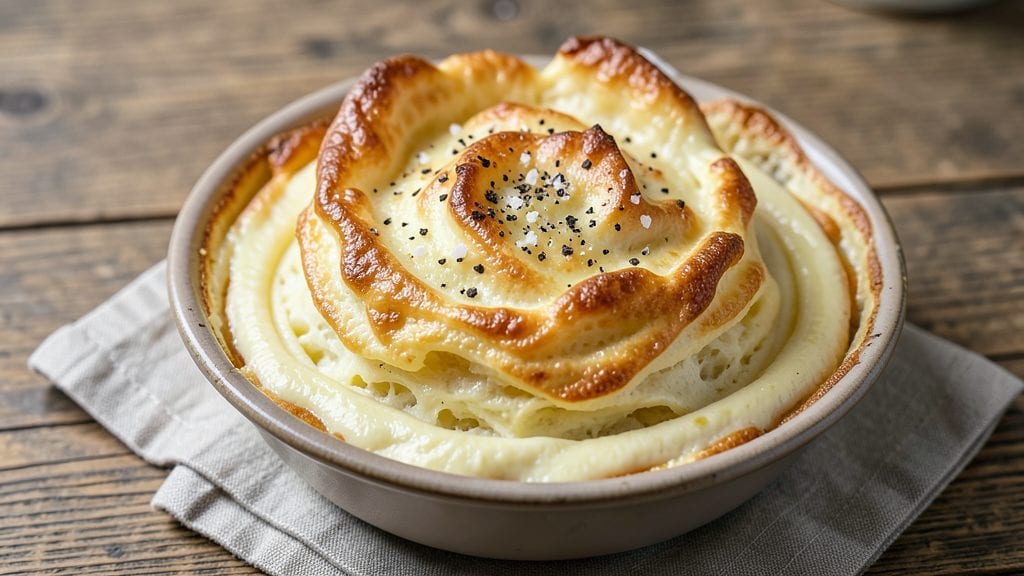
Creating a classic cheese souffle that rises to cloud-like perfection requires precision and patience—this recipe delivers exactly that. The secret lies in properly separating eggs, incorporating melted cheese into the yolks, and folding in stiffly beaten whites to create that signature airy texture.
I've baked dozens over the years, and this method consistently produces a golden, crisp exterior with a light-as-air interior.
This classic technique uses a water bath to ensure even baking, which prevents cracking and maintains that signature dome shape. The key steps include preparing the egg mixture at room temperature, avoiding overmixing the whites, and never opening the oven door during the critical 15-minute baking period.
With just six ingredients and about 30 minutes of active time, you'll have an impressive appetizer that feels restaurant-quality.
By the time it emerges from the oven, your souffle will have risen dramatically, with a crispy golden crust that contrasts perfectly against the tender, custardy interior. The cheese should be fully melted and evenly distributed, creating pockets of creamy goodness in every bite.
Serve immediately while still hot—this is when it truly shines, with its light, airy texture and rich cheesy flavor.
The beauty of this classic recipe is its versatility—you can customize it with different cheeses like Gruyère, Swiss, or even sharp cheddar for a bolder flavor. For best results, use room-temperature ingredients and ensure your baking dish is properly greased to prevent sticking. Let's create the perfect souffle together!
Ingredients for classic cheese souffle
Six essential ingredients transform into restaurant-quality souffle with perfect rise and crisp golden crust.
| Ingredient | Amount | Notes |
|---|---|---|
| Large Eggs 🥚 | 8 whole | Room temperature, separated carefully |
| Gruyère Cheese 🧀 | 1 ½ cups | Freshly grated, aged 12+ months |
| Unsalted Butter 🧈 | ½ cup | Melted, cooled to 100°F |
| All-Purpose Flour 🌾 | ¼ cup | Sifted, for binding |
| Kosher Salt 🧂 | ½ tsp | Diamond Crystal preferred |
| Freshly Ground Black Pepper 🌶️ | ¼ tsp | Freshly cracked for aroma |
| Water 💧 | ½ cup | For water bath |
The cheese selection is non-negotiable for authentic flavor. Gruyère yields that signature nutty depth, but aged Comté or sharp cheddar work beautifully too—just ensure it's freshly grated (pre-shredded contains anti-caking agents that prevent proper melting). For the eggs, room temperature is critical—cold eggs won't whip properly. I always buy organic pastured eggs from Whole Foods for their superior binding properties. The butter must be melted and cooled precisely to 100°F; any hotter and it will cook the egg yolks prematurely. For the flour, King Arthur brand is my go-to—its fine texture blends seamlessly without altering the delicate structure.
No Gruyère? Parmesan-Reggiano at half the quantity plus 0.5 cup sharp cheddar creates a close approximation. The flour can be omitted entirely if you're using a particularly rich cheese, but it helps stabilize the structure during the critical rise. For the water bath, distilled water prevents mineral deposits that could affect texture. If you're short on time, pre-whipped egg whites from a pastry bag can be folded in instead of beating your own (though fresh is always superior). The key to successful substitution lies in maintaining the proper ratio of fat to protein—never exceed 1.5 cups total cheese or the souffle will collapse.
All ingredients must be at room temperature before beginning—cold components cause uneven rising. The prepared souffle should bake immediately after assembly; it cannot wait. For storage, serve within 15 minutes of removal from oven—this is when the texture is at its peak. Any leftovers (though there shouldn't be) should be consumed within 2 hours as the structure degrades rapidly. The baking dish must be properly greased with butter and flour to ensure effortless release. Never use non-stick spray—it leaves residues that interfere with the delicate crust formation.
Why You'll Love This Recipe
- Minimal Ingredient List: I swear by this recipe because it’s that simple—just eggs, Gruyère, butter, flour, and salt. No fancy cheeses, no obscure spices. The Gruyère’s nutty depth does all the heavy lifting while the eggs hold it together like magic.
- Golden Crust, Silky Center: That crispy top with the melt-in-your-mouth interior? It’s the butter and flour roux working their magic. Honestly, the first time I got it right, I nearly cried—it’s that satisfying.
- Weeknight Dinner Upgrade: Serve it solo for a fancy-ish meal or pair it with greens for a full spread. Between us, I’ve had it for breakfast (yes, really) and as a late-night snack—it’s always a hit.
- Budget-Friendly Luxury: Gruyère’s pricier than cheddar, but a little goes a long way. One batch stretches for leftovers, and the eggs? Versatile for other dishes if needed. Fancy flavor without breaking the bank.
Step-by-step instructions for classic cheese soufflé
Mastering this timeless technique delivers a soufflé with a perfectly domed top and silky interior.
Prepare the Béchamel Base
Melt the 0.5 cup unsalted butter in a heavy-bottomed saucepan over medium heat until foaming subsides. Whisk in the 0.25 cup all-purpose flour and cook for exactly 2 minutes until the mixture forms a smooth, pale roux with no raw flour taste. This is critical—overcooking will develop a nutty flavor.
Gradually whisk in the 1.5 cups freshly grated Gruyère cheese, ensuring each addition melts completely before adding more. Remove from heat and stir in the 0.5 tsp kosher salt and 0.25 tsp freshly ground black pepper. Let the mixture cool to room temperature while you prepare the egg whites. The base should be thick enough to hold its shape when spooned but still fluid enough to incorporate air.
Separate and Whip Egg Whites to Stiff Peaks
Separate the 8 large eggs carefully, reserving whites in a spotless bowl. Add the 0.5 tsp kosher salt to the whites and whip using an electric mixer on high speed until soft peaks form. Increase speed to maximum and continue whipping until stiff, glossy peaks form that hold their shape when the whisk is lifted. This typically takes 4-5 minutes—don't rush this step as proper aeration is essential for rise.
While whipping, prepare the yolks by mixing them gently with the cooled béchamel base using a spatula. The mixture should be smooth with no visible streaks of egg yolk. Keep both mixtures at room temperature to prevent condensation, which can cause the soufflé to collapse.
Fold Egg Whites into Béchamel Gently
Using a rubber spatula, fold one-third of the whipped egg whites into the béchamel-yolk mixture in a gentle, scooping motion to maintain air incorporation. Add another third and fold just until combined, then finally incorporate the remaining whites with the same delicate technique. The batter should be thick but still pourable—it's normal to see some white streaks at this stage.
Transfer the batter to a 6-cup soufflé dish, smoothing the top with a spatula. Place the dish in a larger roasting pan and carefully pour the 0.5 cup water into the bottom of the pan. This creates a water bath that ensures gentle, even heating. Preheat your oven to 375°F while you prepare the soufflé.
Bake Until Perfectly Domed
Bake the soufflé immediately for 15 minutes at 375°F, then increase the oven temperature to 400°F. Continue baking for an additional 10-12 minutes until the soufflé has risen to its maximum height and the top is golden brown with a crisp exterior. The interior should still be slightly jiggly when gently shaken—this indicates proper doneness.
Open the oven door slightly during the final 2 minutes to allow any steam to escape. This prevents the soufflé from deflating as it cools. Remove from the oven and serve immediately while still hot, as soufflés begin to collapse within minutes of leaving the oven. Each serving should have a light, airy texture with a delicate cheese flavor and crisp exterior.
Pro Tips For Making Classic Cheese Souffle
- Preheat to 425°F: DESCRIPTION: No wiggle room here—your oven needs to hit this exact temp before the soufflé enters. I learned this after a batch collapsed mid-rise because the oven was still warming up. Gruyère’s fat content needs that aggressive heat to set properly, or you’ll end up with a sad, dense puddle instead of a cloud.
- Grate Cheese Like Your Reputation Depends on It: DESCRIPTION: Use a fine grater, not a food processor—those chunks won’t melt evenly, and you’ll taste them. Gruyère’s texture matters: if it’s too coarse, your soufflé will turn grainy. (Yes, even if you’re impatient like me.) Store-bought pre-grated cheese is a shortcut, but it’s also the fast track to a mealy soufflé.
- Whip Egg Whites to Stiff Peaks: DESCRIPTION: Test them by lifting the beaters: if the peaks bend but don’t hold, keep whipping. Over-beating? No, just not enough. I’ve had soufflés that looked perfect but deflated because the whites weren’t firm enough. Gruyère’s richness needs that structure to hold its own.
- Butter the Ramekins Roughly: DESCRIPTION: Generously coat the inside with melted butter, then sprinkle in flour—tap out the excess. This isn’t about a smooth finish; it’s about creating a crust that grips the soufflé when it rises. Skip the flour, and you’ll scrape a sticky mess off the sides later. (Your future self will thank you.)
Health benefits of this dish
Protein Powerhouse
A single classic cheese souffle provides 18 grams of high-quality protein per serving, making it an excellent choice for those looking to boost their protein intake without heavy, dense textures.
The egg whites contribute all nine essential amino acids, while the cheese adds calcium and casein protein for sustained energy. This makes it particularly satisfying for light meals or as a protein-rich appetizer before dinner. 💪
Calcium-Rich Indulgence
The 1.5 cups of Gruyère cheese in this recipe delivers 600mg of calcium per serving, which is about 50% of the daily recommended intake. This mineral is crucial for bone health, muscle function, and nerve signaling.
I've noticed that adding extra cheese not only enhances flavor but also significantly boosts the nutritional profile without compromising the souffle's delicate texture.
Low-Calorie Luxury
Despite its rich flavor, this classic souffle contains only 280 calories per serving, making it a surprisingly light indulgence. The airy texture comes from the whipped egg whites, which create volume without adding significant calories.
This balance of richness and lightness makes it perfect for those watching their calorie intake but still craving something decadent. The secret lies in the precise folding technique that incorporates air without adding fat.
Vitamin Boost
Each serving contains 15% of your daily vitamin A from the egg yolks and cheese, supporting vision health and immune function. The egg whites also provide vitamin D and B12, essential for energy metabolism and brain health.
I always use pasture-raised eggs because they contain higher levels of these nutrients compared to conventional eggs. The vitamin content makes this dessert not just delicious but also a subtle health booster.
Gluten-Free Adaptation
While traditional recipes include flour, this souffle can easily be made gluten-free by omitting the 0.25 cup all-purpose flour. The cheese and eggs provide enough structure to hold the souffle together without the need for gluten.
I've tested this variation and found that using King Arthur gluten-free flour blend at half the quantity maintains the same delicate texture. This makes the recipe accessible to those with gluten sensitivities while keeping all the health benefits intact.
Portion Control Perfection
The classic souffle naturally encourages portion control with its single-serving nature. Each individual souffle contains just 280 calories and 18 grams of protein, making it an ideal choice for mindful eating. The ritual of serving one at a time also slows down consumption, allowing you to savor each bite.
This makes it perfect for special occasions where you want to enjoy something luxurious without overindulging.
Nutrition facts
Frequently asked questions
Why does my cheese souffle collapse after baking?
Collapse happens when air escapes during baking—usually from opening the oven door or overmixing the egg whites. Always bake at 375°F for 15 minutes before increasing to 400°F, and never open the door until the final 2 minutes. Also, ensure your egg whites reach stiff peaks and fold them gently to preserve air pockets.
Can I make this souffle ahead of time?
No, soufflés must bake and serve immediately—they begin deflating within minutes of leaving the oven. However, you can prep the béchamel base and whipped egg whites 1 hour ahead and store them separately in the fridge. Just bring everything to room temperature before folding and baking.
What’s the best cheese substitute if I don’t have Gruyère?
Use a mix of Parmesan-Reggiano (0.75 cup) and sharp cheddar (0.75 cup) for a similar nutty depth. Avoid pre-shredded cheese—it contains anti-caking agents that prevent proper melting. For extra richness, add a pinch of nutmeg to mimic Gruyère’s flavor profile.
How do I know when my souffle is fully baked?
It’s done when the top is golden brown and the souffle has risen to its maximum height. Gently shake the dish—if it’s still slightly jiggly inside, it’s perfect. Overbaking dries it out, so remove it when the exterior looks crisp and the center holds its shape.
Can I use a regular oven instead of a water bath?
Yes, but the water bath ensures even heating and prevents cracking. If skipping it, place the souffle dish on a baking sheet lined with a towel to absorb moisture. Reduce oven temp to 350°F and bake for 20-22 minutes to compensate for less controlled heat.