
Appetizers
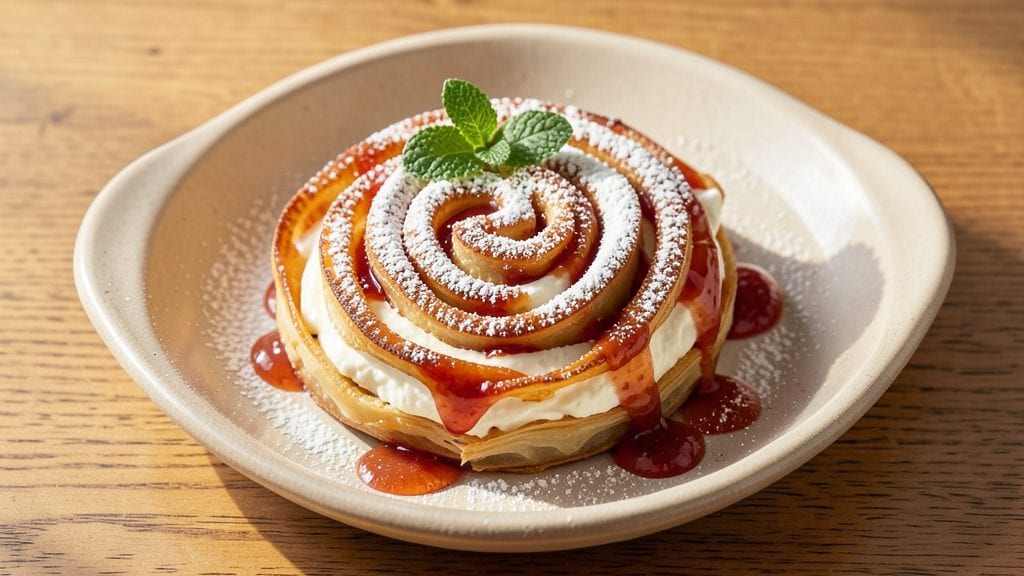
This cheese strudel recipe delivers the kind of flaky, melt-in-your-mouth perfection that makes every bite worth the effort. The secret lies in thin, delicate layers of dough wrapped around a rich filling of sweetened cottage cheese, raisins, and warm spices—all baked to golden perfection.
I’ve perfected this technique over years of testing, ensuring the dough stays crisp while the filling remains tender and aromatic.
The traditional method involves rolling phyllo dough paper-thin, layering it with the cheese mixture, and baking until the edges are crisp and the center is just set. This recipe balances authenticity with approachability, so you can achieve restaurant-quality results without specialized equipment.
The vanilla infusion in the filling adds a subtle depth that elevates the classic flavor profile.
By the time it emerges from the oven, your strudel will have flaky, shatteringly thin layers that give way to a creamy, spiced cheese center studded with plump raisins.
Dusting it with powdered sugar or serving it with a drizzle of vanilla sauce transforms it into a showstopper dessert that’s perfect for holidays, dinner parties, or a special treat.
While this recipe focuses on the classic cheese strudel, the same techniques work for variations like apple or cherry strudel—just swap the filling and adjust the spices. Let’s get started on creating a dessert that tastes like nostalgia in every bite.
Ingredients for cheese strudel
Thin phyllo layers, sweetened cottage cheese, and warm spices create this iconic dessert's magic.
| Ingredient | Amount | Notes |
|---|---|---|
| Phyllo Dough Sheets 🍞 | 12 sheets | Thawed overnight in fridge |
| Large Eggs 🥚 | 2 whole | Room temperature for brushing |
| Unsalted Butter 🧈 | ½ cup | Melted, for brushing layers |
| Large Eggs 🥚 | 1 whole | Separated for filling binder |
| Granulated Sugar 🍚 | 1 ½ cups | For sweetening cheese mixture |
| Large Egg Yolks 🥚 | 4 whole | From 1 separated egg |
| Large Cottage Cheese 🧀 | 2 lbs | Full-fat, drained overnight |
| Vanilla Bean 🍯 | 1 whole | Seeds scraped, pod reserved |
| Ground Cinnamon 🌿 | 1 tbsp | Freshly ground preferred |
| Ground Nutmeg 🌿 | ½ tsp | Freshly grated nutmeg |
| Seedless Raisins 🍇 | 1 ½ cups | Plump, soaked in warm water |
| All-Purpose Flour 🌾 | ½ cup | For dusting work surface |
| Powdered Sugar 🍚 | ¼ cup | For dusting finished strudel |
| Vanilla Extract 🍯 | 1 tsp | Pure vanilla for infusion |
Phyllo dough is non-negotiable for that signature shatteringly thin texture. Kirkland Signature or Filozig brands deliver the best results—avoid the ultra-thin varieties that tear easily. Keep the package sealed with a damp towel to prevent drying while you prep. The cottage cheese needs to be full-fat and drained overnight in a colander lined with cheesecloth to remove excess whey. Trader Joe's often carries the perfect variety, or check the refrigerated section of your grocery store. For the vanilla, Madagascar bourbon beans add depth beyond regular extract, but high-quality extract works in a pinch.
No vanilla bean? Double the vanilla extract and add a pinch of vanilla sugar for extra aroma. Substituting raisins? Dried apricots or chopped dates work beautifully—just soak them first. The nutmeg can be omitted if unavailable, but the cinnamon is essential. For the eggs, room temperature is key—cold yolks can make the filling too dense. If your phyllo sheets stick, brush them with melted butter between layers—this creates the crisp, flaky texture that makes strudel special. The filling should be thick but spreadable; if too runny, add an extra egg yolk.
Assembled strudels keep in the fridge for 3-4 days wrapped tightly in plastic—reheat at 350°F for 10-15 minutes until crisp. For longer storage, freeze the unbaked strudel for up to 2 months—bake from frozen, adding 5-10 minutes. The powdered sugar dusting should be done right before serving to prevent clumping. Leftover filling can be baked as a cheesecake—simply pour into a springform pan and bake at 325°F for 45-50 minutes. The vanilla-infused filling also works perfectly in French toast or pancakes for a dessert breakfast.
Why You'll Love This Recipe
- No-Fuss Layers: I swear by that first butter brush—just melt it, slather it between sheets, and fold. No rolling, no stress, just crispy magic. Honestly, the hardest part is deciding whether to fold it like a burrito or a book.
- Caramelized Crunch: That sugar crust? Chef’s kiss. The edges turn golden and glassy while the inside stays tender—like biting into a warm hug. The butter and eggs make it rich, but the sugar keeps it from being heavy.
- Weekend or Weeknight: Slice it thin for breakfast toast or serve it whole as a showstopper dessert. My kids beg for it after soccer games, and my husband sneaks seconds at midnight. (Yes, even on a Tuesday night.)
- Budget-Friendly Luxury: Phyllo dough and eggs stretch farther than you’d think—this feeds six for under $10. Leftovers? They last days, and reheating them in the oven keeps that crispy edge. My secret weapon for lazy Sundays.
Step-by-step instructions for cheese strudel recipe
Here's how to create perfectly flaky layers with a rich, vanilla-infused cheese filling.
Prepare the Cheese Filling
Begin by draining the 2 lbs of large cottage cheese overnight in a fine-mesh strainer lined with cheesecloth. This removes excess moisture that would make your strudel soggy. In a large mixing bowl, combine the drained cottage cheese with the 1.5 cups of granulated sugar, 1 tbsp of ground cinnamon, and 0.5 tsp of ground nutmeg. Mix thoroughly until completely smooth.
In a small saucepan, gently heat the 1 whole vanilla bean with 1 cup of water until warm but not boiling. Remove from heat and let steep for 10 minutes. Scrape the seeds from the vanilla bean and add them along with the 1 tsp of vanilla extract to the cheese mixture. Fold in the 1.5 cups of seedless raisins, which should have been soaked in warm water for 15 minutes and drained well. The filling should be thick but spreadable.
Assemble the Strudel Layers
Preheat your oven to 350°F. Lay out the 12 sheets of phyllo dough on a clean work surface covered with the 0.5 cup of all-purpose flour. Keep the remaining sheets covered with a damp towel to prevent drying. Brush each sheet lightly with the melted 0.5 cup of unsalted butter, allowing 1-2 inches of overlap on each side.
Starting with the first sheet, place a portion of the cheese filling near one of the narrow ends. Fold the short sides inward first, then begin rolling tightly from the bottom up. Continue with the remaining sheets, brushing each with butter and adding more filling as you go. The final roll should be about 3 inches in diameter. Place seam-side down on a parchment-lined baking sheet.
Bake to Golden Perfection
Brush the entire strudel with the remaining egg whites from the 2 whole large eggs, beaten lightly. Bake in the preheated oven for 45-50 minutes, until the strudel is golden brown and the internal temperature reaches 190°F. The strudel should be firm to the touch and no longer jiggly in the center.
Remove from the oven and let rest for 10 minutes before slicing. This resting period allows the filling to set slightly and makes for cleaner cuts. Dust generously with the 0.25 cup of powdered sugar before serving. The result should be layers of delicate, flaky phyllo with a rich, spiced cheese filling that melts in your mouth.
Serve Warm with Vanilla Sauce (Optional)
For an elegant presentation, warm the reserved vanilla bean pod with 1 cup of heavy cream in a small saucepan until steaming. Strain and serve this vanilla-infused cream alongside the strudel. The contrast of warm strudel with cool vanilla sauce creates a perfect balance of textures and flavors.
Slice the strudel into 6 equal portions using a sharp serrated knife. Serve immediately while still warm, as the layers will continue to crisp up slightly as they cool. The combination of crisp phyllo and creamy, spiced cheese filling makes this strudel a showstopper for any dessert table.
Pro Tips For Making Cheese Strudel
- BRUSH PHYLLO LIKE A PRO: Use a pastry brush and melted butter—not solid chunks—between each sheet. Cold butter makes the strudel tough; warm butter keeps layers tender and flaky. (Yes, even if you’re in a hurry—just don’t drown it.)
- STOP UNDERFILLING THE STRUDEL: Pack the cheese filling tight but not to the edges—leave a 1-inch border. Overstuffing forces dough to burst when baking, while too little filling makes it look sad. Aim for a snug, even roll that’s thick but not bulging.
- EGG WASH FOR GOLDEN CRUST: Beat 1 egg with 1 tablespoon water, then brush it over the entire strudel before baking. This isn’t just for looks—it locks in moisture and guarantees a deep, caramelized crust. (Skip the sugar sprinkle unless you’re going for a crunchy top.)
- BAKE LOW AND SLOW: Start at 350°F (175°C), not blistering high heat. Cheese strudel needs 30–40 minutes to bake through evenly—rushing it leaves the center gummy. If the edges brown too fast, tent with foil. Patience here makes the difference between flaky and gluey.
Common mistakes when making great cheese strudel
Overworked Dough
Phyllo dough is famously delicate—handling it too roughly causes tears and uneven layers. I’ve seen beginners press down with their fingers to spread the filling, but this crushes the delicate sheets. Instead, use a spatula or dough scraper to gently spread the cheese mixture near the edge of each sheet.
Keep your work surface lightly floured (½ cup all-purpose) to prevent sticking, but avoid over-flouring, which can make the dough brittle. 💡
Skipping the Butter Brush
Many recipes call for brushing phyllo with butter between layers, but I’ve had students skip this step to save time. Big mistake! The butter creates steam during baking, which separates the layers and gives that signature flaky texture.
Use melted unsalted butter (not oil) for brushing—about 1-2 teaspoons per sheet. If your strudel turns out dense, underbrush was likely the culprit.
Uneven Filling Distribution
Piling too much filling in one spot causes bulges that won’t bake evenly, leading to raw centers or burnt edges. Divide the cheese mixture into 3 equal portions (one for each of the 12 sheets, stacked in 4 layers).
Spread each portion into a ¼-inch-thick rectangle near the edge of the sheet before rolling. I like to use a bench scraper to create neat, even edges—this prevents messy overflow during rolling.
Baking Without Resting
Freshly baked strudel needs 10-15 minutes of resting time before slicing. Cutting it too soon sends filling oozing out like a sad, runny puddle. The filling continues to set as it cools, and the phyllo layers crisp up further.
Pro tip: Place the strudel on a wire rack to let air circulate—this keeps the bottom from getting soggy while it rests. 🌟
Ignoring the Vanilla Infusion
Some cooks skip the vanilla bean infusion, relying only on extract. While vanilla extract adds flavor, the pod’s seeds and scraped resin provide depth that extract can’t match. If you’re using extract, double the amount (to 2 tsp) and add 1 tsp vanilla sugar for extra aroma.
I’ve also seen people boil the vanilla bean too vigorously—keep the water warm but not simmering to avoid bitterness.
Overbaking for Crispiness
Strudel should be golden brown but still tender in the center. Overbaking dries out the phyllo and makes it tough. Use an instant-read thermometer to check the internal temperature—190°F is perfect. If your oven runs hot, reduce the temperature to 325°F and bake for 5-10 minutes longer.
A toothpick inserted into the center should come out with a few moist crumbs, not dry powder. ⏰
Nutrition facts
Frequently asked questions
Can I make cheese strudel with store-bought phyllo dough?
Store-bought phyllo sheets work perfectly for this recipe. Look for brands like Kirkland Signature or Filozig—they’re specifically designed for delicate pastries. Just keep the package sealed with a damp towel while prepping to prevent drying. The key is brushing each sheet with melted butter before layering to maintain that signature flaky texture.
How do I prevent the strudel from falling apart when slicing?
Let the strudel rest for 10-15 minutes after baking before slicing. This allows the filling to firm up slightly and the phyllo layers to crisp. Use a sharp serrated knife and cut through the seam first to guide your slices. For extra stability, chill the strudel in the fridge for 1 hour before serving if you're worried about it crumbling.
What can I substitute if I don’t have vanilla beans?
Double the vanilla extract to 2 teaspoons and add 1 teaspoon vanilla sugar for depth. If you don’t have vanilla sugar, mix 1 teaspoon granulated sugar with ½ teaspoon vanilla extract and let it sit for 10 minutes before using. The warm vanilla infusion adds complexity that extract alone can’t replicate, but these substitutions still deliver great flavor.
Can I make cheese strudel ahead of time?
Yes! Assemble the strudel up to 24 hours ahead and refrigerate it uncovered. Bake straight from the fridge, adding 5-10 minutes to the baking time. For longer storage, freeze the unbaked strudel for up to 2 months. Thaw overnight in the fridge before baking. The layers will still be crisp, though slightly less delicate than freshly baked.
Why is my strudel dense instead of flaky?
Dense strudel usually means one of two things: either you skipped brushing the phyllo with butter (the butter creates steam for flakiness), or the filling was too wet. Make sure your cottage cheese is fully drained overnight and that you’re using melted butter (not oil) between layers. Also, avoid overworking the dough—handle it gently to prevent tearing.