
Appetizers
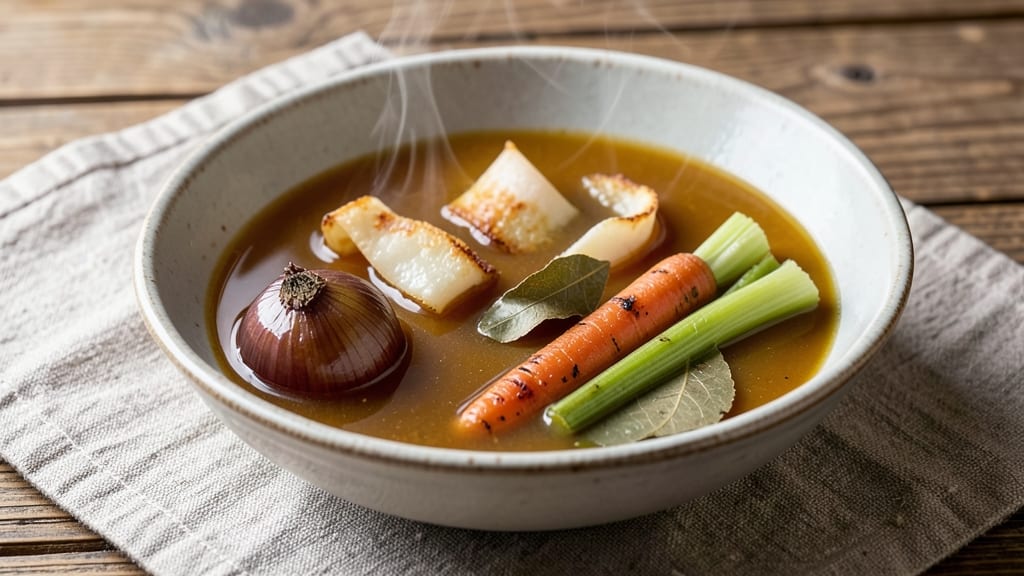
Transforming leftover pasta water into cheese stock is the secret weapon every home cook needs—this rich, savory base elevates soups, sauces, and risottos with minimal effort. The magic happens when cheese rinds, vegetables, and aromatics infuse into the starchy pasta water, creating a velvety foundation packed with umami depth.
I developed this technique after realizing how much flavor was being wasted down the drain, and it’s now a staple in my kitchen for adding restaurant-quality richness to dishes.
This method requires just five simple ingredients—cheese rinds, onions, carrots, celery, and bay leaves—and takes about 30 minutes to prepare. The key is using high-quality cheese rinds (Parmesan or cheddar work best) and simmering the mixture gently to extract maximum flavor without bitterness.
Unlike store-bought stocks, this version is customizable, allowing you to tailor the flavor to your favorite dishes.
What you’ll end up with is a smooth, flavorful stock that’s perfect for enhancing creamy soups, cheesy sauces, or even risottos. The starchy base from the pasta water adds natural body, while the cheese rinds contribute a rich, savory note that’s impossible to replicate with bouillon cubes.
This stock freezes beautifully, so you can make a big batch and keep it on hand for quick weeknight meals.
For variations, try swapping cheddar rinds for Parmesan for a more complex, nutty flavor, or add a splash of white wine to brighten the stock. Use it as a substitute for water in recipes where extra richness is desired—your dishes will thank you. Let’s get started!
Ingredients for cheese stock
Five simple ingredients transform starchy pasta water into restaurant-quality cheese stock.
| Ingredient | Amount | Notes |
|---|---|---|
| Parmesan Cheese Rinds 🧀 | 4 pieces | Freshly cut from Parmigiano-Reggiano block |
| Cheddar Cheese Rinds 🧀 | 4 pieces | Aged cheddar preferred for depth |
| Yellow Onion 🧅 | 1 whole | Medium size, peeled and halved |
| Carrots 🥕 | 2 medium | Peeled and cut into chunks |
| Celery Stalks 🌿 | 2 whole | Trimmed and cut into pieces |
| Bay Leaves 🌿 | 2 whole | Dried or fresh preferred |
| Fresh Pasta Water 💧 | 4 cups | Starchy, from freshly cooked pasta |
| Extra-Virgin Olive Oil 🫒 | 1 tbsp | For preventing scorching |
| Salt 🧂 | 1 tsp | Kosher or sea salt |
| Black Peppercorns 🌶️ | 5 whole | Crushed for added depth |
The cheese rinds are the star here—Parmigiano-Reggiano adds nutty complexity while aged cheddar brings a sharp tang. Grab the rinds from the bottom of your cheese block (those crispy bits) or ask your grocer for pre-cut rinds—Whole Foods and Trader Joe's usually carry them. For the vegetables, don't stress about perfect cuts—roughly chopped works best. The onions and carrots should be medium-sized to balance the stock's flavor without overpowering. Fresh bay leaves add aromatic depth, but dried work in a pinch (use half the amount).
No Parmesan rinds? Gruyère or Gouda rinds work beautifully for a different flavor profile. Short on carrots? Leeks or fennel add sweetness without altering the stock's structure. The pasta water must be starchy—if it looks clear, you've waited too long. For extra richness, add 1/2 cup heavy cream at the end. Want brightness? A splash of dry white wine (about 2 tbsp) brightens the stock beautifully. The olive oil isn't just for cooking—it prevents scorching and adds fruity notes that enhance the cheese's flavor.
This stock freezes like a dream—simply pour into ice cube trays for single-use portions or store in 1-cup containers for larger batches. Keeps for 3 months in the freezer or 5 days in the fridge. For maximum flavor, use within a week. The starchy base makes it perfect for risottos (use as your cooking liquid), while the cheese rinds give soups and sauces that restaurant-quality depth you can't get from bouillon cubes. Make a big batch—you'll want this on hand for everything from mac and cheese to creamy pasta dishes.
Why You'll Love This Recipe
- No-Waste Magic: I swear by this trick—those cheese rinds you’d normally toss? They’re the secret weapon. Just toss them in with the veggies, and suddenly you’ve got this deep, umami-rich base that turns even simple pasta into something restaurant-worthy. Honestly, it’s the kind of hack that makes me feel like a chef.
- Umami Bomb: The combo of Parmesan and cheddar rinds? Chef’s kiss. That salty, nutty punch cuts through the sweetness of the carrots and onion, while the celery adds this subtle earthiness. It’s the kind of flavor that lingers—like when you take a bite of a dish and think, “Wait, why is this so good?”
- Pantry Staple Power: This stock is my go-to for when I’m prepping for the week. Freeze it in ice cube trays, and suddenly you’ve got instant flavor for soups, risottos, or even a quick mac and cheese. Between us, I’ve used it in everything from weeknight dinners to holiday feasts—it’s that reliable.
- Budget-Friendly Luxury: You’re basically making gold from scraps. Cheese rinds are free if you save them, and the veggies? A fraction of what store-bought stock costs. Plus, it keeps for months in the freezer, so you’re not scrambling for last-minute upgrades. Solid move for anyone who wants depth without the markup.
Step-by-step instructions for cheese stock recipe
This rich, umami-packed stock transforms humble pasta water into a velvety foundation for soups and sauces.
Prepare the Vegetable Base
Heat the 1 tablespoon extra-virgin olive oil in a medium saucepan over medium heat. Add the 1 whole yellow onion, 2 medium carrots, and 2 whole celery stalks, all cut into ½-inch chunks. Sauté for 8-10 minutes until the vegetables soften and the onion becomes translucent.
Here's the thing—don't rush this step. You want the vegetables to develop a gentle sweetness before they contribute their flavors to the stock. If they start to brown too quickly, reduce the heat slightly. The goal is caramelization without burning, as this creates deeper flavor complexity.
Add Cheese Rinds and Aromatics
Once the vegetables are tender, add the 4 pieces Parmesan cheese rinds and 4 pieces cheddar cheese rinds. These will infuse the stock with their concentrated, savory essence. Toss everything together for 1 minute to coat the rinds with the vegetable juices.
Add the 2 whole bay leaves and the 5 whole black peppercorns (lightly crush them between your palm and a cutting board for maximum aroma). Stir briefly to distribute these aromatic elements. The bay leaves will add herbal depth, while the peppercorns contribute a subtle, warm spice note that rounds out the stock's complexity.
Incorporate the Pasta Water
Pour in the 4 cups fresh pasta water—this starchy liquid is the secret weapon. The starch helps create a naturally thickened, velvety stock without needing additional thickeners. Add the 1 teaspoon salt and bring the mixture to a gentle simmer over medium-low heat.
I know it seems counterintuitive to use pasta water, but trust me—its natural starch content transforms this into a luxurious, restaurant-quality stock. The simmer should be just enough to create small bubbles around the edges without a rolling boil. Skim off any foam that rises to the surface during the first 5 minutes of simmering.
Simmer and Infuse
Reduce the heat to low and let the stock simmer uncovered for 30-45 minutes. This slow infusion allows the cheese rinds to melt gradually, releasing their rich, umami flavors while the vegetables continue to break down. You'll notice the stock gradually deepens in color and becomes more aromatic.
Real talk: Don't walk away. Set a timer and check periodically to ensure the stock doesn't reduce too quickly. You want it to maintain a medium consistency—thick enough to coat the back of a spoon but still liquid enough to pour easily. The cheese rinds should dissolve completely by the end of this process.
Strain and Finish
Once the stock has infused, remove the saucepan from heat and let it sit for 5 minutes to allow any remaining cheese particles to settle. Then, strain the stock through a fine-mesh sieve into a clean bowl or pitcher, pressing gently on the solids to extract every last drop of flavor.
Taste and adjust the seasoning if needed—you might want to add a pinch more salt or a few drops of extra-virgin olive oil to enhance the richness. This stock keeps beautifully in the refrigerator for up to 5 days or can be frozen for 3 months, making it a perfect way to elevate any dish from ordinary to extraordinary.
Pro Tips For Making Cheese Stock
- BROWN THE RINDS FIRST: Toss those cheese rinds in a dry skillet over medium heat for 2-3 minutes until they smell like a fondue party started. This caramelizes the fat and deepens the flavor—skip it, and your stock will taste like sad, underwhelming cheese.
- CHOP VEGETABLES UNIFORM: Cut onions, carrots, and celery into roughly ½-inch pieces—no need for fancy dice. Smaller bits cook faster and release flavor, but don’t go so small they turn to mush. (Yes, I’ve done that. Twice.)
- STRAIN TWICE FOR CLEAR STOCK: After simmering, line a fine-mesh strainer with cheesecloth or a coffee filter to catch any stray particles. Pour the stock through, then strain it again through a regular sieve. Your stock will look restaurant-worthy, not swampy.
- USE THE RINDS TWICE: After the first simmer, rinse the rinds under cold water to remove any gunk, then toss them back in for a second simmer with fresh water. Doubles the flavor without extra effort—just don’t overcook them, or they’ll turn into a gluey mess.
Common mistakes when making your cheese stock
Skimming Too Aggressively
New chefs often skim off too much foam during the first 5 minutes of simmering, stripping away flavorful oils and starches that contribute to the stock's body. Instead of removing everything, let the foam settle and only skim what rises to the very top.
The starchy foam is what gives your cheese stock that velvety texture—don't lose it! I usually skim just 1-2 tablespoons total, leaving the rest to work its magic. 🧂
Using Low-Quality Cheese Rinds
Not all cheese rinds are created equal. Pre-packaged rinds from grocery stores often lack the depth of flavor found in fresh rinds from a block of Parmigiano-Reggiano or aged cheddar.
If you're using pre-cut rinds, look for brands like Whole Foods Market or Trader Joe's, which source high-quality options. For maximum flavor, save your own rinds by cutting them fresh from the block—those crispy, golden edges are where the most umami lives.
Boiling the Stock
A rolling boil will turn your delicate cheese stock into a bitter, concentrated mess. The ideal simmer should be just enough to create small bubbles at the edges (180-190°F), not a full, vigorous boil.
If you see large bubbles breaking the surface or hear a steady rolling sound, reduce the heat immediately. The gentle simmer is what allows the cheese rinds to melt evenly and infuse their flavor without creating harsh, burnt notes. 🌡️
Ignoring the Starch in Pasta Water
Some cooks make the mistake of using plain water instead of pasta water, missing out on the natural thickening power of starch. The starch in pasta water isn't just for texture—it also helps emulsify the cheese fat, creating a richer, more cohesive stock.
If your pasta water looks clear, it's too late—save it for another use. For the best results, use water that's cloudy with starch, ideally from freshly cooked pasta like fettuccine or penne.
Over-Simmering the Stock
Leaving the stock to simmer for too long (more than 45 minutes) can turn it cloudy and develop a flat, one-dimensional flavor. The cheese rinds should dissolve completely within 30-45 minutes, and any longer risks breaking down the delicate flavors.
Set a timer and keep an eye on it—you're aiming for a balance of infusion time and freshness. Once the rinds disappear and the stock smells deeply aromatic, it's time to strain and stop the cooking process.
Not Straining Properly
Rushing the straining process leaves behind gritty cheese particles that can make your stock taste gritty or unevenly textured. After simmering, let the stock sit for 5 minutes off the heat to allow any remaining solids to settle.
Then, strain through a fine-mesh sieve or cheesecloth, pressing gently on the solids with a wooden spoon to extract every last drop of flavor. A nut milk bag works beautifully for this—it catches even the finest particles while allowing the liquid to pass through smoothly. 🧀
Nutrition facts
Frequently asked questions
Can I use any type of cheese for this stock?
While any cheese rinds will work, the best flavors come from Parmesan or aged cheddar. These cheeses have concentrated umami and savory notes that infuse beautifully. For a different profile, try Gruyère or Gouda rinds, but avoid soft cheeses like brie—they melt too quickly and can make the stock greasy.
How do I store cheese stock for later use?
Store in an airtight container in the fridge for 5 days or freeze in 1-cup portions for up to 3 months. For freezing, use ice cube trays for single-use portions. Thaw overnight in the fridge—never at room temperature. The stock thickens when cold, so stir before using.
What are the best ways to use cheese stock?
Use it as a 1:1 substitute for water or milk in soups, sauces, or risottos. Try it in mac and cheese, creamy pasta dishes, or even as a base for cheese sauces. The starchy texture makes it perfect for thickening without cornstarch. For extra richness, add 1/2 cup heavy cream at the end.
Why does my stock look cloudy after simmering?
Cloudiness usually means you over-simmered or skimmed too aggressively. The starchy foam and cheese particles should dissolve completely in 30-45 minutes. If it's still cloudy, strain through a cheesecloth for a clearer result. For a smoother texture, blend briefly before straining.
Can I make cheese stock without pasta water?
Yes, but the texture will be thinner. Replace pasta water with 4 cups milk or broth and add 1 tablespoon cornstarch to thicken. The cheese rinds will still infuse flavor, though the starchy body from pasta water gives it that signature velvety quality. For best results, stick with pasta water when possible.