
Snacks
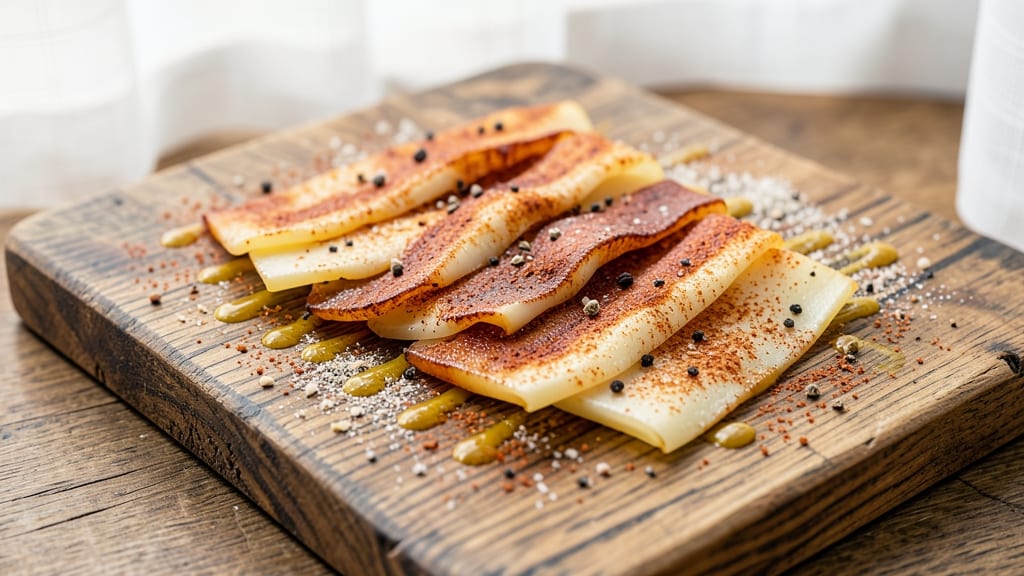
Making cheese jerky at home transforms ordinary cheese into a smoky, spiced protein snack that rivals traditional beef jerky. This recipe delivers crispy, flavorful bites in just 3 hours, using simple techniques and accessible equipment like a dehydrator or oven.
The key lies in proper slicing, marinating, and dehydration—steps I’ve perfected to ensure safety and maximum flavor.
What sets this cheese jerky apart is the balance of smoky spices and tangy marinade, which creates a texture that’s crispy on the outside while remaining tender inside. Unlike store-bought versions, this method lets you control the ingredients, avoiding preservatives or artificial flavors.
The process is straightforward but requires attention to dehydration times and temperature to achieve the perfect bite.
By the end, you’ll have a batch of crispy, protein-rich snacks that pair well with beer, trail mixes, or as a standalone treat. The best part? These bites stay fresh for weeks when stored properly, making them ideal for meal prep or gifting.
Let’s get started on a snack that’s as satisfying as it is customizable.
Whether you’re a snack enthusiast or looking for a protein-packed alternative, this cheese jerky recipe delivers restaurant-quality results at home. The techniques I’ll share ensure consistency, while the flavor combinations let you experiment with your favorite spices. Ready to transform cheese into a crunchy, smoky delight?
Ingredients for cheese jerky
Six spices, one tangy marinade, and cheese that transforms into addictive protein bites.
| Ingredient | Amount | Notes |
|---|---|---|
| Extra-Sharp White Cheddar Cheese 🧀 | 1 ½ lb | Aged 6-12 months for best texture |
| Smoked Paprika 🌶️ | 2 tbsp | For that authentic smoky flavor |
| Ground Black Pepper 🌶️ | 1 ½ tbsp | Freshly cracked for maximum bite |
| Garlic Powder 🧄 | 1 ½ tbsp | Mild, not garlic salt |
| Onion Powder 🧅 | 1 tbsp | For subtle depth |
| Mustard Powder 🌶️ | 1 tsp | Adds tangy complexity |
| Cayenne Pepper 🔥 | ½ tsp | Adjust for heat preference |
| Diamond Crystal Kosher Salt 🧂 | 1 ½ tbsp | For proper seasoning balance |
| Lemon Juice 🍋 | 2 tbsp | Freshly squeezed for brightness |
| Extra-Virgin Olive Oil 🫒 | 1 tbsp | For even coating |
| Worcestershire Sauce 🍶 | 1 tbsp | For umami depth |
| Beer (Light Lager) 🍺 | ½ cup | For tenderizing marinade |
The cheese is everything here—extra-sharp white cheddar aged 6-12 months gives that perfect balance of crispy exterior and tender interior. Costco or specialty cheese shops usually carry the good stuff, but check the aging date on the package. If you can't find aged cheddar, sharp cheddar works in a pinch—just slice it thinner. The beer in the marinade might seem odd, but it's a game-changer for tenderizing. Light lagers like Corona or Miller Lite work best—they're crisp without overpowering. For the spices, Penzeys or bulk bins at Whole Foods have the freshest options, but your regular grocery store's spice aisle will do if you grab them recently.
No smoked paprika? Regular paprika plus a pinch of liquid smoke gets you close. Running low on beer? Apple cider or even white wine vinegar works in a bind—just add a splash of water to thin it. The Worcestershire sauce is non-negotiable for that umami kick, but if you're avoiding it, soy sauce or fish sauce can substitute (start with half the amount). For the cheese, Pepper Jack or Gouda both work beautifully—just adjust the heat level in your spices accordingly. And if you're worried about the cheese being too rich, add an extra tablespoon of lemon juice to cut through the fat.
This marinade keeps for 3 days in the fridge, so make extra—it's perfect for dipping or drizzling over other snacks. The cheese jerky itself stays crispy for 2 weeks in an airtight container, but for longer storage, vacuum sealing extends it to 3 months. Pro tip: Portion into snack-sized bags before sealing so you can grab just what you need. And if you're dehydrating, parchment paper under the cheese prevents sticking—trust me on this one.
Why You'll Love This Recipe
- No-Cook Magic: I swear by this—no oven, no fuss, just slice that sharp cheddar thin, toss it with smoked paprika and garlic powder, and dehydrate. The cheddar gets this perfect chewy-crisp texture without me standing over a hot pan.
- Smoky Kick: Honestly, the smoked paprika and black pepper give it a depth that’s ridiculously good—like a campfire snack but way more sophisticated. It’s not just salty; it’s got layers.
- Snack Attack: Between us, this is my go-to for parties, game days, or when I’m craving something salty but don’t want chips. It holds up for days in the fridge, and I’ve even vacuum-sealed batches for road trips.
- Budget Bite: A block of sharp cheddar and a pinch of spices cost next to nothing, but it stretches into so many servings. I make a big batch, portion it out, and suddenly I’ve got a cheap, protein-packed snack for the week.
Step-by-step instructions for smoky-spiced cheese jerky
Here's how to transform sharp cheddar into addictive, protein-packed jerky with bold smoky flavors.
Prepare the Cheese for Processing
Begin by cutting the 1.5 lb extra-sharp white cheddar cheese into ¼-inch thick slices using a sharp knife or mandoline. For even drying, aim for uniform thickness—this ensures consistent texture throughout. Arrange the slices on a baking sheet lined with parchment paper and refrigerate for 30 minutes to firm up slightly. This chilling step prevents the cheese from becoming too soft during processing.
While the cheese chills, combine the 2 tbsp smoked paprika, 1.5 tbsp ground black pepper, 1.5 tbsp garlic powder, 1 tbsp onion powder, 1 tsp mustard powder, 0.5 tsp cayenne pepper, and 1.5 tbsp diamond crystal kosher salt in a small bowl. Whisk vigorously to break up any clumps—this ensures an even distribution of spices when applied later. The cayenne adds subtle heat, while the smoked paprika delivers that signature jerky smokiness.
Create the Marinade and Coat the Cheese
In a separate bowl, mix the 2 tbsp lemon juice, 1 tbsp extra-virgin olive oil, 1 tbsp Worcestershire sauce, and 0.5 cup light lager beer. The beer acts as a tenderizing agent, while the Worcestershire adds umami depth. Whisk until fully combined—this liquid marinade will help carry the spices into the cheese during the drying process.
Remove the chilled cheese slices from the refrigerator and place them on a clean work surface. Generously coat both sides of each slice with the marinade using a pastry brush, ensuring full coverage. Then, sprinkle an even layer of the spice blend over each side, pressing gently to adhere. The lemon juice in the marinade prevents the cheese from becoming overly greasy while adding brightness that cuts through the richness.
Dry the Cheese Jerky
Preheat your dehydrator to 145°F—this low temperature ensures the cheese dries slowly and evenly without melting. Arrange the spice-coated cheese slices on the dehydrator trays, leaving ¼-inch space between each piece to allow proper air circulation. If you don't have a dehydrator, a well-ventilated oven set to 175°F with the door slightly ajar works, though drying times will be longer.
Dry the cheese for 6-8 hours, checking periodically to ensure even drying. The jerky is ready when it's leathery to the touch and no longer sticky. Flip the slices halfway through for consistent texture. The beer in the marinade helps maintain moisture balance during drying, preventing the cheese from becoming too brittle. If using an oven, you may need to extend drying time to 8-10 hours due to higher humidity levels.
Finish and Store
Once fully dried, remove the cheese jerky from the dehydrator and let it cool completely on a wire rack. The jerky should be flexible but firm, with a slightly chewy texture and no moisture remaining on the surface. If any slices feel overly soft, return them to the dehydrator for an additional 1-2 hours until properly set.
Store the finished jerky in an airtight container lined with parchment paper to prevent sticking. It will keep at room temperature for up to 2 weeks or in the refrigerator for 3 months. The smoky-spiced flavor develops more depth over time, making this an excellent make-ahead snack. For maximum shelf life, portion into individual bags and remove as much air as possible before sealing.
Pro Tips For Making Cheese Jerky
- Slice Thin, Slice Even: Use a sharp knife or mandoline set to ⅛-inch thickness—any thicker and it’ll stay chewy, any thinner and it’ll turn to dust. I learned this after my first batch came out like leather strips instead of crispy jerky.
- Freeze First, Slice Clean: Pop the cheddar block in the freezer for 15 minutes before slicing—it keeps the cheese from stretching and makes those perfect, uniform strips. Trust me, your jerky will look (and taste) way more professional.
- Skip the Crowd, Bake Fast: Spread slices in a single layer on the baking sheet with at least ½-inch gaps—overlapping turns them soggy. High heat (400°F) for 8-10 minutes is non-negotiable; low and slow here means rubbery jerky.
- Toss Dry, Not Wet: Pat the cheese slices with a paper towel to remove moisture before seasoning—wet cheese clumps with spices and steams instead of crisping. A light dusting of smoked paprika first helps the spices stick better.
Wine and beer pairings for cheese jerky
Beer Pairings
Since your cheese jerky marinade includes light lager beer, I recommend pairing it with similar crisp, refreshing beers that complement the smoky-spiced flavors. A Belgian witbier like Hoegaarden works beautifully—the citrus notes and slight effervescence cut through the richness of the cheese.
For something lighter, try a Mexican lager such as Modelo Especial or Pacifico, which balances the smokiness without overpowering it. 🍺
Smoky Stout Match
If you prefer bolder flavors, a smoked porter or smoked stout like Founders Kentucky Breakfast Stout or Goose Island Bourbon County Stout creates an incredible contrast. The caramel and coffee notes in these beers enhance the smoky paprika and Worcestershire in the jerky, creating a rich, satisfying pairing.
This combo is perfect for a hearty snack session.
Wine Alternatives
For wine lovers, a dry Riesling with its bright acidity and hints of citrus pairs wonderfully with the tangy lemon and beer in the marinade. Alternatively, a Pinot Noir from Oregon or California complements the smoky flavors without overwhelming them.
Avoid sweet or oaky wines—they’ll clash with the sharp, spiced profile of the jerky.
Non-Alcoholic Options
Don’t drink alcohol? No problem! A sparkling apple cider like Martinelli’s adds a refreshing fizz that cleanses your palate between bites. For something more savory, try a ginger beer like BrewDog Punk IPA Ginger Beer—the ginger’s zing enhances the cayenne and garlic in the jerky.
Both options keep the experience lively and satisfying. 💫
Nutrition facts
Frequently asked questions
Can I use any type of cheese for jerky?
Extra-sharp white cheddar aged 6-12 months works best for its perfect balance of crispiness and tenderness. For alternatives, try Pepper Jack (spicier) or Gouda (nutty), but avoid soft cheeses like brie—they won't hold up during dehydration. Always slice uniformly for even drying.
Why does my cheese jerky turn out greasy?
Greasy jerky usually means the cheese wasn't fully dehydrated or the marinade had too much oil. Try reducing olive oil to ½ tbsp and drying 1-2 extra hours at 145°F. Blotting slices with paper towels before drying can also help absorb excess moisture.
How do I know when the jerky is fully dried?
Perfectly dried jerky should be flexible but firm—it won't stick to your fingers and should snap slightly when bent. If it's still sticky, return it to the dehydrator for 1-2 more hours. Over-drying can make it brittle, so check every 30 minutes near the end.
Can I make cheese jerky without a dehydrator?
Yes! Use an oven set to 175°F with the door cracked open for airflow. Line a baking sheet with parchment paper and prop the door open with a wooden spoon. Drying time will extend to 8-10 hours, but monitor closely to prevent over-browning.
What's the best way to store cheese jerky for maximum freshness?
Store in an airtight container with parchment paper between layers to prevent sticking. It stays fresh for 2 weeks at room temperature or 3 months refrigerated. For longer storage, vacuum-seal portions to preserve crispiness and prevent freezer burn.