
Side Dishes
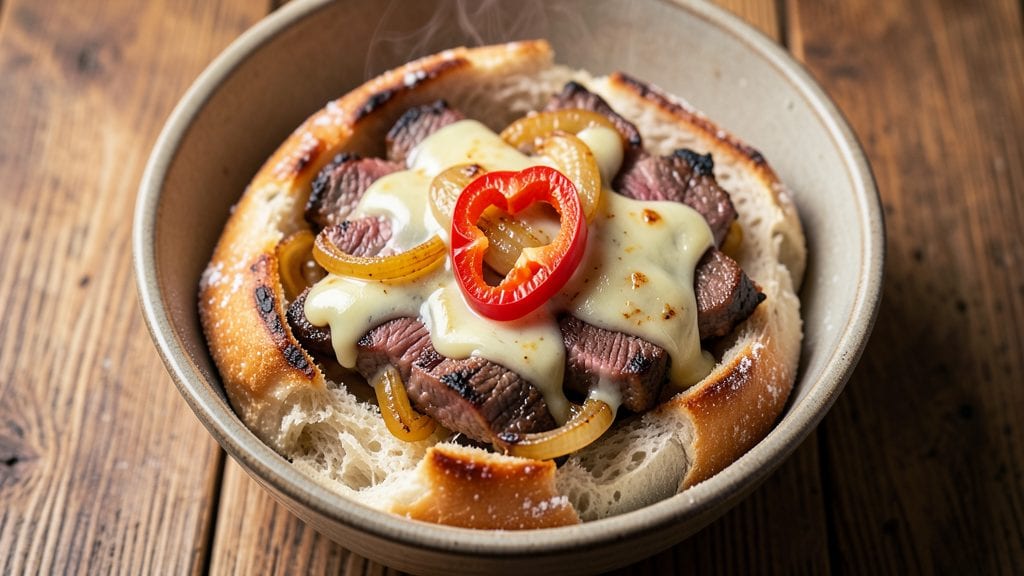
This Philly cheese steak bread recipe delivers the ultimate comfort food experience—crispy golden crust surrounding gooey, melted cheese and tender beef that practically falls apart at the touch.
After years of perfecting the balance between a sturdy bread shell and rich filling, I’ve cracked the code for a version that’s restaurant-quality but made at home. The secret lies in the bread’s dough, which must be neither too soft nor too dense to handle the generous filling without collapsing.
The filling is where the magic happens: thinly sliced ribeye steak seared to perfection, caramelized onions and peppers that add depth, and layers of melted provolone and American cheese that create that signature pull-apart texture.
This isn’t just a side dish—it’s a main event that pairs beautifully with a crisp green salad or roasted vegetables to round out the meal. The bread itself can be adapted to your preferences, from classic Italian-style to sweet versions with a touch of cinnamon sugar.
What you’ll end up with is a bread that’s crispy on the outside, perfectly chewy inside, and oozing with melted cheese and savory beef in every bite.
The aroma alone will have everyone gathering around the table, and the first pull-apart reveals the real reward: tender, flavorful layers that make this dish impossible to resist. Whether you’re serving a crowd or treating yourself to a solo indulgence, this recipe delivers every time.
For those with dietary restrictions, gluten-free bread options work surprisingly well, though the texture will differ slightly. The filling remains the star, so even if the bread isn’t perfect, the flavors will still shine. Ready to bring Philly’s iconic flavors to your kitchen? Let’s get started with the full recipe.
Ingredients for philly cheese steak bread
Crispy golden crust meets gooey cheese and tender beef—here's what you'll need.
| Ingredient | Amount | Notes |
|---|---|---|
| Ribeye Steak 🥩 | ¾ lb | Thinly sliced against grain |
| Yellow Onion 🧅 | 1 whole | Medium size, thinly sliced |
| Green Bell Pepper 🌶️ | 1 whole | Medium size, thinly sliced |
| Provolone Cheese 🧀 | 8 oz | Shredded, medium shreds |
| American Cheese 🧀 | 8 oz | Sliced, not pre-shredded |
| All-Purpose Flour 🌾 | 4 cups | Plus 1 tbsp for dusting |
| Active Dry Yeast 🍞 | 0.03 oz | 1 packet or 2.25 tsp |
| Granulated Sugar 🍚 | 1 tbsp | For yeast activation |
| Unsalted Butter 🧈 | ¼ cup | Softened, room temperature |
| Large Eggs 🥚 | 1 whole | Room temperature |
| Salt 🧂 | 1 ½ tsp | Kosher or sea salt |
| Ground Black Pepper 🌶️ | ½ tsp | Freshly ground preferred |
| Garlic Powder 🧄 | 1 tsp | For dough seasoning |
| Olive Oil 🫒 | 2 tbsp | For dough and searing |
The ribeye is non-negotiable here. Look for well-marbled cuts at Whole Foods or your local butcher—they’ll slice it thinly for you, saving time. For the dough, King Arthur flour gives the best texture, but any all-purpose works. The yeast? Check the expiration date—old yeast won't activate properly. I always buy mine in bulk from Trader Joe's since it's cheaper and stays fresh longer. Don't skip the room-temperature butter—it mixes better into the dough, giving you that perfect chewy texture.
No ribeye? Sirloin works in a pinch, but it'll be leaner. Pre-shredded cheese gets clumpy—buy a block and shred it yourself. The bell pepper can be any color, but green holds up best to caramelizing. Short on time? Frozen bell peppers (thawed and drained) work fine. For the dough, no yeast? Use 1 tbsp baking powder instead, but it won't rise as much. The garlic powder is optional but adds depth—skip it if you're using fresh garlic in the filling instead.
Dough keeps for 3 days in the fridge, wrapped tightly. For longer storage, freeze portions for up to 3 months. The filling components (except cheese) can be prepped ahead and stored separately. When ready to bake, let everything sit at room temperature for 30 minutes—this ensures even cooking. Leftovers? Reheat in a 350°F oven for 10 minutes to restore crispiness.
Why You'll Love This Recipe
- I’ll be real: ribeye can be pricey, but you’re not buying a whole one—just a pound or two, sliced thin. Stretch it with the peppers and onions, and suddenly you’ve got a filling, flavor-packed meal that costs way less than delivery. My wallet and my taste buds thank me every time.
- One-Pan Magic: Honestly, I swear by this recipe because it’s so simple—just sear the ribeye, toss in the onions and peppers, melt the cheeses, and boom. No chopping boards, no extra pans, just one sheet pan handling all the mess. The steak practically falls apart when you slice it, and the cheeses stretch like caramel over everything.
- Steakhouse in a Loaf: Between us, this tastes like a Philly cheesesteak sandwich but better—because the bread soaks up all that juicy ribeye and melted provolone while the American cheese adds that perfect gooey pull. I’ll take this over takeout any day, especially when the onions are caramelized just enough to make my whole kitchen smell amazing.
- Game Day Hero: Here’s what sold me—this is my go-to for game days, potlucks, or when my college-aged kids bring home friends. It’s hearty enough to feed a crowd but still feels special, not like a casserole you’d serve at a PTA meeting. Plus, the leftovers? Even better the next day when the flavors meld even more.
Step-by-step instructions for Philly cheese steak bread
Here's how to make this crispy, cheesy masterpiece with tender meat pulls and golden crust.
Prepare the Meat Filling
In a large skillet, heat 1 tablespoon olive oil over medium-high heat. Add the 0.75 lb ribeye steak, sliced thinly against the grain, and cook for 3-4 minutes until just browned but still slightly pink. Remove from heat and set aside.
In the same skillet, add 1 tablespoon olive oil and sauté the thinly sliced yellow onion and thinly sliced green bell pepper for 5-6 minutes until softened but not browned. Combine with the cooked steak in a bowl and set aside.
Make the Dough
In a large bowl, mix 4 cups all-purpose flour, 1.5 teaspoons salt, 0.5 teaspoon ground black pepper, and 1 teaspoon garlic powder. In a separate bowl, dissolve 0.03 oz active dry yeast and 1 tablespoon granulated sugar in 1 cup warm water (about 110°F) and let sit for 5 minutes until foamy.
Add the yeast mixture to the flour mixture along with 0.25 cup softened unsalted butter and 1 room temperature large egg. Mix until combined, then knead for 8-10 minutes until smooth and elastic. Cover and let rise in a warm place for 1 hour or until doubled in size.
Assemble and Shape the Bread
Punch down the risen dough and divide into 4 equal portions. Roll each portion into a 12-inch circle about ¼-inch thick. On each circle, spread 2 ounces shredded provolone cheese and 2 ounces sliced american cheese evenly, leaving a 1-inch border around the edges.
Spoon about ¼ of the meat mixture onto each cheese-covered circle, spreading it toward the center. Fold the edges of the dough over the filling to completely enclose it, creating a sealed package. Roll the sealed edges to seal tightly and shape into a round loaf.
Proof and Bake for Crispy Results
Place each shaped loaf on a parchment-lined baking sheet, seam-side down. Cover with a clean kitchen towel and let proof for 30 minutes until puffy. Preheat oven to 375°F and bake for 25-30 minutes until the crust is deep golden brown and internal temperature reaches 190°F.
For extra crispiness, brush the tops with 1 tablespoon olive oil before baking. Let cool for 5 minutes before slicing—this ensures the cheese stays melted and gooey inside while the crust stays perfectly crispy.
Pro Tips For Making Philly Cheese Steak Bread
- SEAR THE STEAK FIRST: Cut the ribeye against the grain into ¼-inch slices, then sear them in a screaming-hot pan for 30 seconds per side before assembling the sandwich. Cold steak won’t release its juices when melted cheese hits—this step guarantees every bite stays tender. (Yes, even if you’re impatient like me.)
- CHAR THE ONIONS: Cook the onions and bell peppers in the same pan you seared the steak, pushing them to the edges and letting them blacken in spots. That caramelized bitterness cuts through the richness of the cheese and steak—don’t rush it, or you’ll end up with bland filler.
- SALT THE BREAD LATE: Skip salting the bread dough until after the first rise, then hit it with a light sprinkle right before baking. Too early, and the salt draws out moisture, making the crust gummy instead of crisp. (Your future self will thank you.)
- LAY CHEESE IN LAYERS: Alternate thin slices of provolone and American cheese—provolone melts cleaner, American adds stretch. If you pile it all on top, the provolone will pool like soup, and the sandwich will fall apart. (Does it look weird? Yes. Does it work? Every single time.)
Troubleshooting this recipe
Dough Too Sticky
If your dough feels too sticky to handle, you likely added too much water or the flour wasn’t properly measured. I’ve found that spooning and leveling flour (rather than scooping) gives consistent results. Add 1 tablespoon flour at a time until the dough pulls away cleanly from your fingers.
For extra insurance, chill the dough for 15 minutes before shaping—this firms it up without drying it out. 💡
Filling Leaking
Leaky filling usually means the dough wasn’t sealed properly or the cheese melted too quickly. Always leave a 1-inch border of dough around the edges to contain the filling.
For extra security, I pinch the seams tightly and use a bit of egg wash (1 egg beaten with 1 tbsp water) to help the dough adhere. If it still leaks, reduce baking time by 2-3 minutes—the cheese will keep melting even after removal.
Crust Too Soft
A soft crust often happens when the dough wasn’t baked long enough or the oven wasn’t hot enough. I recommend using an oven thermometer to confirm your oven reaches 375°F.
Brush the tops with 1 tbsp olive oil before baking for extra crispiness. For a restaurant-style crust, bake for 30 minutes instead of 25—patience pays off here.
Cheese Not Melted
If your cheese stays stubbornly solid, it’s likely because the bread wasn’t hot enough inside. Use a meat thermometer to check for an internal temp of 190°F—this ensures the cheese melts completely.
For extra gooeyness, add ½ cup shredded mozzarella to your cheese mix—it melts more easily than provolone alone. Cover the bread with foil for the last 5 minutes of baking if needed.
Bread Collapsing
Collapsed bread usually means the dough wasn’t strong enough or the filling was too heavy. Make sure your dough has enough gluten development—knead for the full 8-10 minutes. For extra stability, let the dough rise until it’s doubled in size before shaping.
If it still collapses, reduce the filling slightly or use a thicker dough (add ½ cup extra flour if needed).
Nutrition facts
Frequently asked questions
Can I make this bread without yeast?
Yes! For a quick version, replace the yeast with 1 tbsp baking powder and 1 tsp baking soda. The dough will be denser and won't rise as much, but it'll still hold the filling. Bake at 375°F for 30-35 minutes to ensure the cheese melts completely. The texture will be more like a savory cake than traditional bread.
What’s the best way to reheat leftover Philly cheese steak bread?
For crispy results, wrap slices in foil and reheat in a 350°F oven for 10 minutes. To revive the crust, broil for 1-2 minutes at the end. Microwaving works in a pinch (30 seconds), but it’ll make the crust soggy. Store leftovers in an airtight container for up to 3 days or freeze for 2 months.
Can I use ground beef instead of ribeye?
Ground beef works well if you brown it thoroughly to remove excess fat. Use 80% lean for the best texture, and season it with 1 tsp Worcestershire sauce and ½ tsp smoked paprika for extra flavor. Drain any excess grease before mixing with the onions and peppers to keep the filling from getting too greasy.
How do I make a sweet version of this bread?
Swap the savory filling for a cinnamon-sugar mixture: mix ½ cup brown sugar, 2 tbsp cinnamon, and 1 tbsp butter. Add ½ cup chopped pecans or raisins for texture. Use a sweet dough (add ¼ cup sugar and 1 tsp vanilla to the dough) and bake as directed. The result? A delicious dessert bread with a crispy crust!
Why does my bread turn out dense instead of crispy?
Density usually means the dough didn’t rise enough or the oven wasn’t hot enough. Double-check your yeast (it should foam in 5 minutes in warm water) and ensure the dough doubles in size before shaping. For crispiness, preheat the oven to 375°F and brush the tops with olive oil before baking. A baking stone or steel also helps create a crispier crust.