
Breakfast & Brunch
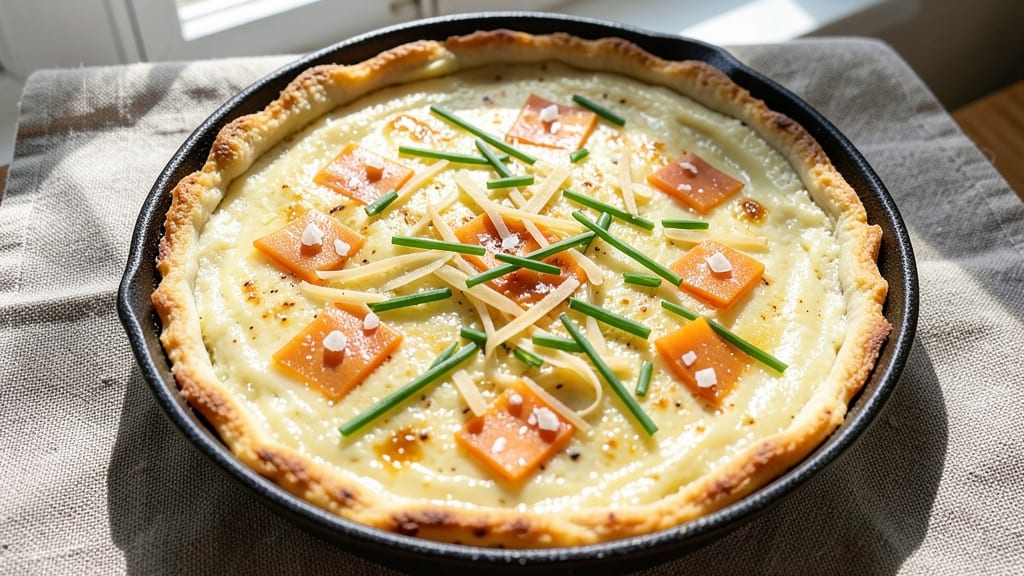
This no-crust cheese quiche recipe delivers all the richness of a classic quiche without the fuss of pie dough—just silky egg custard, melty cheese, and fresh herbs baked to golden perfection.
The secret lies in a simple technique that creates a velvety texture with minimal ingredients, making it ideal for busy mornings or brunch gatherings. I developed this version after years of testing, and it consistently delivers that restaurant-quality custard every time.
The beauty of this recipe is its simplicity: no crust means no rolling, no chilling, and no risk of a soggy bottom. Instead, we focus on the star—a creamy egg mixture enriched with sharp cheddar and Gruyère, plus bright herbs like chives and thyme for depth.
The filling bakes in a cast-iron skillet or oven-safe dish, creating edges that are just crisp enough to contrast the tender center. It’s the kind of dish that feels indulgent yet requires only 15 minutes of active prep.
What you’ll end up with is a quiche so rich and satisfying it’ll fool even crust purists. The top remains slightly custardy in the center while the edges achieve that perfect golden hue, and the cheese pulls into stretchy, melt-in-your-mouth strands.
Serve it warm with a simple green salad or crusty bread for a brunch that feels both elegant and effortless. Let’s get started on this foolproof method—your taste buds will thank you.
This recipe works equally well for breakfast or dinner, and leftovers reheat beautifully. The absence of crust doesn’t compromise flavor—instead, it allows the egg and cheese to shine without distraction.
Perfect for meal prep or last-minute entertaining, this quiche proves that simplicity and sophistication can go hand in hand. Here’s how to make it.
Ingredients for cheese quiche recipe no crust
Six eggs, two cheeses, and just a handful of fresh herbs transform into restaurant-quality quiche without a crust.
| Ingredient | Amount | Notes |
|---|---|---|
| Large Eggs 🥚 | 6 whole | Room temperature for best blending |
| Heavy Cream 🥛 | 1 cup | Full-fat for richest texture |
| Whole Milk 🥛 | ½ cup | Warmed slightly for smoother custard |
| Sharp Cheddar Cheese 🧀 | 1 ½ cups | Shredded, aged for tangy flavor |
| Gruyère Cheese 🧀 | 1 cup | Finely grated, nutty depth |
| Fresh Chives 🌿 | ¼ cup | Thinly sliced, mild onion flavor |
| Fresh Thyme Leaves 🌿 | 1 tbsp | Finely chopped, earthy aroma |
| Salt 🧂 | ¾ tsp | Diamond Crystal preferred |
| Black Pepper 🌶️ | ½ tsp | Freshly cracked, medium grind |
| Nutmeg 🌿 | ¼ tsp | Freshly grated, fine zest |
| Unsalted Butter 🧈 | 2 tbsp | Melted, for skillet coating |
| All-Purpose Flour 🌾 | 1 tbsp | Light dusting for skillet |
The cheeses are non-negotiable here. Gruyère provides that signature nutty complexity while sharp cheddar delivers tangy bite—together they create the perfect melty contrast. For Gruyère, Whittard of Chelsea or Rey de France from specialty shops deliver the best flavor, but any quality block works if freshly grated. The cheddar should have visible aged crystals—Cabot or Tillamook are reliable grocery store options. Fresh herbs elevate this dish, so Trader Joe's or local farmers markets are ideal for chives and thyme. If using dried thyme, reduce to one-quarter the amount and toast it lightly in a dry pan first.
No heavy cream? Half-and-half plus a splash of whole milk works in a pinch, though the texture won't be quite as luscious. Substituting cheddar? Parmesan or Gouda both work but adjust the amount—Parmesan is saltier so use less. Fresh herbs unavailable? Dried chives at one-third the amount or omit entirely if you prefer. The nutmeg is crucial for that classic quiche aroma, but if you're sensitive to its flavor, reduce to a pinch or omit. For the eggs, always use large eggs—they create the silkiest custard. The flour and butter create a natural barrier that prevents the custard from sticking to the skillet, so don't skip this step even though it's minimal.
This quiche reheats beautifully—just warm in a 350°F oven for 10-15 minutes until the center is set. Store leftovers covered in the fridge for 4 days or freeze portions for 3 months. I always make a double batch because it's perfect for meal prep. The custard actually improves overnight as flavors meld, so leftovers often taste better than day-of. For serving, let it sit at room temperature for 10 minutes before slicing—this helps the cheese pull cleanly.
Why You'll Love This Recipe
- No-Fuss Prep: I swear by this—just whisk eggs, cream, and milk in one bowl, then fold in the cheddar and Gruyère. No rolling dough, no stressing over a buttery crust. Honestly, I’ve made it in my mug when I forgot to take the pan out of the dishwasher.
- Rich Without the Guilt: That combo of sharp cheddar and nutty Gruyère? It’s like a hug for your taste buds. The heavy cream makes it velvety, but the whole milk keeps it from feeling too heavy—perfect for when you want something indulgent but not greasy.
- Leftovers That Don’t Suffer: Between us, most quiches turn dry or sad after day two. Not this one. The custard stays creamy, the cheese doesn’t separate, and I’ve reheated slices straight from the fridge for breakfast—no one ever complains.
- Budget Breakfast Win: I use whatever cheese I have on hand (Gruyère’s fancy, but cheddar works just as well), and eggs are always cheap. It feeds four for under $5, and the leftovers stretch into lunches. My college-student nephew calls it “gourmet on a shoestring.”
Step-by-step instructions for cheese quiche no crust
This method delivers a velvety egg custard with perfectly melted cheese and aromatic herbs—no crust needed.
Prepare the Skillet and Cheese Filling
Preheat your oven to 375°F. In a 9-inch oven-safe skillet, melt 2 tablespoons unsalted butter over medium heat. Lightly dust the bottom with 1 tablespoon all-purpose flour, swirling to coat evenly. This creates a delicate crust-like base that prevents sticking.
In a separate bowl, combine 1.5 cups sharp cheddar cheese and 1 cup gruyère cheese. Finely grate the gruyère if it's not already shredded—this ensures even melting throughout the custard. Sprinkle 0.25 teaspoon nutmeg and 0.5 teaspoon black pepper over the cheese mixture and toss gently to distribute the spices evenly. This step builds the flavor foundation before adding the eggs.
Whisk the Egg and Cream Mixture
In a large mixing bowl, whisk together 6 whole large eggs (room temperature) and 1 cup heavy cream until just combined—no need to overbeat. In a separate small bowl, warm 0.5 cup whole milk slightly (just until steaming) to help create a smoother custard. Add the warm milk to the egg mixture and whisk again until fully incorporated.
Season the mixture with 0.75 teaspoon salt and 0.25 cup fresh chives (thinly sliced) and 1 tablespoon fresh thyme leaves (finely chopped). The herbs should be evenly distributed—this ensures every bite carries their bright, aromatic notes. Here's the thing—don't overmix after adding the herbs or you'll break down their delicate flavors.
Assemble and Pre-Bake the Cheese Layer
Carefully pour the cheese mixture into the prepared skillet, spreading it evenly with a spatula. Sprinkle the seasoned cheese blend over the top, pressing down gently with the back of a spoon to help it melt slightly and create a flavorful barrier. Transfer the skillet to the preheated oven and bake for 8-10 minutes until the cheese begins to soften and turn golden around the edges.
This pre-baking step is crucial—it prevents the cheese from sinking to the bottom during the main baking phase, ensuring a smooth, creamy texture throughout. Watch closely after 6 minutes—the cheese should look slightly bubbly and starting to set. If it browns too quickly, tent loosely with foil to prevent over-browning.
Pour the Egg Mixture and Bake to Perfection
Remove the skillet from the oven and let it cool for 2 minutes. Then, carefully pour the egg and cream mixture over the cheese layer, using a spatula to spread it evenly. The mixture should cover the cheese completely—this creates the signature silky custard texture we're after. Return the skillet to the oven and bake for 25-30 minutes until the custard is set but still slightly jiggly in the center.
To test doneness, gently shake the skillet—if the custard wobbles slightly but doesn't spill over, it's ready. The edges should be golden brown, and the top should look smooth with no visible liquid. If the top browns too quickly, cover loosely with foil for the last 5-10 minutes of baking to prevent over-browning while allowing the center to finish cooking.
Rest and Serve Warm
Remove the quiche from the oven and let it rest for 10-15 minutes before serving. This resting period allows the custard to fully set and the flavors to meld together. The quiche should release cleanly from the skillet edges—if it sticks, run a thin knife around the perimeter to loosen it gently.
Slice into 6 equal wedges and serve warm. Each bite should deliver a creamy, velvety texture with pockets of melted cheese and bright herb notes. The nutmeg adds a subtle warmth that complements the sharp cheddar and nutty gruyère perfectly. For best results, serve within 2 hours of baking while the custard is at its peak texture.
Pro Tips For Making Cheese Quiche Recipe No Crust
- Preheat the Pan: Slap that oven on at 375°F (190°C) before you even think about mixing your custard. I learned this the hard way—my first no-crust quiche came out gummy because the pan was cold when the eggs hit it. A hot pan means the bottom sets faster and the custard cooks evenly, not like a sad, undercooked pudding.
- Shred Cheese Like a Pro: Skip the food processor for Gruyère—it turns it into cheese dust. Instead, use a box grater with the largest holes and shred by hand. For sharp cheddar, pulse in short bursts in a food processor, but stop before it gets fine. Lumpy cheese melts better and doesn’t clump into a greasy mess when the quiche bakes.
- Whisk the Custard Well: Don’t just stir the eggs, cream, and milk like you’re mixing paint. Whisk vigorously for 2 full minutes until the mixture is pale, thick, and ribbons off the whisk. This cuts down on cracks later and gives you that silky, restaurant-quality texture. (Yes, even if you’re impatient like me.)
- Vent the Dish: Cover the quiche with foil loosely—crinkle it or prop it open with a spoon. This lets steam escape without letting the top dry out. I used to seal it tight, and my quiches would come out with a skin on top like a sad, overcooked pancake. A little airflow keeps the custard tender and the cheese gooey.
Perfect pairings for this dish
Herb-Infused Salads
Pair this no-crust quiche with a mixed greens salad tossed in a light lemon-Dijon vinaigrette. Use 2 tablespoons olive oil, 1 tablespoon Dijon mustard, 1 tablespoon fresh lemon juice, and ½ teaspoon honey for a bright contrast to the rich custard.
Add ¼ cup toasted walnuts and ½ cup crumbled feta cheese for extra texture. The peppery bite of arugula also works beautifully—toss with 1 tablespoon balsamic glaze and 2 tablespoons shaved Parmesan. 🥗
Crusty Bread Essentials
A warm baguette or sourdough loaf is perfect for soaking up leftover custard. Toast slices until golden and lightly butter them for added richness.
For a rustic touch, serve with garlic confit—simmer 3 garlic cloves in 2 tablespoons olive oil for 10 minutes until soft, then spread on warm bread. The garlic’s sweetness complements the nutmeg in the quiche beautifully.
Wine Pairings
A crisp Chardonnay from Burgundy or California pairs perfectly with this quiche, thanks to its buttery notes that mirror the custard’s richness. For something lighter, try a Sauvignon Blanc with its citrus and herbaceous qualities that cut through the cheese.
If you prefer red, a Pinot Noir with bright acidity balances the dish without overpowering. Avoid heavy, oaky whites—they’ll clash with the delicate herbs. 🍷
Coffee and Tea Pairings
For a morning brunch, serve with a bold French press coffee—the dark roast enhances the quiche’s savory depth. A lightly sweetened Earl Grey tea with lemon slices provides a refreshing contrast, especially if you prefer something caffeine-free.
For a dessert-like pairing, try a spiced chai latte—the cinnamon and cardamom notes complement the nutmeg in the quiche. ☕
Sweet Accompaniments
Balance the savory flavors with a honey-drizzled pear or sliced apples tossed in 1 teaspoon lemon juice and 1 teaspoon brown sugar. The fruit’s natural sweetness contrasts the sharp cheddar and nutty Gruyère.
For a more decadent touch, serve with vanilla bean ice cream—the cool creaminess soothes the palate after each rich bite. A drizzle of warm maple syrup over the ice cream elevates the pairing to dessert-level indulgence. 🍐
Beverage Pairing Pro Tips
Always serve beverages chilled—room-temperature drinks dull the quiche’s vibrant flavors. For a sparkling twist, pair with sparkling water infused with cucumber and mint—the effervescence cleanses the palate between bites. If you’re serving this for dinner, a dry Riesling with its minerality enhances the dish’s complexity.
And remember: warm drinks like coffee or tea should be served just off-boiling to preserve their aromatic oils. 💡
Nutrition facts
Frequently asked questions
Can I make this no-crust quiche in a different dish?
Yes! While a 9-inch oven-safe skillet works perfectly, you can adapt this recipe to a 9x13-inch baking dish or pie plate. For a baking dish, reduce the oven temperature to 350°F and increase baking time to 35-40 minutes. The key is to ensure the custard is set but still slightly jiggly in the center. A ceramic dish also works well—just monitor closely to prevent over-browning.
What if I don’t have Gruyère cheese?
No problem! Substitute Gruyère with Parmesan or Emmental for a similar nutty flavor. Use the same amount (1 cup) and grate it finely for even melting. If you prefer a sharper taste, Pecorino Romano works too—just reduce the quantity slightly (¾ cup) since it’s saltier. The cheese should still melt beautifully and add depth to the custard.
Can I make this quiche ahead of time?
This quiche actually tastes better the next day as the flavors meld. Let it cool completely, then cover tightly with plastic wrap or foil. Store in the fridge for up to 4 days. Reheat portions in a 350°F oven for 10-15 minutes until warmed through. For freezing, wrap individual slices in plastic and freeze for up to 3 months. Thaw overnight in the fridge before reheating.
Why is my quiche custard watery?
Watery custard usually means it wasn’t baked long enough or the oven wasn’t hot enough. Ensure your oven reaches 375°F and bake until the center is just set (it should wobble slightly but not spill when shaken). For extra insurance, cover loosely with foil during the last 10 minutes of baking to help it set evenly. If using a glass dish, it may need 5 extra minutes compared to metal.
Can I add vegetables to this recipe?
Yes! Sauté ½ cup diced bell peppers or ½ cup spinach until softened, then sprinkle over the cheese layer before adding the egg mixture. For heartier options, try ¼ cup cooked bacon or ½ cup sautéed mushrooms. Just make sure to drain excess moisture from veggies to prevent a soggy custard. Add veggies during the 8-10 minute pre-bake step for best texture.