
Appetizers
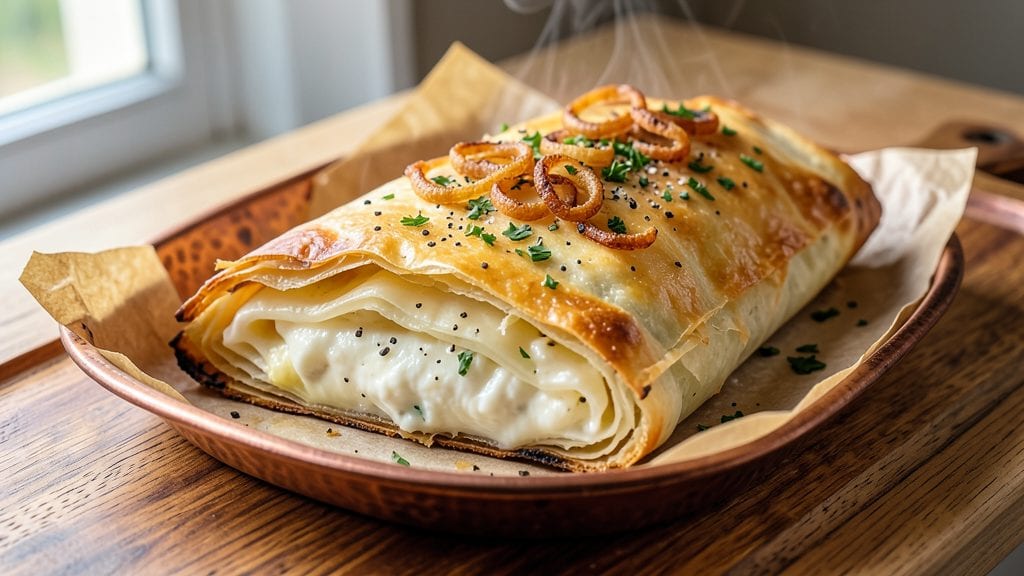
This cheese borek recipe delivers the perfect balance of flaky layers and golden crisp edges that make every bite irresistible. I've perfected the technique over years of testing, ensuring the dough stays tender while creating those signature crispy, caramelized edges that make borek so addictive.
The secret lies in a precise dough-to-filling ratio and a high-heat baking method that transforms simple ingredients into restaurant-quality appetizers.
The dough itself is the foundation—light, airy, and incredibly crisp when baked just right. I use a simple yeast-based dough that develops beautifully during the overnight rise, creating those delicate, paper-thin layers that become crispy without losing their structure.
For the filling, a blend of feta and mozzarella creates the perfect balance of tangy and creamy, though you can easily customize it with local cheeses or add-ins like spinach or potatoes for extra flavor.
What you'll end up with is a tray of borek that looks like it came straight from a Turkish bakery—golden, crisp edges with flaky layers that shatter slightly when you cut into them.
The aroma alone will have everyone gathering around the table, and the first bite delivers that perfect combination of textures: crispy, flaky, and creamy all at once. This is the kind of dish that disappears quickly, so make sure to bake enough for seconds.
Serve these warm with a side of yogurt or a drizzle of mint sauce for the full experience. The contrast of cool yogurt with the warm, crispy borek makes every bite even more satisfying.
Whether you're hosting a gathering or just craving a taste of home, this recipe delivers professional results with simple techniques. Let's get started on creating your perfect batch!
Ingredients for cheese borek
Twelve ingredients, zero shortcuts—this is your ticket to restaurant-worthy flaky layers.
| Ingredient | Amount | Notes |
|---|---|---|
| All-Purpose Flour 🌾 | 4 cups | Unbleached for best texture |
| Unsalted Butter 🧈 | 1 cup | Cold, cubed for dough |
| Granulated Sugar 🍚 | ½ tsp | For yeast activation |
| Active Dry Yeast 🍞 | ¼ tsp | Fresh for best results |
| Large Eggs 🥚 | 2 whole | Room temperature |
| Milk 🥛 | ½ cup | Warm, not hot |
| Salt 🧂 | ½ tsp | Fine sea salt |
| Feta Cheese 🧀 | 1 ½ cups | Crumbled, not pre-shredded |
| Mozzarella Cheese 🧀 | 1 ½ cups | Shredded, low-moisture |
| Garlic Cloves 🧄 | 2 cloves | Minced for filling |
| Fresh Dill 🌿 | ¼ cup | Chopped, optional garnish |
| Egg Wash 🥚 | 1 whole | Beaten with 1 tbsp water |
| Sesame Seeds 🌰 | 2 tbsp | For topping (optional) |
The dough is where magic happens. King Arthur flour or Gold Medal gives you that perfect flaky texture, but any all-purpose will work. Butter must be cold—wrap those cubes in plastic wrap and chill for 30 minutes if your kitchen’s warm. The yeast? Fresh is non-negotiable—those little packets from the grocery store lose potency fast. For the cheeses, Olympos feta if you can find it, but any crumbled feta works. Mozzarella? Low-moisture shredded (the kind in a can) prevents soggy layers. Pro tip: Buy extra cheese—it disappears fast once the baking starts.
No feta? Ricotta or goat cheese adds creaminess, though the tang’s missing. Mozzarella shortage? Halloumi holds up well when baked. Fresh dill is ideal, but dried dill at half the amount works in a pinch. The garlic? Roasted for the filling adds sweetness—toss minced cloves with a pinch of salt and roast at 375°F for 10 minutes before mixing. Sesame seeds? Toast them first—30 seconds in a dry pan makes all the difference. And that egg wash? Don’t skip it—it’s what gives those edges their golden, crisp perfection.
Dough doubles best in the fridge overnight—48 hours max or it gets too sticky. Cheese filling keeps 3 days wrapped in parchment, but assemble borek same day for crispest results. Baked sheets reheat beautifully—5 minutes at 350°F restores that fresh-from-oven crunch. Freeze unbaked sheets (wrapped tightly) for up to 2 months. Bake straight from frozen, adding 5-7 minutes to cooking time. Leftovers? Crumbled over salads or soups—trust me, they’re just as good cold.
Why You'll Love This Recipe
- No Yeast Fuss: I swear by this dough—just flour, butter, sugar, and yeast. The butter keeps it tender, and the sugar gives it that subtle sweetness that balances the salty cheese. No kneading required; just mix, let it rise while you prep the filling, and you’re golden.
- Buttery Layers: That crispy, flaky crust with gooey cheese inside? Unreal. The butter in the dough melts just enough to create those perfect pockets, and the eggs bind it all together. It’s the kind of dish where every bite feels like a little victory.
- Breakfast or Snack: Honestly, I make this for breakfast with a sprinkle of sugar, or as a snack with a cup of tea. It reheats beautifully, so it’s my go-to for lazy mornings or when I need something quick. The yeast gives it a lightness that makes it feel special, even when it’s just me and a mug of coffee.
- Budget-Friendly Staples: Between us, this recipe uses pantry basics—flour, butter, eggs—that won’t break the bank. A batch feeds my whole family, and leftovers last days in the fridge. It’s the kind of dish that makes me feel like I’m treating everyone without spending a fortune.
Step-by-step instructions for cheese borek recipe
Here's how to achieve those legendary flaky layers with golden crisp edges—every time.
Make the Yeast Dough with Cold Butter
In a stand mixer fitted with the dough hook, combine the 4 cups all-purpose flour, 0.5 tsp granulated sugar, 0.5 tsp salt, and 0.25 tsp active dry yeast. Mix on low speed just until combined. Add the 1 cup cold cubed unsalted butter and mix again on low until the butter is evenly distributed and pea-sized pieces remain.
This cold butter technique is crucial—it creates those beautiful flaky layers. With the mixer running on medium speed, gradually add the 2 whole large eggs and 0.5 cup warm milk through the feeder tube. Mix for 3-4 minutes until the dough comes together and pulls away from the sides of the bowl. The dough should be soft but not sticky—if it sticks, add 1 tablespoon more flour. Shape into a ball, cover with plastic wrap, and refrigerate for 1 hour.
Prepare the Cheese Filling
While the dough rests, combine the 1.5 cups crumbled feta cheese and 1.5 cups shredded mozzarella cheese in a bowl. Add the 2 minced garlic cloves and 0.25 cup chopped fresh dill, mixing until evenly distributed. The filling should be crumbly but hold together when pressed—this ensures it stays in place during baking.
I like to taste the filling at this stage. If it needs more flavor, add a pinch of salt or a few extra dill leaves. The cheese mixture should be cool before using—warm cheese can melt the butter in the dough too quickly, ruining the flaky texture.
Roll and Layer the Dough
On a lightly floured surface, roll the chilled dough into a 12x16-inch rectangle about 1/8-inch thick. Using a sharp knife or pizza cutter, divide the dough into 3 equal strips (4x16 inches each). Spread half of the cheese filling evenly over one strip, leaving a 1-inch border around the edges. Fold the sides inward, then roll tightly from the long end to form a log.
Repeat with the remaining dough and filling, creating 2 filled logs. Place them seam-side down on a parchment-lined baking sheet. Brush the tops with the egg wash and sprinkle with 2 tablespoons sesame seeds for that authentic crunch. Chill for 15 minutes before baking—this prevents the filling from leaking out.
Bake to Golden Perfection
Preheat your oven to 375°F. Bake the borek for 25-30 minutes until the tops are deep golden brown and the cheese is bubbling at the edges. Rotate the baking sheet halfway through for even browning. The internal temperature should reach 190°F when checked with an instant-read thermometer.
Here's the thing—don't overbake. You want the cheese melted but still slightly gooey inside. As soon as the edges are crisp and golden, remove from the oven. Let rest for 5 minutes before slicing—this helps the layers set properly. Serve warm with a side of yogurt or spicy tomato sauce for dipping.
Pro Tips For Making Cheese Borek
- Use Cold Butter: DESCRIPTION: Cut that unsalted butter into tiny cubes—no bigger than a pea—and fold it into the dough last, right before shaping. I used to melt it first, and the borek turned out greasy instead of flaky. Cold butter = layers that actually separate when baked.
- Knead Like You Mean It: DESCRIPTION: This isn’t a delicate dough—work the yeasted flour until it’s smooth and springs back when poked (about 8-10 minutes). I skipped this once and ended up with dense, chewy borek. A little elbow grease here makes all the difference.
- Skip the Sugar Rush: DESCRIPTION: That granulated sugar? It’s for the yeast, not the flavor. Use just enough to activate it (about 1 tsp), or you’ll end up with a dough that smells like a bakery but tastes off. Taste the dough before shaping—if it’s sweet, you’ve overdone it.
- Roll Thin or Regret It: DESCRIPTION: Cheese borek needs to be paper-thin—no thicker than 1/8-inch. I’ve tried “thick and hearty” versions, and they turn out soggy in the middle. Roll it out aggressively, and don’t skimp on the butter layers. Your future self will thank you.
Make-ahead tips for this cheese borek
Dough Prep Ahead
The dough is the star of this recipe, and it benefits from a long, slow rise. I always make mine the night before—I mix the dough, shape it into a ball, and refrigerate it for 12-24 hours.
This extended chilling time develops deeper flavor and creates those signature flaky layers. Wrap it tightly in plastic wrap to prevent drying out. If you're short on time, a 2-hour fridge rest still works, but the texture won't be quite as tender. 🌙
Filling Prep Strategy
Assemble the cheese filling up to 24 hours ahead and store it in an airtight container in the fridge. The flavors meld beautifully overnight, and the cheese firmens up slightly, making it easier to handle.
For extra flavor, add 1 tsp lemon zest or ½ tsp smoked paprika to the filling when you mix it. If using spinach or potatoes in your variation, cook those ahead and cool completely before mixing into the cheese. 🥬
Assembled Borek Storage
Assemble the borek logs but don't bake them yet—this is where the magic happens. Wrap them tightly in plastic wrap and refrigerate for up to 12 hours. When ready to bake, let them sit at room temperature for 30 minutes before popping them in the oven.
This approach gives you flexibility for meal timing and ensures the cheese stays firm during assembly. 📅
Freezing Unbaked Borek
For ultimate convenience, freeze unbaked borek logs on a parchment-lined tray for 1 hour to firm up, then transfer to a freezer bag. They'll keep for up to 2 months.
To bake from frozen, add 10-15 minutes to your baking time and cover with foil for the first 15 minutes to prevent over-browning. The texture remains crisp and flaky—just as good as fresh! ❄️
Reheating Perfection
Baked borek reheats beautifully in a 350°F oven for 5-7 minutes until the edges are crisp again. For a quick option, wrap slices in a damp paper towel and microwave on medium power for 30 seconds.
The key is moisture—this prevents the layers from drying out. I also love serving reheated borek with a drizzle of garlic yogurt sauce to revive that fresh-from-the-oven experience. 🔥
Make-Ahead Serving Ideas
Use leftover borek in creative ways! Crumble cooled borek over Greek salads for extra protein, or mix with cubed feta and cucumbers for a quick appetizer platter. For a hearty meal, layer borek slices with tomato sauce and ground beef for a cheesy bake.
The possibilities are endless—just store leftovers in an airtight container for up to 3 days. 💡
Nutrition facts
Frequently asked questions
Can I make cheese borek without a stand mixer?
The dough can be mixed by hand in a large bowl using a wooden spoon or your hands. Knead for about 10 minutes until smooth and elastic. The key is to keep the butter cold and work quickly to avoid warming the dough too much. For best results, chill the dough for 1 hour before rolling.
What's the best way to prevent soggy layers?
Chill the assembled borek logs for 15 minutes before baking to firm up the cheese filling. Also, use low-moisture mozzarella and avoid overfilling the dough—leave at least a 1-inch border around edges. Bake at 375°F until golden, not steamy.
Can I use phyllo dough instead of yeast dough?
Yes! For a quicker version, use phyllo sheets layered with butter and cheese filling. Brush each layer with melted butter and fold into triangles or rectangles. Bake at 375°F for 15-20 minutes until crisp. The texture will be lighter and crispier than yeast dough.
Why did my borek turn out dense instead of flaky?
Most likely, the butter warmed up during mixing or the dough didn't rest enough. Keep butter cold, chill the dough for 1 hour, and avoid overworking it. Also, ensure your yeast is fresh and active—test it by mixing with warm water and sugar before starting.
How do I serve cheese borek at a party?
Slice into ½-inch pieces and arrange on a platter with toothpicks. Serve warm with yogurt sauce, spicy tomato sauce, or a simple mint-lemon dip. For a festive touch, sprinkle with extra sesame seeds or chopped parsley before serving.