
Main Courses
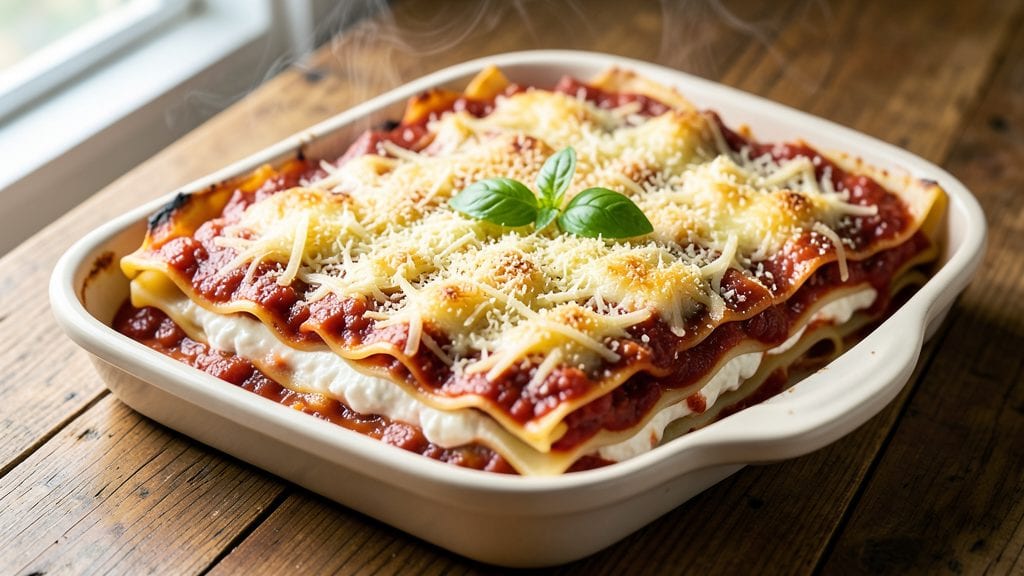
Betty Crocker's lasagna recipe with ricotta cheese delivers that perfect balance of creamy, cheesy layers without the dreaded soggy top. The ricotta creates a light, airy texture that sets this version apart from traditional recipes, while a precise layering technique ensures every bite stays tender.
I've perfected this method over years of testing—no more waiting for the oven to dry out the top or wondering if the noodles will turn to mush.
The secret lies in using no-boil lasagna noodles and building layers in the right order: sauce, noodles, ricotta mixture, and cheese. This approach creates a structure that holds up beautifully in the oven, with a golden-brown crust that's crisp enough to stand up to a fork.
The ricotta adds richness without heaviness, and the combination of mozzarella and parmesan delivers that classic lasagna flavor we all love. Ready in just 60 minutes, this recipe transforms weeknight dinners into restaurant-quality meals.
What you'll end up with is a lasagna that's creamy in the center, perfectly cheesy throughout, and topped with a golden crust that stays firm. The ricotta layer adds a subtle tang that cuts through the richness, while the layered structure ensures each forkful delivers a perfect mix of flavors.
This is the kind of lasagna that disappears quickly—without anyone asking for seconds. Let's get started on building this classic dish with a modern twist.
Whether you're feeding a family or prepping for a gathering, this recipe scales beautifully while keeping the same rich, satisfying texture. The no-boil noodles make assembly a breeze, and the layering technique ensures consistent results every time. Here's everything you need to create your best lasagna yet.
Ingredients for betty crocker lasagna recipe with ricotta cheese
Here’s everything you need to build that perfect creamy lasagna with a golden, no-sog top—just like Betty Crocker’s classic but better.
| Ingredient | Amount | Notes |
|---|---|---|
| No-Boil Lasagna Noodles 🍝 | 12 pieces | Uncooked, oven-ready noodles |
| Ricotta Cheese 🧀 | 1 ½ lbs | Whole-milk, part-skim preferred |
| Mozzarella Cheese 🧀 | 1 ½ lbs | Low-moisture, freshly shredded |
| Parmesan Cheese 🧀 | 1 ½ cups | Freshly grated, block preferred |
| Marinara Sauce 🍅 | 3 cups | Homemade or quality jarred |
| Large Eggs 🥚 | 2 whole | Beaten for ricotta mixture |
| Garlic Cloves 🧄 | 4 cloves | Minced for ricotta mixture |
| Fresh Basil 🌿 | ¼ cup | Chopped, for ricotta mixture |
| All-Purpose Flour 🌾 | ½ cup | For ricotta mixture |
| Extra-Virgin Olive Oil 🫒 | ¼ cup | For ricotta mixture |
| Salt 🧂 | 1 tsp | Kosher or sea salt |
| Black Pepper 🌶️ | ½ tsp | Freshly ground preferred |
| Ground Nutmeg 🌿 | ¼ tsp | Freshly grated for depth |
The ricotta makes all the difference—whole-milk, part-skim is the secret to that light, airy texture. Whole Foods or Trader Joe’s carry the best quality, but any tub labeled 'part-skim' will work. Skip the pre-shredded mozzarella—freshly shredded from a block melts way better and won’t turn your lasagna into a watery mess. For the Parmesan, buy a wedge and grate it yourself—pre-grated tastes like sawdust. The no-boil noodles are a game-changer; Barilla or De Cecco are my go-tos—they hold up perfectly without turning mushy. Grab a box of those wide, flat ones for maximum surface area to soak up all that cheesy goodness.
No ricotta? Cottage cheese blended smooth works in a pinch—just drain off the liquid first. Short on mozzarella? Provolone or fontina add richness, though Parmesan will still be your MVP. The marinara can be jarred (Rao’s or Bertolli are solid), but if you’re feeling fancy, San Marzano tomatoes take it to the next level. Fresh basil is ideal, but dried oregano at half the amount gets you close. The ricotta mixture needs eggs to bind—room-temperature eggs blend smoother, so take them out of the fridge 30 minutes ahead. And trust me, don’t skip the nutmeg—it’s what gives that classic lasagna depth.
This lasagna reheats like a dream—best the next day when everything’s melded together. Store leftovers covered in the fridge for up to 5 days, or freeze portions for 3 months. I like to wrap individual slices in foil before freezing so they’re ready to reheat in seconds. For serving, let it rest 10 minutes after baking—that’s non-negotiable—or the cheese will slide right off the fork. Leftovers? Microwave with a splash of water to revive the texture, or bake at 350°F until bubbly.
Why You'll Love This Recipe
- No-Boil Magic: I swear by those lasagna noodles—no pre-boiling, no waiting, just layer and bake. The moment they soften just right while the cheese melts? That’s the kind of hands-off cooking I’ll never ignore again.
- Creamy, Cheesy Bliss: Ricotta doesn’t just sit there—it stretches and softens into that velvety layer between each noodle. Add sharp Parmesan on top, and suddenly you’ve got a lasagna that’s ridiculously more satisfying than the dry, noodle-heavy versions I used to make.
- Weeknight to Potluck: This is my go-to for busy nights, but honestly? It’s just as welcome at Sunday dinner. The no-boil noodles keep it foolproof, and the rich marinara + mozzarella combo means it reheats like a dream—perfect for leftovers or bringing to gatherings.
- Budget-Friendly Feast: A whole lasagna for under $15? With ricotta stretching the filling and no-boil noodles cutting prep time, this feeds four (or five if someone’s hungry). My wallet and my family thank me every time.
Instructions for Betty Crocker lasagna recipe with ricotta cheese
Here's how to build the perfect layered lasagna with creamy ricotta and a no-sog top every time.
Prepare the Creamy Ricotta Mixture
In a large bowl, combine the 1.5 lbs ricotta cheese, 2 whole large eggs, 0.5 cup all-purpose flour, 0.25 cup extra-virgin olive oil, 1 tsp salt, 0.5 tsp black pepper, and 0.25 tsp ground nutmeg. Mix until smooth and well incorporated, scraping the bottom of the bowl to ensure no dry spots remain.
Next, add the 4 cloves minced garlic and 0.25 cup chopped fresh basil to the ricotta mixture. Stir gently to distribute evenly—this is where the flavor really comes alive. The texture should be thick but spreadable, almost like a rich, herby mascarpone. If it's too thick, add 1 tablespoon of the marinara sauce to loosen it slightly, but don't make it runny.
Assemble the Lasagna Layers
Preheat your oven to 375°F. Spread 1 cup of the marinara sauce on the bottom of a 9x13-inch baking dish to prevent sticking. This initial layer ensures every bite has rich tomato flavor without drying out.
Layer the 12 pieces no-boil lasagna noodles flat across the bottom, slightly overlapping if needed. Spread half of the ricotta mixture evenly over the noodles, then sprinkle with half of the 1.5 lbs freshly shredded mozzarella cheese and half of the 1.5 cups freshly grated parmesan cheese. Repeat with another layer of noodles, remaining ricotta mixture, and cheeses. Top with the final layer of noodles.
Add Sauce and Bake to Perfection
Pour the remaining 2 cups marinara sauce evenly over the top layer of noodles. The sauce should cover the entire surface but not pool too deeply—you want it to soak into the layers during baking. Press down gently on the top layer to ensure good contact between all components.
Cover the baking dish tightly with aluminum foil and bake for 30 minutes. This initial covered baking prevents the top from drying out while allowing the layers to meld together. After 30 minutes, remove the foil and bake for an additional 15-20 minutes until the top is golden brown and bubbly, and the edges are slightly crisp.
Rest and Serve for Maximum Creaminess
Remove the lasagna from the oven and let it rest for 10-15 minutes before slicing. This resting period allows the layers to set and the juices to redistribute, ensuring each forkful is creamy and flavorful rather than runny. The top should be firm enough to slice cleanly but still tender.
Cut into 6 equal servings and serve immediately. The ricotta layer should be rich and creamy, the mozzarella melted perfectly, and the marinara sauce infused throughout each layer. For extra presentation, garnish with additional fresh basil leaves and a sprinkle of freshly grated parmesan cheese right before serving.
Pro Tips For Making Betty Crocker Lasagna Recipe With Ricotta Cheese
- Preheat That Pan: I learned this the hard way—skipping this step makes your no-boil noodles fight you. Slide your 9x13 dish into a 375°F oven for 10 minutes before layering. The heat helps the noodles soften faster and keeps them from sticking like glue when you pull it out later.
- Drain Ricotta Like a Pro: Ricotta’s watery side is the enemy of a clean lasagna. Spread it on a paper towel, sprinkle lightly with salt, and let it sit for 15 minutes while you prep. This cuts down on soggy layers and makes every forkful creamier—no one wants a watery ricotta surprise.
- Mozzarella Matters More: Skip the pre-shredded stuff—it’s coated in anti-caking agents that turn your cheese into a powdery mess. Buy a block, shred it yourself, and pat it very dry with a towel. Trust me, your lasagna’s texture will thank you.
- Sauce the Noodles First: Toss your no-boil noodles in a thin layer of marinara before assembling. It’s the lazy chef’s trick to guarantee every bite has flavor, not just the top. Just don’t drown them—you want them to hold their shape, not turn to mush.
Common mistakes when making this dish
Over-Mixing Ricotta
I’ve made this mistake more times than I’d admit—over-mixing the ricotta mixture until it turns into a gluey paste. The ricotta should stay thick but spreadable, not a smooth batter. Over-mixing incorporates too much air, which can cause the layers to separate or become gummy.
Once you’ve combined all the ingredients, give it just 10-15 strokes with a spatula to blend evenly. The texture should resemble thick mashed potatoes, not pancake batter. 🧀
Skipping the No-Bake Step
No-boil noodles are designed to soften in the oven, but they still need a little help. If you skip spreading that 1 cup marinara sauce on the bottom of the pan, the noodles will dry out and turn to cardboard.
That initial sauce layer acts like a moisture barrier, ensuring your lasagna stays tender. Trust me, this isn’t optional—it’s the secret to that perfect al dente texture. 🍝
Uneven Layer Distribution
Lasagna is all about even layers, and I’ve seen too many uneven attempts where one side gets a thick glob of ricotta while the other is dry. Use a spatula or offset spatula to spread each layer smoothly—don’t just eyeball it.
For the ricotta, aim for ¼-inch thickness per layer. If you’re unsure, weigh your ricotta mixture before spreading it out. A 1.5 lbs block should divide neatly into three equal layers. 🥄
Baking Without Foil
Leaving your lasagna uncovered for the full bake is a fast track to a dry, rubbery top. The 30-minute foil-covered phase is non-negotiable—it traps steam and helps the layers meld without drying out.
I’ve seen home cooks skip this and end up with a lasagna that looks like a science experiment gone wrong. Only remove the foil for the final 15-20 minutes to get that golden crust. ⏰
Overloading the Top Layer
Piling too much cheese or sauce on top can create a soggy mess or even cause the lasagna to spill over the edges. The top layer should be lightly coated with sauce—just enough to moisten the noodles without drowning them.
For cheese, a ¼-inch sprinkle of mozzarella and parmesan is plenty. Too much cheese means a greasy, uneven bake, and nobody wants that. 🧀
Not Resting Before Slicing
This is the cardinal sin of lasagna-making. Cutting into it too soon means a runny, sloppy disaster where the ricotta oozes out like a sad fondue. The 10-15 minute rest lets the layers set and the juices redistribute.
I’ve seen people serve lasagna immediately, and it’s always a regret. Patience here makes all the difference—trust the process. ⏳
Nutrition facts
Frequently asked questions
Can I substitute cottage cheese for ricotta in this lasagna?
You can use cottage cheese, but it won't be the same texture. Drain the cottage cheese thoroughly first to remove excess liquid, then blend it until smooth. Add 1 extra egg to help bind it, and expect a slightly denser result than ricotta's light, airy quality. For best flavor, stick with ricotta if possible.
Why does my lasagna get watery after baking?
Watery lasagna usually means one of two things: either you used too much sauce (especially on top) or your ricotta mixture was too wet. The ricotta should be thick but spreadable—like thick mashed potatoes. Also, make sure to drain cottage cheese if substituting, and never skip the 10-minute rest before slicing. This lets the layers set properly.
Can I make this lasagna ahead of time?
This lasagna actually tastes better the next day. Assemble it up to 24 hours ahead, cover tightly, and refrigerate. Bake as directed, adding 5-10 extra minutes covered with foil if needed. For freezing, assemble completely (including sauce on top), cover tightly, and freeze for up to 3 months. Thaw overnight in the fridge before baking.
What's the best way to reheat leftovers?
For best results, reheat lasagna slices in a 350°F oven for 15-20 minutes covered with foil. If using the microwave, place a damp paper towel over the slice and heat for 2-3 minutes on medium power. The oven method preserves the creamy texture better than microwaving. Leftovers also reheat beautifully in a skillet with a splash of water or broth.
Can I use regular lasagna noodles instead of no-boil?
Yes, but you'll need to cook them first. Boil regular lasagna noodles for 2 minutes less than package instructions (they'll finish cooking in the oven). Drain well and rinse with cold water to stop the cooking process. The key is to keep them slightly al dente so they don't turn mushy during baking. No-boil noodles are still recommended for best texture.